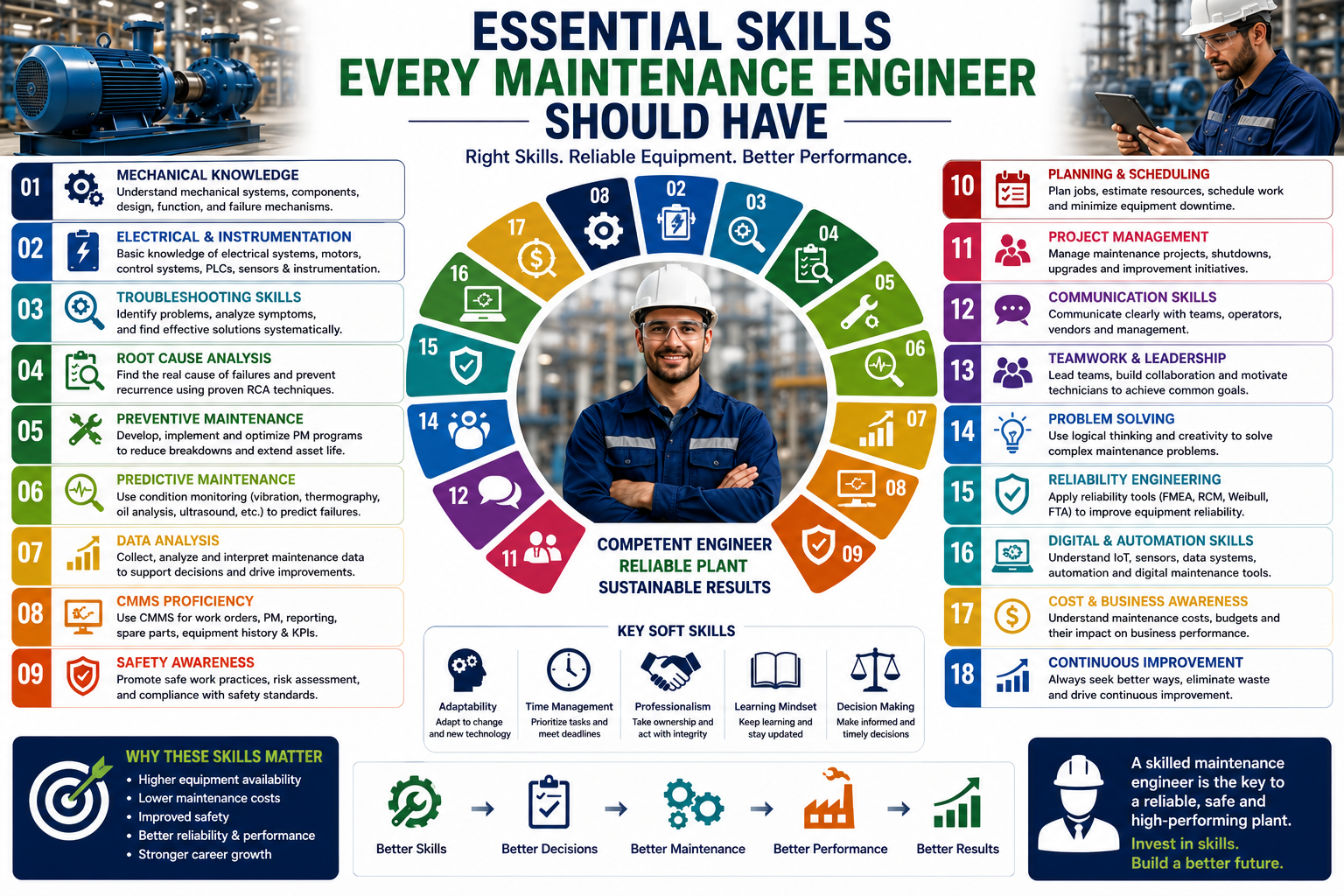
Maintenance engineering is one of the most important functions in modern industrial operations. Manufacturing plants, power stations, oil and gas facilities, mining operations, processing plants, utilities, and other industrial organizations depend on maintenance engineers to keep equipment safe, reliable, and available.
The role of a maintenance engineer is no longer limited to repairing broken machines. Modern maintenance engineering involves reliability improvement, preventive maintenance, predictive maintenance, data analysis, troubleshooting, project management, safety, and continuous improvement.
As industrial equipment becomes more automated and connected, maintenance engineers need a combination of technical, analytical, digital, and interpersonal skills.
This article explores the essential skills every successful maintenance engineer should develop.
1. Mechanical Engineering Knowledge
Strong mechanical knowledge is fundamental for many maintenance engineering roles.
Maintenance engineers should understand how mechanical systems operate and how their components can fail.
Important areas include:
- Bearings
- Shafts
- Gears
- Couplings
- Pumps
- Compressors
- Valves
- Conveyors
- Lubrication systems
- Hydraulic systems
- Pneumatic systems
Engineers should understand concepts such as friction, wear, alignment, balancing, loading, lubrication, and mechanical stress.
This knowledge helps engineers diagnose problems and select appropriate corrective actions.
2. Electrical and Instrumentation Knowledge
Modern industrial equipment is rarely purely mechanical.
Machines often combine mechanical, electrical, electronic, control, and instrumentation systems.
A maintenance engineer should therefore understand basic:
- Electrical circuits
- Motors
- Starters
- Variable-frequency drives
- Sensors
- Switchgear
- Control systems
- Instrumentation
- PLCs
- Electrical protection
A mechanical maintenance engineer does not necessarily need to become an electrical specialist, but understanding how electrical and control systems interact with mechanical equipment is extremely valuable.
3. Troubleshooting Skills
Troubleshooting is one of the most important skills for a maintenance engineer.
When equipment stops working, the engineer must identify the actual cause rather than simply replace components.
A structured troubleshooting process may include:
Identify the symptom → Gather information → Develop possible causes → Test the causes → Identify the root problem → Correct the problem → Verify the solution
Good troubleshooting requires technical knowledge, observation, logical thinking, and experience.
The best maintenance engineers do not rely entirely on guesswork.
4. Root Cause Analysis
Repairing a failed component does not necessarily eliminate the failure.
For example, if a bearing fails repeatedly, replacing the bearing may restore the machine temporarily.
But the underlying cause could be:
- Misalignment
- Poor lubrication
- Excessive loading
- Contamination
- Installation error
- Shaft problems
Root Cause Analysis (RCA) helps engineers identify why failures occur and prevent recurrence.
Common RCA techniques include:
- 5 Whys
- Fishbone diagrams
- Fault Tree Analysis
- Cause-and-effect analysis
- Failure Mode and Effects Analysis
Developing strong RCA skills allows maintenance engineers to move from reactive repair toward proactive reliability improvement.
5. Preventive Maintenance Knowledge
Maintenance engineers should understand how to develop and optimize preventive maintenance programs.
Preventive maintenance includes tasks performed at predetermined intervals to reduce the probability of equipment failure.
Examples include:
- Lubrication
- Inspection
- Cleaning
- Adjustment
- Calibration
- Component replacement
- Functional testing
However, more maintenance does not always mean better reliability.
Engineers should evaluate whether each preventive maintenance task actually addresses a known failure mode.
This helps prevent unnecessary maintenance and excessive downtime.
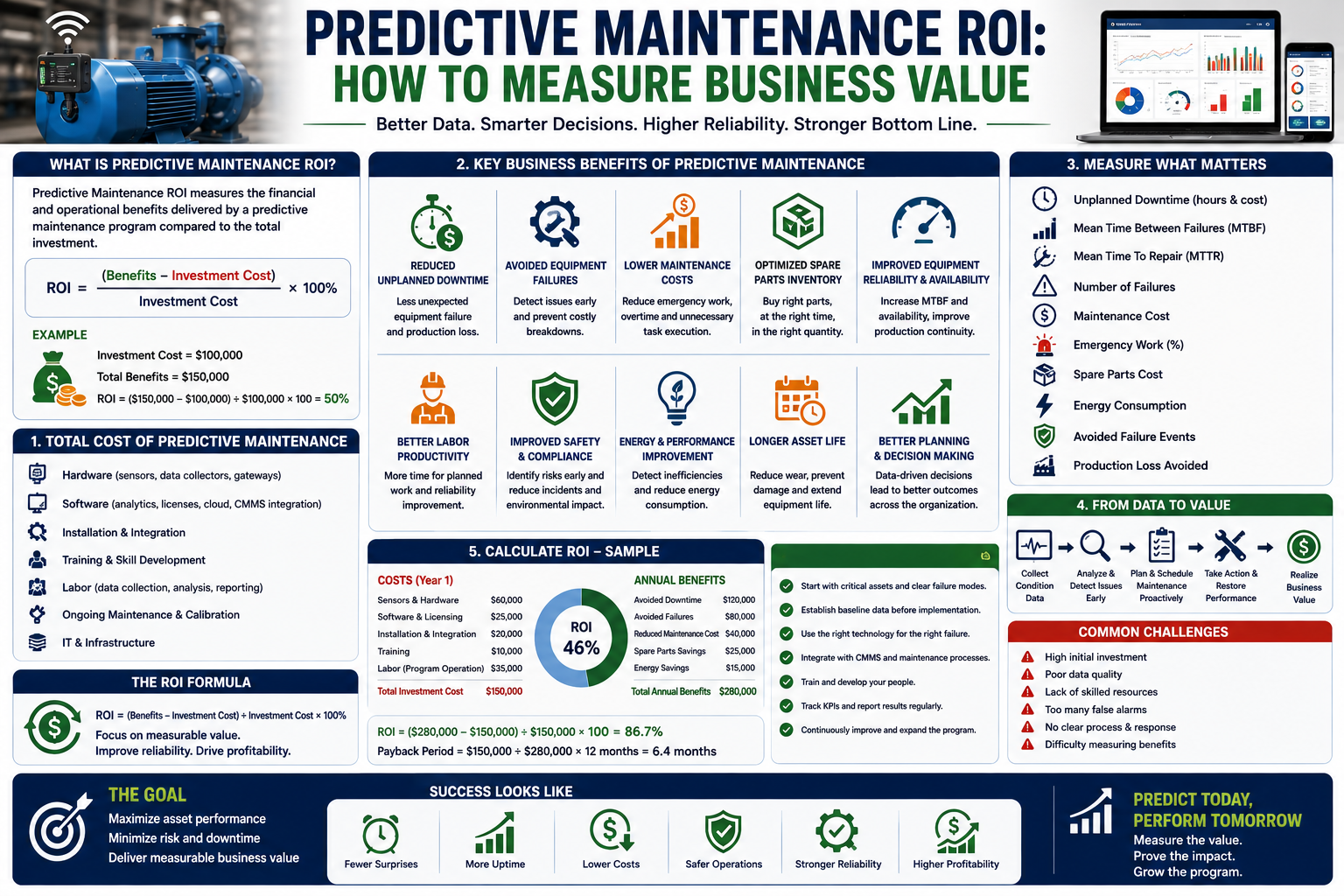
6. Predictive Maintenance Skills
Modern maintenance engineers should understand condition-monitoring technologies.
Important predictive maintenance techniques include:
- Vibration analysis
- Infrared thermography
- Oil analysis
- Ultrasonic inspection
- Motor current analysis
- Temperature monitoring
- Pressure monitoring
Engineers do not necessarily need to become certified specialists in every technology, but they should understand what each technique can detect and when it should be applied.
The ability to interpret condition-monitoring information can help engineers detect equipment deterioration before failure.
7. Data Analysis
Maintenance is becoming increasingly data-driven.
Engineers may work with information from:
- CMMS systems
- Sensors
- PLCs
- SCADA systems
- Condition-monitoring platforms
- Inspection reports
- Equipment history
- Production systems
Useful analytical skills include identifying trends, calculating maintenance KPIs, analyzing failure patterns, and comparing equipment performance.
Common maintenance metrics include:
- MTBF
- MTTR
- Availability
- Maintenance cost
- Planned maintenance percentage
- Schedule compliance
- Unplanned downtime
- Repeat failure rate
Data analysis allows engineers to make decisions based on evidence rather than assumptions.
8. CMMS Skills
A Computerized Maintenance Management System (CMMS) is an important tool for modern maintenance organizations.
Maintenance engineers should understand how to use CMMS platforms for:
- Work orders
- Preventive maintenance
- Equipment history
- Spare-parts management
- Maintenance scheduling
- Labor tracking
- Failure reporting
- KPI analysis
Good CMMS data is essential for reliability analysis.
If failure codes, equipment information, and work-order details are inaccurate, engineering decisions based on that information may also be inaccurate.
9. Safety Awareness
Safety is a fundamental responsibility of every maintenance engineer.
Maintenance activities can involve:
- Electrical energy
- Moving machinery
- Pressure
- Heat
- Chemicals
- Confined spaces
- Working at height
- Stored energy
Engineers should understand safe work practices and relevant site procedures.
Important concepts include:
- Lockout/Tagout
- Permit-to-work systems
- Risk assessment
- Job safety analysis
- Hazard identification
- Energy isolation
- Personal protective equipment
Production targets should never take priority over safe maintenance practices.
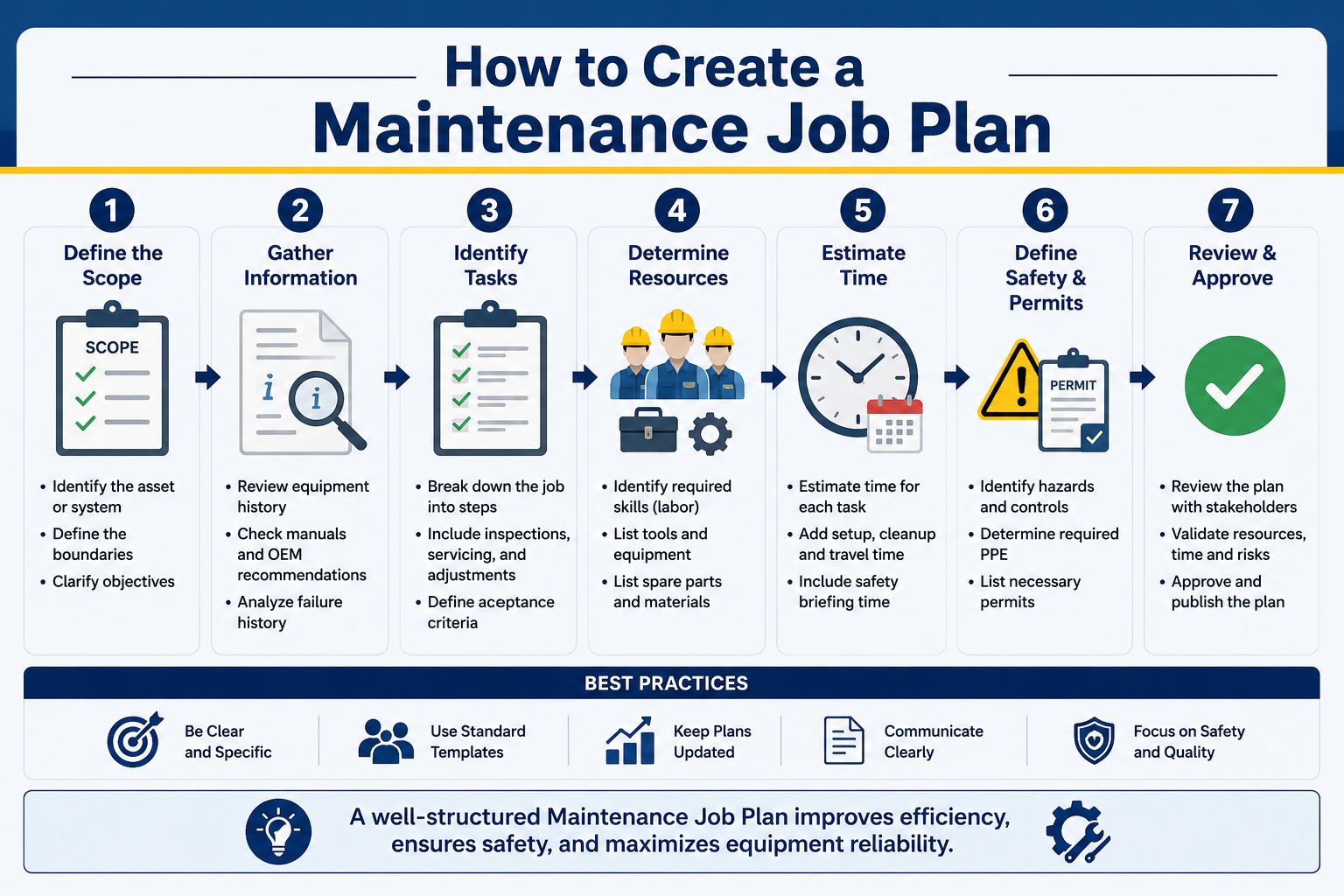
10. Planning and Scheduling
A technically excellent maintenance strategy can still fail if maintenance work is poorly planned.
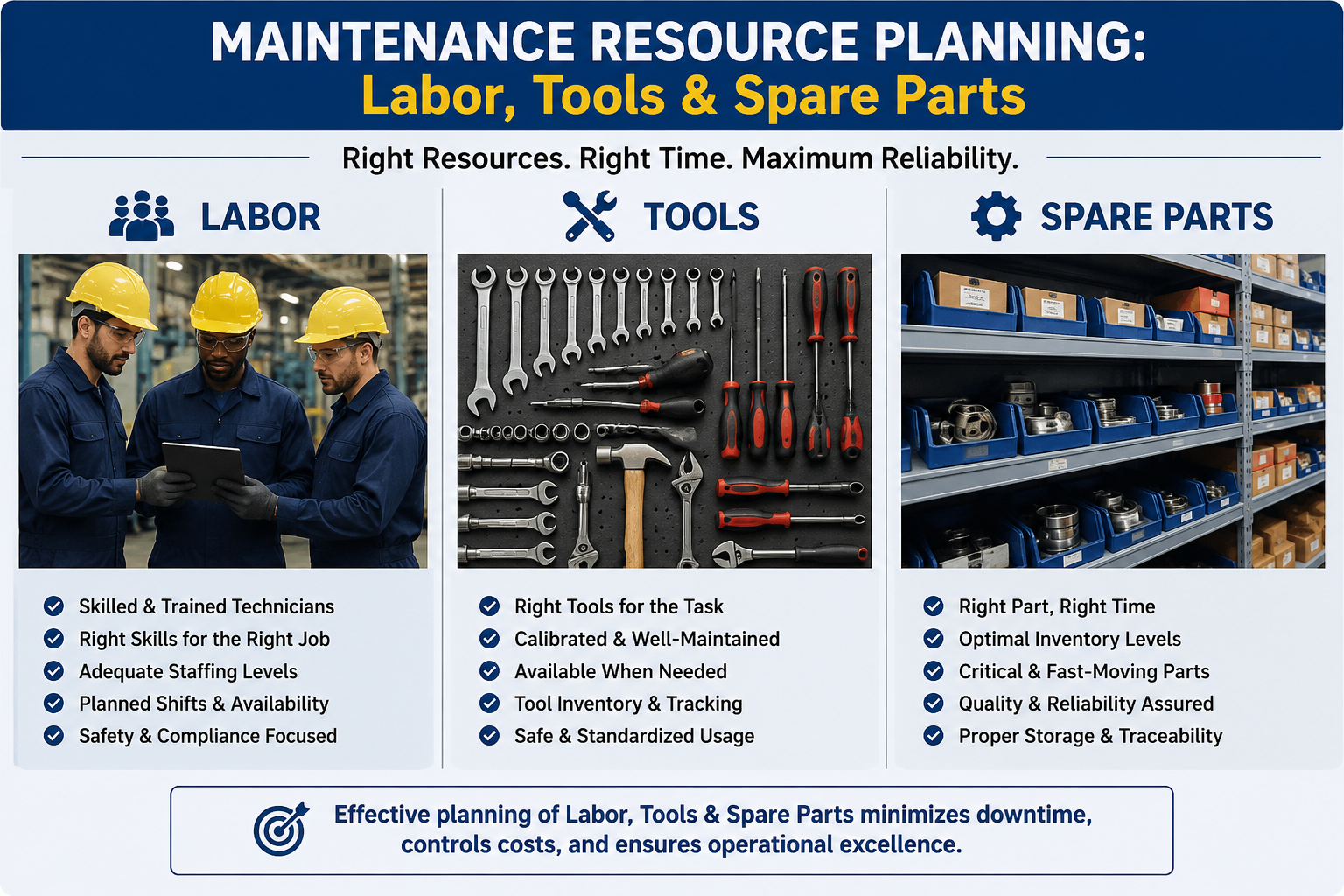
Maintenance engineers should understand how to plan work by identifying:
- Required labor
- Tools
- Spare parts
- Procedures
- Equipment access
- Safety requirements
- Estimated duration
- Isolation requirements
Scheduling then determines when the work should be performed based on equipment availability and production requirements.
Effective planning reduces delays and improves maintenance productivity.
11. Project Management
Maintenance engineers often participate in equipment upgrades, shutdowns, reliability projects, and plant modifications.
Project-management skills help engineers manage:
- Scope
- Cost
- Schedule
- Resources
- Contractors
- Risk
- Quality
- Documentation
For larger projects, engineers may need to coordinate multiple departments and external suppliers.
Basic project-management knowledge is therefore increasingly valuable.
12. Communication Skills
Technical knowledge alone is not enough.
Maintenance engineers regularly communicate with:
- Technicians
- Operators
- Production managers
- Engineering teams
- Procurement
- Contractors
- Suppliers
- Senior management
They need to explain technical problems clearly to people with different levels of technical knowledge.
For example, an engineer may need to explain a complex equipment failure to a manager in terms of:
Cause → Risk → Cost → Recommended action → Expected benefit
Clear communication makes technical decisions easier to understand and implement.
13. Teamwork and Leadership
Maintenance is a team activity.
Engineers often coordinate technicians, operators, contractors, planners, and other specialists.
Leadership skills can help engineers:
- Assign tasks
- Coordinate shutdowns
- Resolve conflicts
- Encourage safe work
- Train technicians
- Drive improvement projects
Leadership does not necessarily mean having a management title.
A maintenance engineer can demonstrate leadership by taking ownership of problems and helping the team find better solutions.
14. Problem-Solving and Critical Thinking
Industrial equipment failures are rarely identical.
Engineers must often work with incomplete information and changing operating conditions.
Critical thinking helps them evaluate:
- What happened?
- When did it happen?
- What changed?
- What evidence supports each possible cause?
- What information is missing?
- What action provides the greatest risk reduction?
Good engineers question assumptions and use evidence to support their decisions.
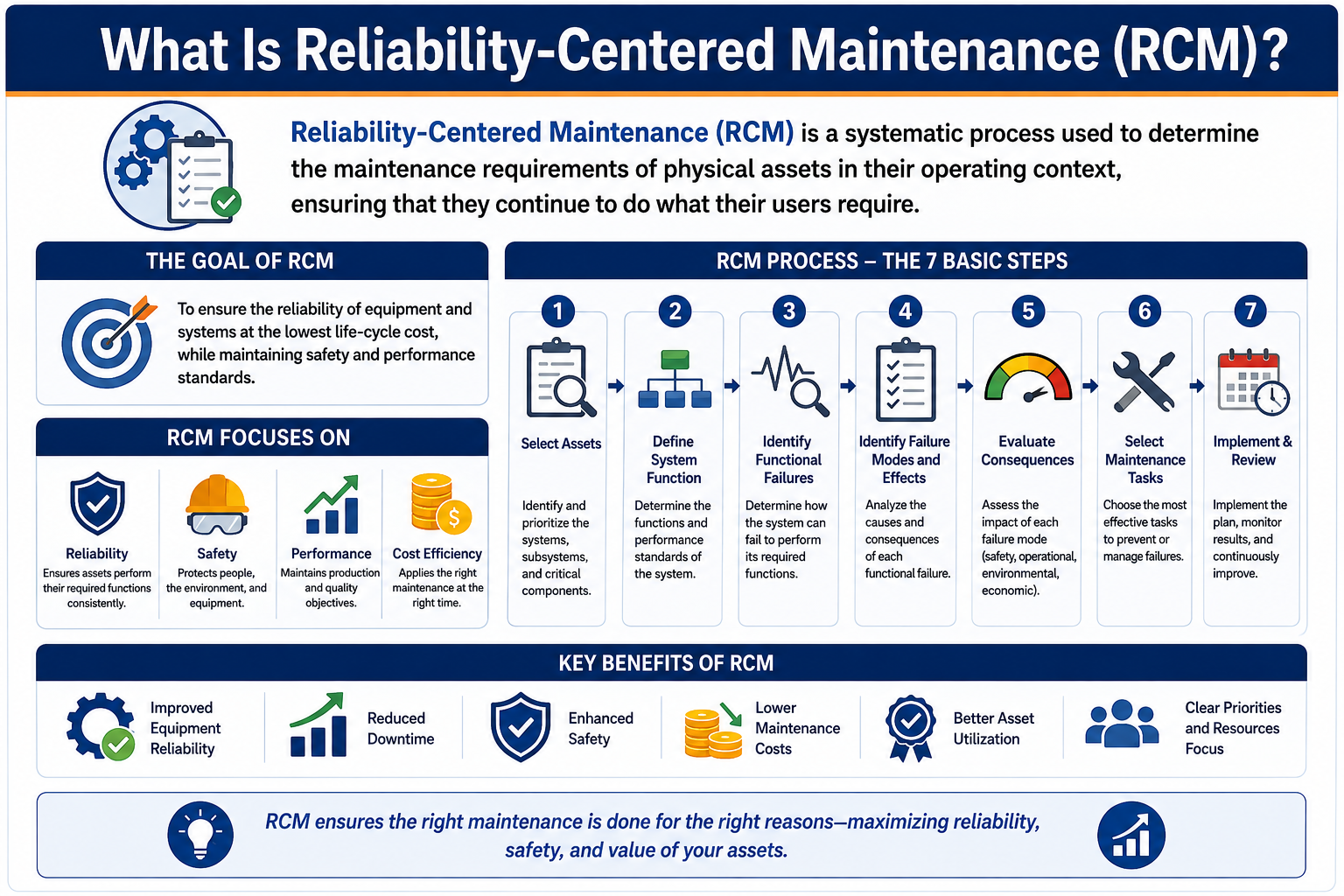
15. Reliability Engineering
Maintenance engineers increasingly need reliability engineering knowledge.
Important concepts include:
- Failure Modes
- FMEA
- Reliability-Centered Maintenance
- Weibull analysis
- Fault Tree Analysis
- Criticality analysis
- Failure distribution
- Asset lifecycle management
Reliability engineering shifts the focus from simply maintaining equipment to understanding and managing equipment failure behavior.
16. Digital and Automation Skills
Industrial facilities are becoming more connected.
Maintenance engineers may increasingly work with:
- IoT sensors
- Wireless monitoring
- Digital dashboards
- Cloud platforms
- AI-based analytics
- Digital twins
- Automated inspection systems
Engineers who develop digital skills will be better positioned to work with modern maintenance technologies.
The objective is not to become a software developer but to understand how digital tools can improve maintenance decisions.
17. Cost and Business Awareness
Maintenance decisions have financial consequences.
Engineers should understand:
- Maintenance costs
- Downtime costs
- Spare-parts costs
- Labor costs
- Lifecycle costs
- Repair vs replacement decisions
For example, repairing an old pump may initially appear cheaper than replacing it.
But if the pump repeatedly fails and causes expensive production downtime, replacement may provide better lifecycle value.
A strong maintenance engineer considers both technical performance and business impact.
18. Continuous Improvement Mindset
Industrial maintenance is never truly finished.
There will always be opportunities to improve:
- Equipment reliability
- Maintenance processes
- Safety
- Work quality
- Planning
- Costs
- Availability
Engineers should continuously ask:
What can we do better?
Methods such as Lean Maintenance, Kaizen, RCA, and reliability improvement programs can support continuous improvement.
How to Develop These Skills
Maintenance engineers can develop their capabilities through a combination of:
Practical Experience
Work directly with equipment and maintenance teams.
Technical Training
Develop knowledge in mechanical, electrical, instrumentation, and reliability engineering.
Certifications
Consider relevant professional certifications in reliability, maintenance, safety, or condition monitoring.
Data Analysis
Learn tools such as spreadsheets, dashboards, and basic statistical analysis.
Cross-Functional Experience
Work with production, engineering, procurement, safety, and operations teams.
Learning From Failures
Every equipment failure can provide an opportunity to improve technical knowledge.