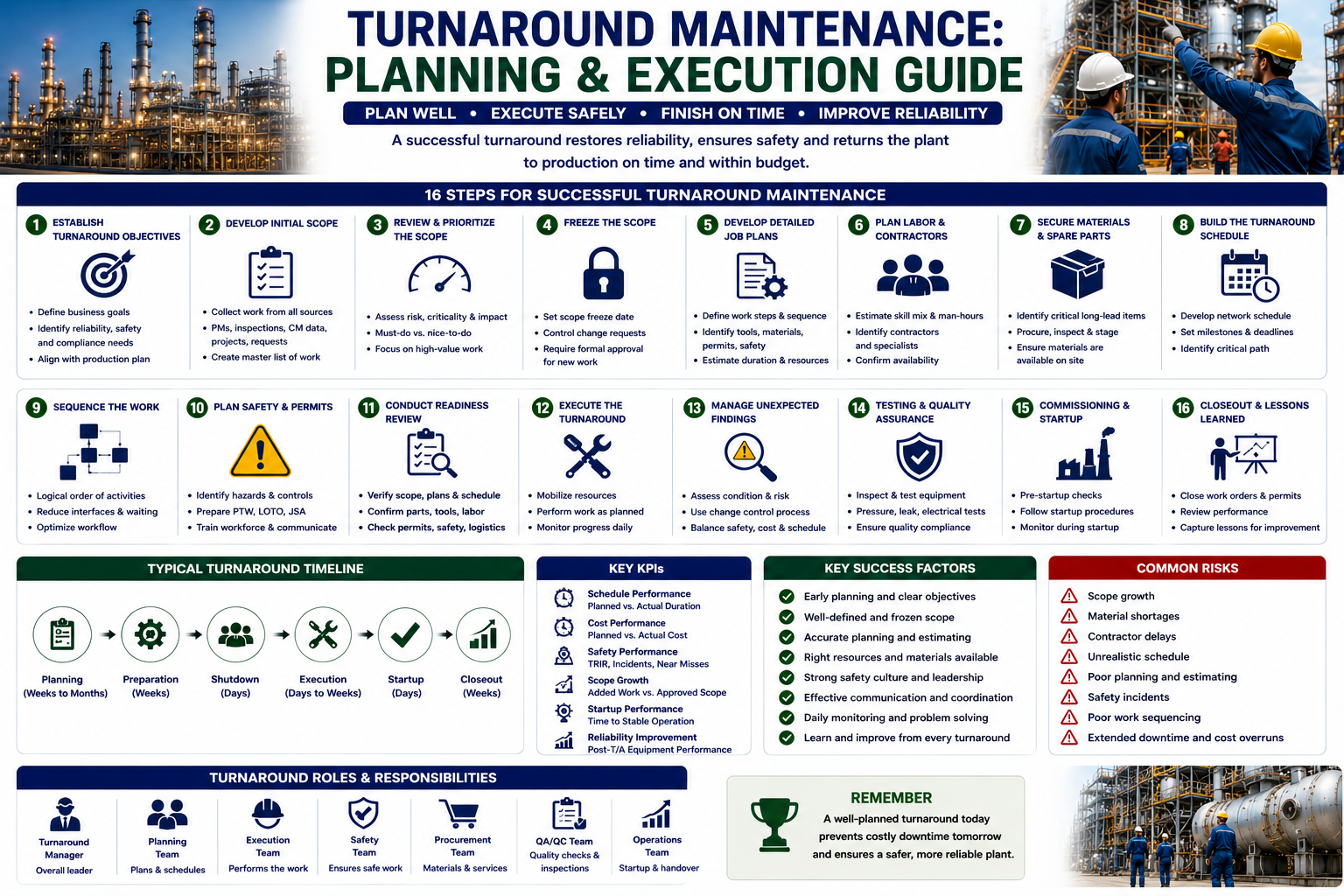
Turnaround maintenance is one of the most important and challenging activities in large industrial facilities. Unlike routine maintenance, a turnaround requires a planned and temporary shutdown of equipment or an entire production unit so that major inspections, repairs, replacements, overhauls, and improvement projects can be completed.
Industries such as oil and gas, petrochemicals, power generation, mining, chemicals, pharmaceuticals, and heavy manufacturing rely on turnarounds to maintain the long-term reliability and safety of critical assets.
Because production may be stopped for days or weeks, turnaround maintenance can be extremely expensive. Every additional hour of downtime can affect production, revenue, customer commitments, and operating costs.
For this reason, successful turnaround maintenance depends on early planning, accurate scope definition, strong scheduling, effective resource management, safety, and disciplined execution.
This guide explains how to plan and execute a successful maintenance turnaround.
What Is Turnaround Maintenance?
Turnaround maintenance is a planned shutdown during which industrial equipment is taken offline for major maintenance, inspection, repair, modification, cleaning, and refurbishment activities.
A turnaround is different from normal preventive maintenance because it often involves work that cannot be completed while equipment is operating.
Typical turnaround activities include:
- Equipment overhaul
- Pressure-vessel inspection
- Heat-exchanger maintenance
- Boiler inspection
- Pipeline repairs
- Valve replacement
- Pump and compressor overhaul
- Electrical maintenance
- Instrumentation testing
- Structural repairs
- Equipment modifications
- Cleaning and decontamination
- Statutory inspections
The primary objective is to restore equipment to a safe and reliable operating condition while completing the shutdown within the approved time and budget.
Turnaround Maintenance vs Routine Maintenance
Routine maintenance is generally performed during normal operation or short planned equipment outages.
Turnaround maintenance is more extensive.
| Routine Maintenance | Turnaround Maintenance |
|---|---|
| Frequent activities | Periodic major shutdown |
| Smaller work scope | Large work scope |
| Short equipment outages | Extended shutdown |
| Smaller teams | Large multidisciplinary teams |
| Limited coordination | Extensive coordination |
| Lower cost per event | High financial impact |
| Repeated maintenance tasks | Major inspections and overhauls |
Turnarounds often involve hundreds or thousands of individual activities, making detailed planning essential.
Why Turnaround Planning Is Important
A poorly planned turnaround can result in:
- Production delays
- Cost overruns
- Contractor shortages
- Spare-parts shortages
- Safety incidents
- Poor work quality
- Schedule delays
- Extended startup
- Equipment failures after restart
A well-planned turnaround provides the opposite benefits:
- Better schedule control
- Improved safety
- Higher workforce productivity
- Better resource utilization
- Reduced downtime
- Improved equipment reliability
- Better cost control
The goal is not simply to complete as much work as possible.
The goal is to complete the right work safely and efficiently within the shortest practical shutdown window.
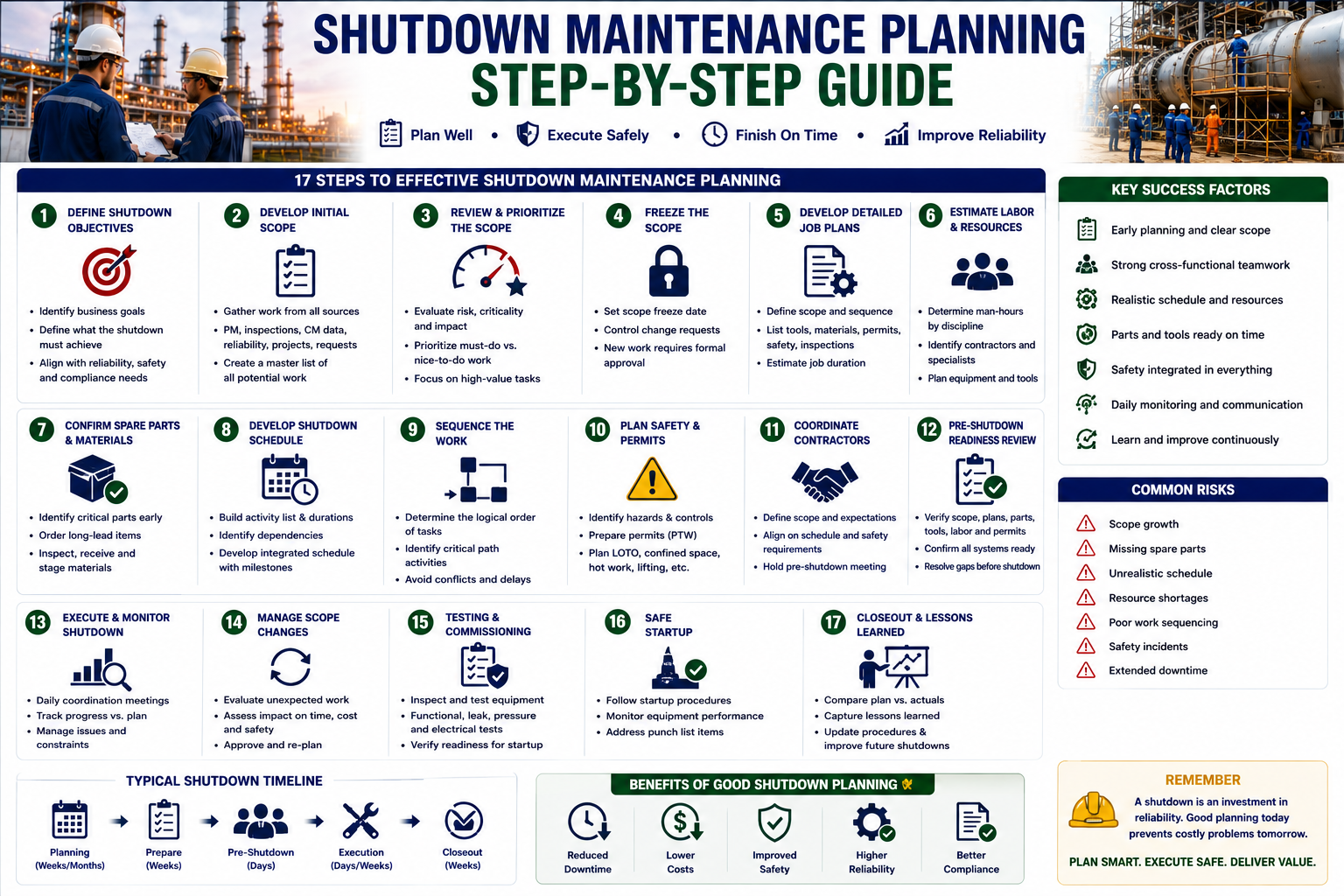
Step 1: Establish Turnaround Objectives
The first step is to define what the turnaround must achieve.
Objectives may include:
- Completing regulatory inspections
- Repairing critical equipment
- Replacing deteriorated components
- Performing major overhauls
- Eliminating known reliability problems
- Completing approved modifications
- Improving plant safety
- Increasing equipment operating life
Clear objectives provide direction for scope development and decision-making.
Step 2: Develop the Turnaround Scope
The scope represents all work proposed for the turnaround.
Potential sources include:
- Preventive maintenance
- Corrective work orders
- Inspection findings
- Reliability recommendations
- Equipment condition data
- Previous turnaround findings
- Regulatory requirements
- Engineering projects
- Safety observations
Each proposed job should be evaluated carefully.
Adding unnecessary work can increase shutdown duration without providing sufficient value.
Step 3: Prioritize the Scope
Not every job should receive the same priority.
Prioritization should consider:
- Safety risk
- Environmental consequences
- Equipment criticality
- Production impact
- Failure probability
- Regulatory requirements
- Cost of failure
- Availability of alternative equipment
Critical safety and statutory activities should receive appropriate priority.
Lower-value work can be deferred when completing it would create unnecessary schedule or cost risk.
Step 4: Freeze the Scope
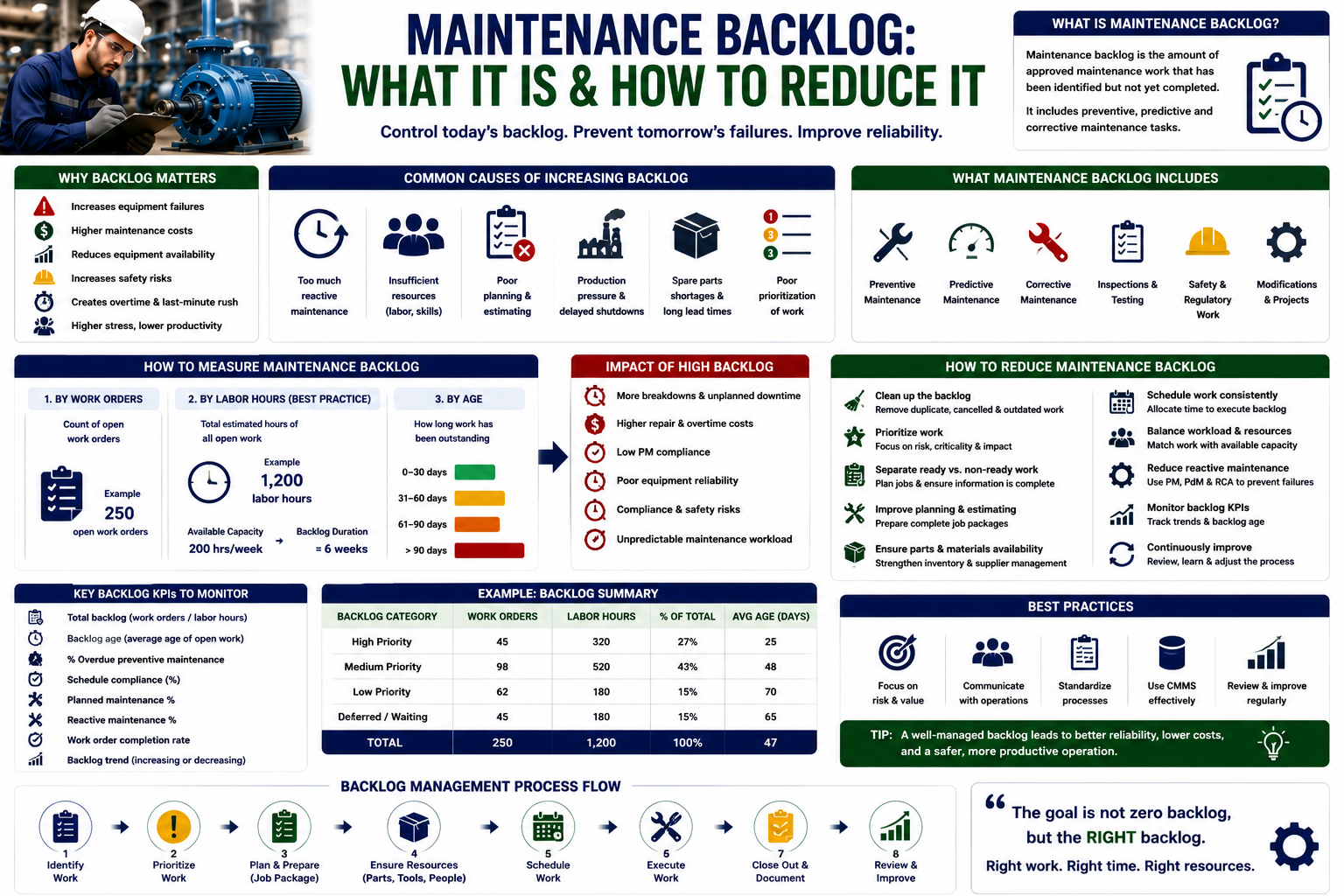
Scope growth is one of the biggest threats to turnaround performance.
After the scope has been reviewed and approved, organizations should establish a scope freeze date.
After this point, new work should require formal review and approval.
A change-control process should evaluate:
- Why the work is required
- Safety implications
- Reliability impact
- Cost
- Labor requirements
- Material requirements
- Schedule impact
This prevents uncontrolled scope growth.
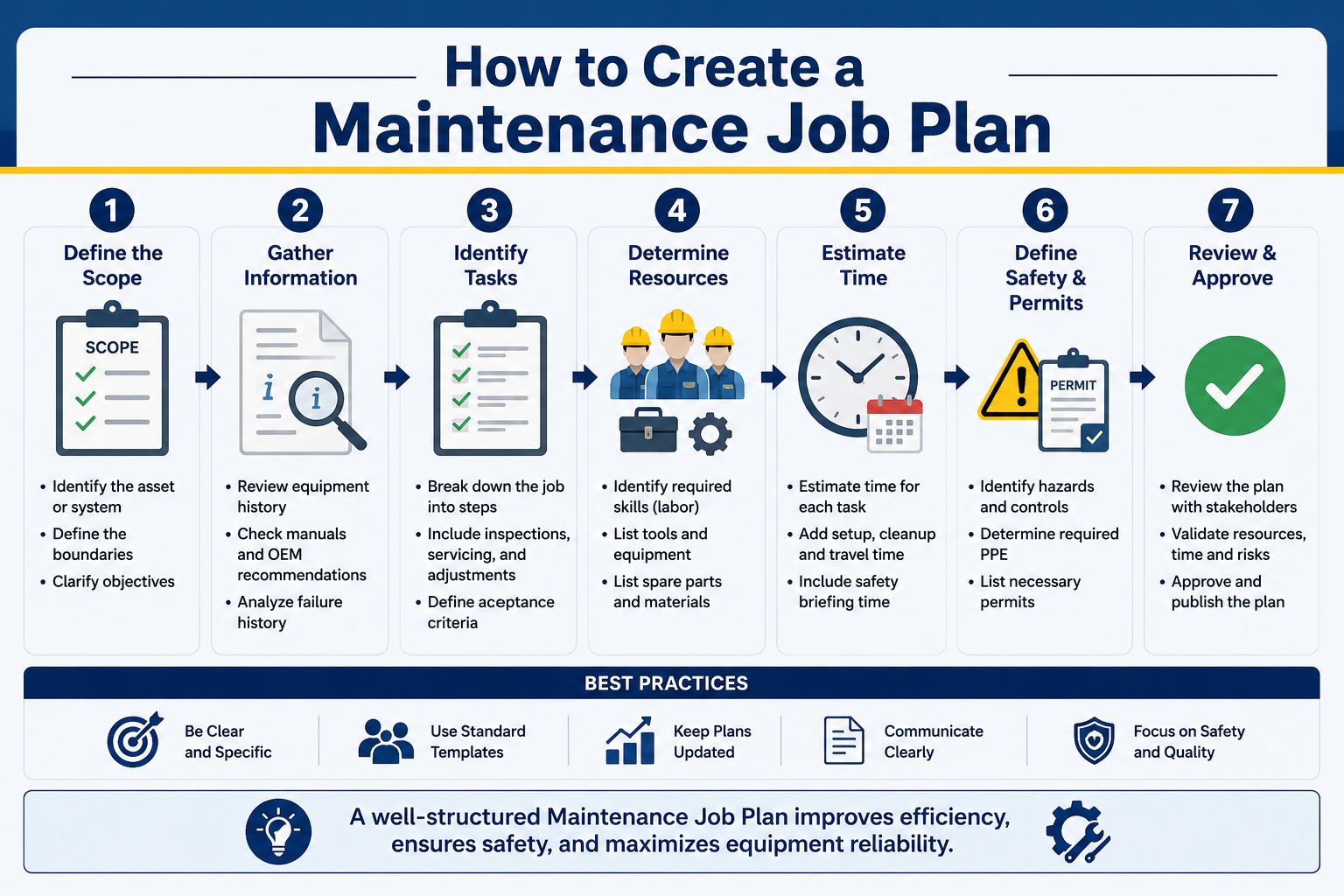
Step 5: Develop Detailed Job Plans
Each major turnaround activity should have a detailed job plan.
The plan should identify:
- Work scope
- Work sequence
- Required labor
- Tools
- Materials
- Equipment
- Permits
- Safety controls
- Inspection requirements
- Testing requirements
- Estimated duration
For example, a pump overhaul plan could include isolation, draining, removal, disassembly, inspection, component replacement, reassembly, alignment, lubrication, testing, and commissioning.
Good job plans reduce uncertainty during execution.
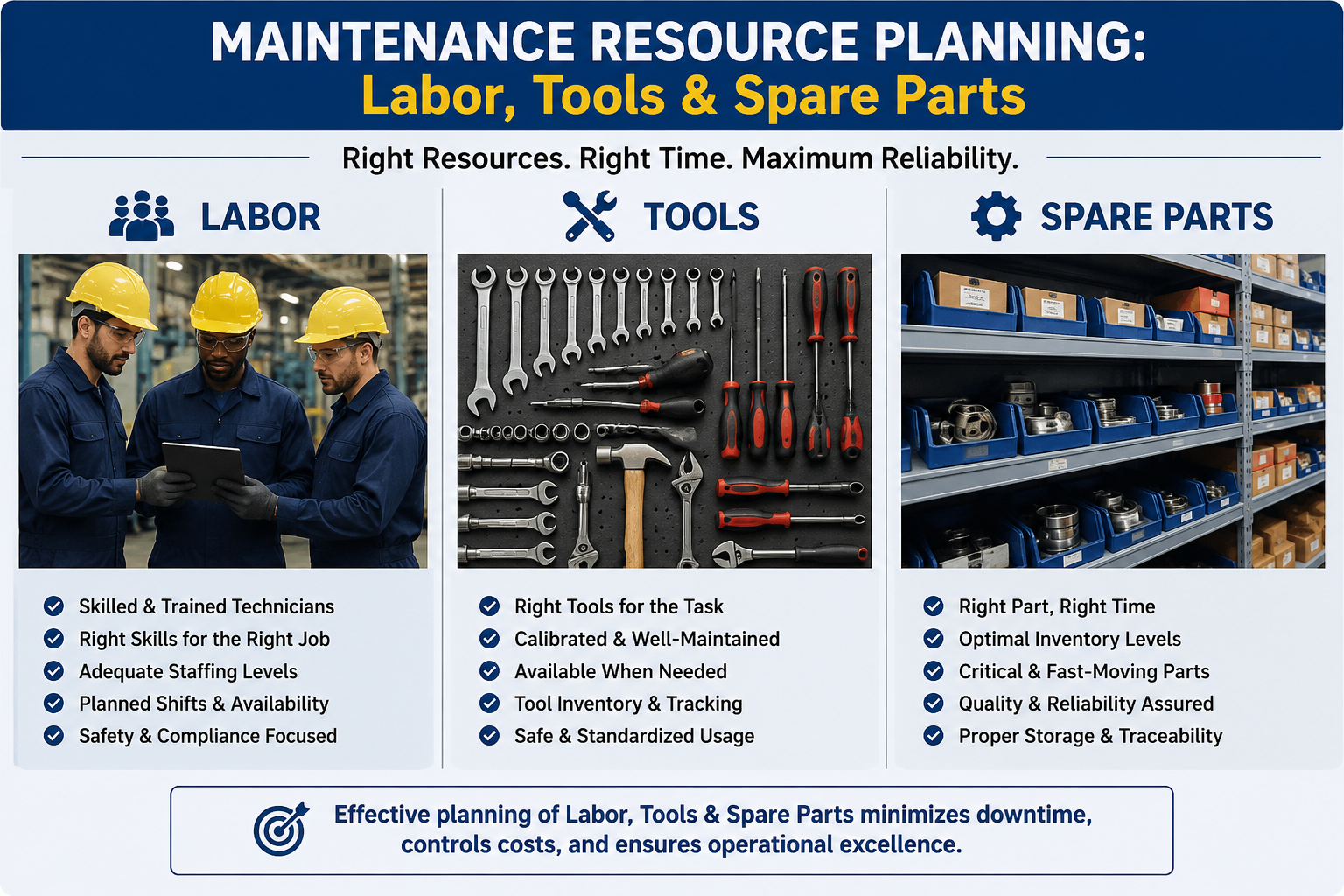
Step 6: Plan Labor and Contractors
Large turnarounds often require additional personnel.
Resources may include:
- Mechanical technicians
- Electrical technicians
- Instrument technicians
- Welders
- Inspectors
- Engineers
- Planners
- Supervisors
- Specialized contractors
Labor requirements should be estimated well before the shutdown.
Contractors should be selected based on:
- Technical capability
- Experience
- Safety performance
- Workforce availability
- Previous performance
- Cost
Step 7: Secure Materials and Spare Parts
Material shortages can significantly delay a turnaround.
Critical items should be identified early.
Examples include:
- Bearings
- Mechanical seals
- Valves
- Gaskets
- Fasteners
- Pipes
- Electrical components
- Instrumentation
- Lubricants
Long-lead items should be ordered well in advance.
Before the shutdown begins, materials should be received, inspected, stored, and made available at the required locations.
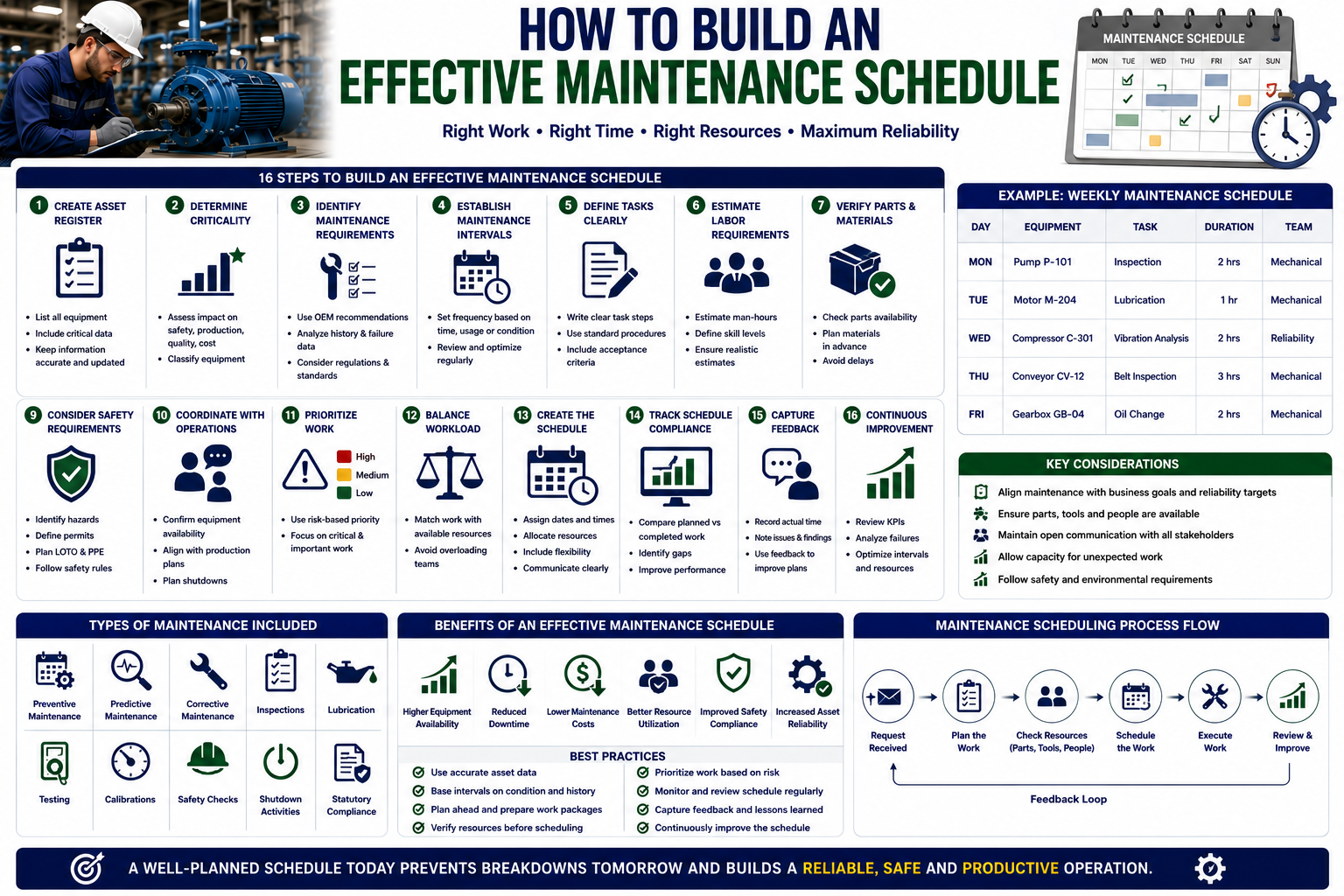
Step 8: Build the Turnaround Schedule
The turnaround schedule should integrate all planned activities.
It should identify:
- Start dates
- Finish dates
- Activity durations
- Dependencies
- Labor requirements
- Equipment requirements
- Milestones
- Commissioning activities
Critical-path analysis should be used to identify activities that directly influence the overall turnaround duration.
A delay to a critical-path activity can delay the entire startup.
Step 9: Sequence Work Properly
Work must be performed in a logical sequence.
For example:
Shutdown → Isolation → Decontamination → Access → Inspection → Repair → Testing → Reassembly → Commissioning → Startup
Poor sequencing can result in technicians waiting for equipment access or other activities to be completed.
Good sequencing reduces congestion and improves workforce productivity.
Step 10: Plan Safety
Safety must be integrated into every stage of turnaround planning.
Turnarounds can involve large numbers of workers performing different activities simultaneously.
Safety planning may include:
- Lockout/Tagout
- Permit-to-work
- Confined-space entry
- Gas testing
- Hot work
- Electrical isolation
- Working at height
- Lifting operations
- Excavation controls
- Emergency response
Daily safety meetings and field inspections can help maintain strong safety performance.
Step 11: Conduct a Readiness Review
Before the turnaround begins, conduct a formal readiness review.
Confirm that:
- Scope is approved.
- Job plans are complete.
- Materials are available.
- Contractors are mobilized.
- Tools are ready.
- Labor is available.
- Permits are prepared.
- Equipment isolation plans are complete.
- Safety requirements are understood.
- Temporary facilities are ready.
A turnaround should not begin until major readiness gaps have been addressed.
Step 12: Execute the Turnaround
During execution, progress must be monitored continuously.
Turnaround management teams should track:
- Completed work
- Work in progress
- Delayed work
- Labor utilization
- Material shortages
- Safety performance
- Quality issues
- Critical-path activities
Daily coordination meetings can help identify problems before they become major schedule threats.
Step 13: Manage Unexpected Findings
Unexpected defects are common during turnarounds.
Inspection may reveal:
- Severe corrosion
- Cracks
- Excessive wear
- Damaged components
- Structural deterioration
- Unexpected equipment conditions
These findings should be evaluated through formal change control.
The decision should consider:
Safety + Reliability + Cost + Schedule Impact
Critical work may need to be added, while lower-priority work may need to be removed to maintain the overall shutdown duration.
Step 14: Testing and Quality Assurance
Maintenance work should not be considered complete simply because components have been installed.
Appropriate testing may include:
- Pressure testing
- Leak testing
- Electrical testing
- Instrument calibration
- Alignment verification
- Vibration measurements
- Functional testing
- Safety-system testing
Quality inspections should be completed before equipment is released for commissioning.
Step 15: Commissioning and Startup
Startup should be carefully controlled.
Before restarting equipment, verify:
- Guards are installed
- Tools have been removed
- Temporary equipment has been removed
- Valves are correctly positioned
- Instruments are operational
- Safety systems are functional
- Work permits are closed
- Equipment is correctly assembled
- Punch-list items are reviewed
A controlled startup reduces the risk of immediate post-turnaround failures.
Step 16: Turnaround Closeout
After the equipment is returned to service, the turnaround should not immediately be considered finished.
The organization should review:
- Planned vs actual duration
- Planned vs actual cost
- Scope growth
- Labor performance
- Contractor performance
- Safety performance
- Equipment performance
- Startup problems
Lessons learned should be documented and incorporated into future turnarounds.
Important Turnaround Maintenance KPIs
Useful KPIs include:
Schedule Compliance
Measures how much planned work was completed according to schedule.
Cost Variance
Compares actual turnaround cost with the approved budget.
Scope Growth
Measures additional work added after the approved scope.
Safety Performance
Tracks incidents, near misses, and safety observations.
Contractor Performance
Evaluates productivity, quality, safety, and schedule performance.
Startup Reliability
Measures equipment performance after the turnaround.
Production Recovery Time
Measures how quickly the facility returns to stable production.
Common Turnaround Maintenance Mistakes
Organizations should avoid:
- Starting planning too late
- Poor scope definition
- Excessive scope growth
- Incomplete job plans
- Missing spare parts
- Unrealistic labor estimates
- Poor contractor coordination
- Weak safety controls
- Poor work sequencing
- Inadequate testing
- Rushing startup
- Failing to capture lessons learned
These issues can significantly increase turnaround duration and cost.
Best Practices for Successful Turnarounds
A successful turnaround should:
- Begin planning early.
- Establish clear objectives.
- Develop a risk-based scope.
- Freeze the scope at the appropriate time.
- Prepare detailed job plans.
- Secure materials and resources early.
- Use realistic labor estimates.
- Identify the critical path.
- Coordinate contractors carefully.
- Integrate safety into all activities.
- Conduct readiness reviews.
- Monitor progress daily.
- Control scope changes.
- Test equipment thoroughly.
- Manage startup carefully.
- Capture lessons learned.