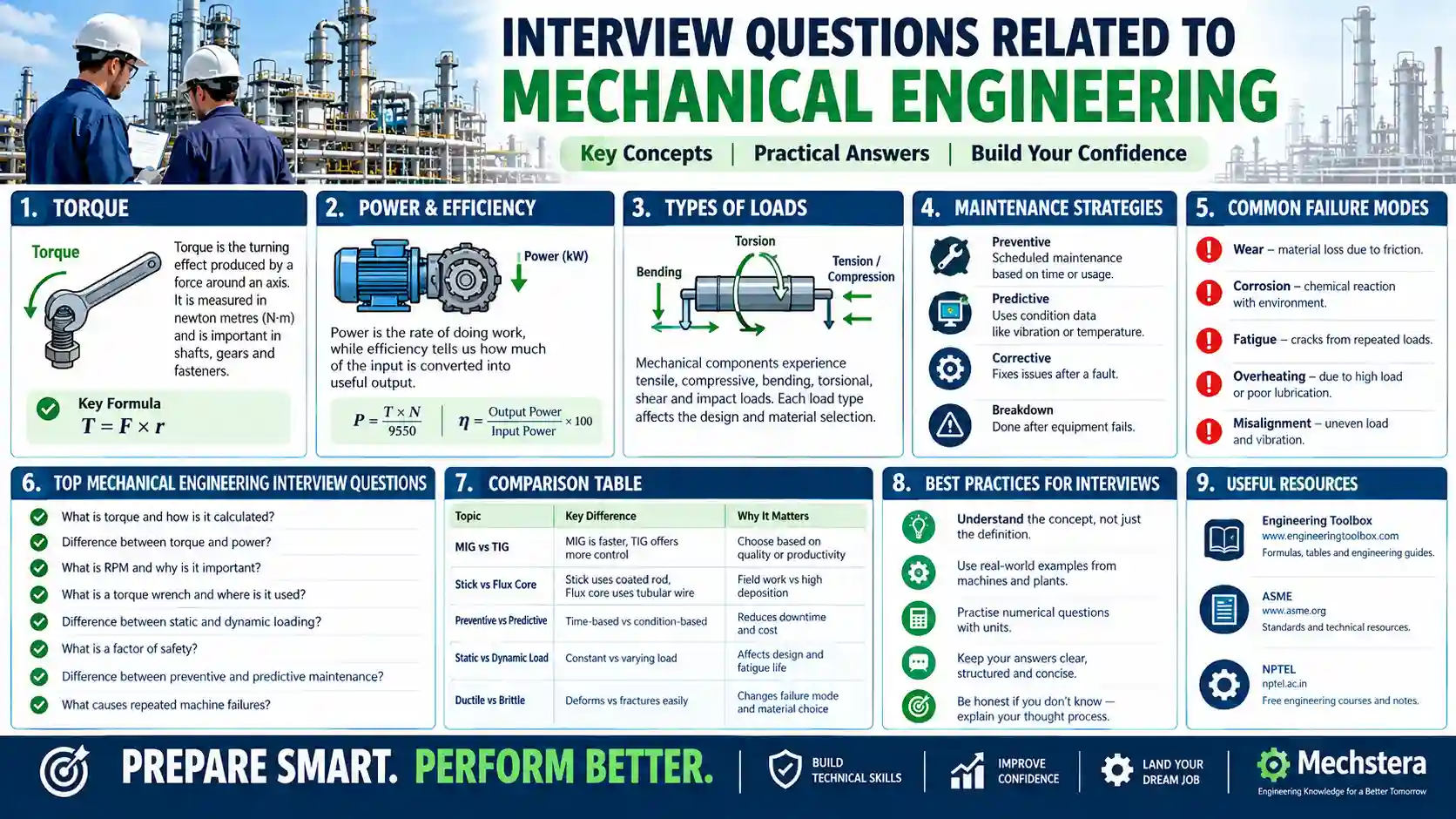
Mechanical engineering interviews often test more than textbook definitions. An interviewer may ask about torque, RPM, power, efficiency, loading, safety factors, maintenance, and mechanical failures to understand how well you connect engineering theory with real equipment.
For example, knowing the formula for torque is useful, but explaining how torque affects shaft design or fastener tightening demonstrates a deeper understanding. The same applies to maintenance. Defining preventive maintenance is straightforward; explaining when it is preferable to breakdown maintenance shows practical judgment.
This guide covers important interview questions related to mechanical engineering, with clear answers, essential formulas, comparison tables, and practical examples. Whether you are preparing for a fresher interview, a technical round, or an entry level maintenance position, these questions will help you revise core concepts and explain them more confidently.
At Mechstera, the goal is to make engineering concepts easier to understand and apply, rather than simply memorize definitions.
1. What Is Torque in Mechanical Engineering?
Torque is the turning effect produced by a force acting around an axis. It is commonly measured in newton metres (N·m) and is important when analysing shafts, gears, fasteners, motors, and rotating machinery.
The basic formula is:
T = F x r
Here, (T) represents torque, (F) is the applied force, and (r) is the perpendicular distance between the axis and the force’s line of action.
For example, applying a force of 50 N at a perpendicular distance of 0.2 m produces 10 N·m of torque. Increasing the lever arm increases torque when the applied force remains unchanged.
Interview tip: Explain that force produces a turning effect only according to its direction and perpendicular distance from the axis.
2. What Is the Difference Between Force and Torque?
Force is a push or pull that can change an object’s motion or deform it. Torque describes the rotational effect of a force about a particular axis.
Consider a spanner tightening a nut. The force applied by your hand creates torque because it acts at a distance from the nut’s axis. Applying the same force closer to the nut produces less torque than applying it at the end of the spanner, assuming the force direction is the same.
This distinction is useful in shaft design, bolted joints, lever mechanisms, and machine assembly.
3. Why Does a Gearbox Increase Torque and Reduce Speed?
A gearbox changes the relationship between rotational speed and torque. A reduction gearbox lowers output speed and can increase output torque, making it suitable for machinery that requires greater turning force.
In an ideal gearbox, power remains constant. In an actual system, friction and other losses reduce the power available at the output.
For instance, a motor may rotate too quickly to drive a heavily loaded conveyor directly. A suitable gearbox reduces the speed and increases the torque available at the drive shaft.
4. What Is the Difference Between Torque and Power?
Torque indicates the turning effect available at a shaft, whereas power describes how quickly work is performed or energy is transferred.
A motor with high torque at low RPM may suit a heavy starting load. Another motor may deliver comparable power at higher RPM but have lower torque. The correct choice depends on the load, speed requirement, and transmission arrangement.
For rotating machinery, power can be calculated using:

Suppose a motor produces 60 N·m at 1500 RPM.

This relationship is especially useful when checking motor ratings, selecting gearboxes, and evaluating drive systems.
5. What Does RPM Mean?
RPM stands for revolutions per minute. It measures how many complete rotations a rotating component makes in one minute.
RPM is relevant to electric motors, engines, pumps, fans, turbines, and machine tools. Rotational speed influences power, vibration, heating, bearing performance, and the number of fatigue cycles experienced by a component.
It is not the same as torque or power. These quantities are related, but each describes a different aspect of machine operation.
6. What Is Mechanical Efficiency?
Mechanical efficiency is the ratio of useful output power to input power. It is normally expressed as a percentage.
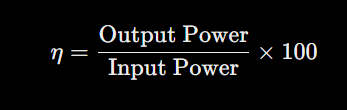
If a machine receives 5 kW of input power and delivers 4 kW of useful output power, its efficiency is 80%.
The remaining power is lost through effects such as friction, heat, vibration, leakage, and fluid drag. Identifying these losses helps engineers improve performance and control operating costs.
7. Why Can Mechanical Efficiency Decrease at Low Loads?
Some losses remain relatively constant even when a machine operates below its rated load. Bearing friction, seal drag, lubricant churning, and auxiliary power requirements may continue while useful output decreases.
As a result, losses account for a larger proportion of the input power at light loads. This is one reason correct equipment sizing matters. Selecting a machine solely because it has a high rated capacity can lead to unnecessary energy consumption if the normal operating demand is much lower.
8. What Are the Main Types of Mechanical Loads?
Mechanical loads describe the forces and moments acting on a component. Understanding the load type helps engineers estimate stress, deformation, and possible failure.
| Load type | What it does | Common engineering concern |
|---|---|---|
| Tensile load | Pulls a component apart | Yielding or fracture |
| Compressive load | Pushes a component together | Crushing or buckling |
| Bending load | Causes a component to curve | Bending stress and fatigue |
| Torsional load | Twists a component | Shear stress and torsional failure |
| Shear load | Acts parallel to a surface | Sliding or shear failure |
| Impact load | Applies force suddenly | High local stress and fracture |
Real components may experience several loads at once. A rotating shaft, for example, can experience both bending and torsion. An engineer must consider the combined stress condition instead of checking each load in isolation.
9. What Is the Difference Between Static and Dynamic Loading?
Static loading changes slowly enough that inertia effects can usually be neglected. Dynamic loading varies with time and may produce vibration, impact, or fluctuating stresses.
A stationary structure carrying a constant weight is a basic example of static loading. A rotating shaft exposed to changing forces is a dynamic loading example because the stress experienced at a particular point may change during operation.
The distinction matters because a component that can withstand a steady load may still fail under repeated loading. Engineers therefore assess fatigue, vibration, and operating cycles when designing equipment that experiences dynamic forces.
10. What Is Fatigue Failure?
Fatigue failure occurs when repeated or fluctuating stresses cause cracks to initiate and grow over time. The component may eventually fracture even when the applied stress is below the material’s static strength.
Cracks commonly start near notches, holes, surface defects, weld imperfections, or other stress concentration points. Repeated loading then extends the crack until the remaining material cannot carry the load.
For example, a rotating shaft may operate successfully for a long period before a fatigue crack causes sudden failure. Proper material selection, surface finish, alignment, and inspection can reduce the risk.
11. What Is a Factor of Safety?
The factor of safety provides a margin between a component’s capacity and its expected design demand. It helps account for uncertainty in loading, material properties, manufacturing quality, and operating conditions.
A simplified relationship is:

The exact definition depends on the design method and the failure criterion being considered. Engineers should use the relevant material limit and applicable design standard rather than treating every factor of safety as the same.
A larger margin is not automatically a better design. Excessive conservatism can increase weight and cost without addressing the real risk, such as poor alignment or a sharp notch. Good design identifies the uncertainty and controls it appropriately.
12. What Is the Difference Between a Service Factor and a Factor of Safety?
These terms are related but serve different purposes. A service factor accounts for operating conditions that may increase the demand placed on equipment, such as frequent starts, shock loads, or long operating hours. A factor of safety provides a margin between design demand and the selected capacity limit.
| Comparison | Service factor | Factor of safety |
|---|---|---|
| Main purpose | Accounts for service severity | Provides a design margin |
| Main consideration | Operating duty and load variation | Uncertainty and allowable capacity |
| Common use | Selecting motors, drives, and gearboxes | Designing shafts, structures, and components |
| Practical question | How demanding is the application? | How much margin does the design provide? |
The precise application of either factor depends on the equipment manufacturer’s guidance and the relevant engineering standard.
13. What Is the Difference Between Ductile and Brittle Materials?
Ductile materials can undergo considerable plastic deformation before fracture. Brittle materials generally fracture with relatively little plastic deformation.
Mild steel is commonly associated with ductile behaviour under ordinary conditions, while glass and many ceramics show brittle behaviour. However, temperature, loading rate, material condition, and manufacturing defects can affect how a material behaves.
This distinction influences design decisions. Ductile components may provide visible deformation before failure, whereas brittle fracture can occur with little warning. Engineers must account for the actual material properties and service environment.
14. What Is a Torque Wrench, and Why Is It Used?
A torque wrench is a tool designed to apply a specified amount of torque to a fastener. It helps control tightening and improve consistency in bolted joints.
When a preset click type torque wrench signals that the target has been reached, the user should stop applying force. Pulling further can exceed the intended setting. The tool should also be used according to its specified range, calibration requirements, and manufacturer’s instructions.
Torque control is important in automotive assembly, machinery installation, pressure equipment, and other applications where an incorrectly tightened joint can loosen or become damaged.
15. What Is a Torque Converter?
A torque converter is a fluid coupling used in many automatic transmission systems. It transfers power from the engine to the transmission while allowing controlled slip between the input and output.
Its main elements include the impeller, turbine, and stator. Under suitable operating conditions, the stator redirects fluid flow to help multiply torque when output speed is low. As operating speeds become closer, a lockup clutch in many designs can reduce slip and improve efficiency.
A torque converter provides smoother engagement than a rigid mechanical connection during starting and low speed operation.
16. What Is the Difference Between Reliability and Maintainability?
Reliability describes the likelihood that equipment will perform its required function without failure for a specified period under stated conditions. Maintainability describes how readily the equipment can be restored to working condition after a fault.
A reliable pump experiences fewer failures during operation. A maintainable pump may have accessible components, standard replacement parts, and a design that allows technicians to complete repairs efficiently.
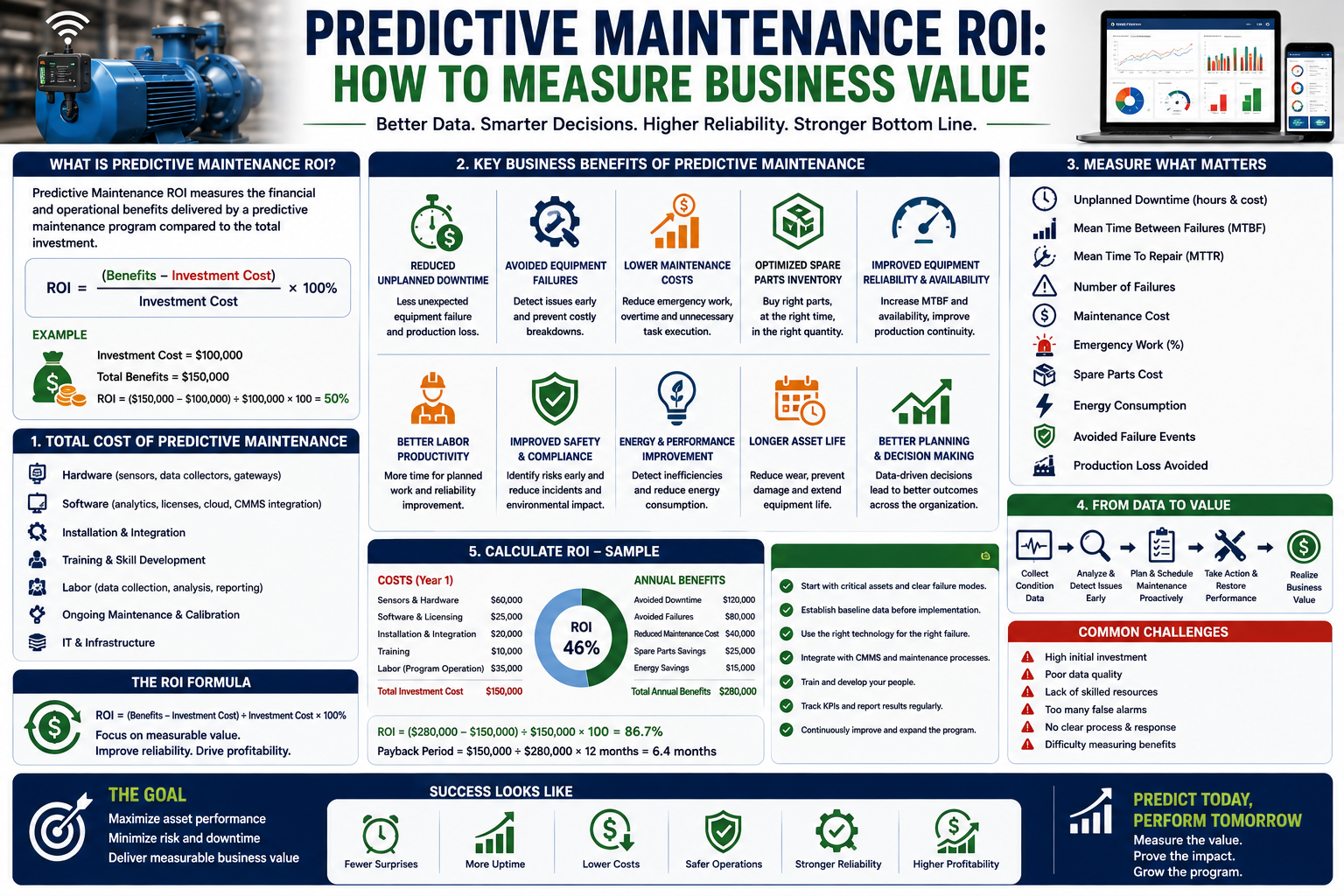
Availability is related to both concepts because equipment needs to operate reliably and be restored promptly when failures occur. Mean time between failures and mean time to repair are commonly used measures, although their interpretation depends on the equipment and data collection method.
17. What Are the Main Types of Maintenance?
Maintenance strategies differ according to equipment condition, failure consequences, and how predictable deterioration is.
Preventive maintenance involves planned work at scheduled intervals or after a defined amount of use. Predictive maintenance uses condition information, such as vibration measurements or temperature trends, to estimate when intervention may be needed. Corrective maintenance restores equipment after a fault is identified, while breakdown maintenance refers to work carried out after equipment has failed.
In practice, no single strategy suits every machine. A low cost component that is easy to replace may justify a different approach from a critical pump whose failure stops production or creates a safety risk.
18. What Is the Difference Between Preventive and Predictive Maintenance?
Preventive maintenance follows a planned schedule. Predictive maintenance uses measured equipment condition to determine when maintenance is appropriate.
| Comparison | Preventive maintenance | Predictive maintenance |
|---|---|---|
| Basis | Time or usage intervals | Equipment condition and trends |
| Typical activities | Scheduled inspection and lubrication | Vibration analysis and temperature monitoring |
| Main benefit | Reduces risk through planned intervention | Helps target work when deterioration is detected |
| Main limitation | May replace parts before necessary | Requires suitable monitoring and interpretation |
| Best fit | Equipment with established service intervals | Equipment with measurable degradation and meaningful failure consequences |
For example, lubricating a bearing at a defined service interval is preventive maintenance. Monitoring vibration and temperature to identify developing bearing damage is predictive maintenance.
19. What Causes Common Mechanical Failures?
Mechanical failures rarely have only one possible cause. Poor lubrication, misalignment, contamination, excessive loading, incorrect assembly, and unsuitable materials can interact and accelerate damage.
A bearing may overheat because of inadequate lubrication, but the underlying issue could also be incorrect lubricant selection, contamination, excessive preload, or shaft misalignment. Replacing the bearing without identifying the cause may result in another failure.
During an interview, explain both the visible symptom and the possible underlying cause. This demonstrates a systematic approach to troubleshooting instead of simply naming a faulty component.
20. How Do Engineers Identify Mechanical Problems Using Condition Monitoring?
Condition monitoring helps engineers identify changes in machine behaviour before a failure becomes severe. The most useful measurement depends on the equipment, operating conditions, and suspected failure mechanism.
Vibration measurements can reveal imbalance, misalignment, looseness, and some bearing defects. Temperature trends can indicate friction, overload, or lubrication problems. Lubricant analysis may reveal contamination and wear particles, while unusual noise can provide an initial indication that further inspection is needed.
No single signal confirms every fault. Engineers compare measurements with operating history, baseline values, manufacturer recommendations, and other available evidence before deciding on corrective action.
21. What Is the Difference Between Wear, Corrosion, and Creep?
Wear is the gradual removal or damage of material caused by interacting surfaces, particles, or other contact mechanisms. Corrosion involves material deterioration through chemical or electrochemical reactions with the surrounding environment. Creep is time dependent deformation under sustained stress, particularly at elevated temperatures.
These mechanisms create different maintenance and design challenges. Wear may require improved lubrication or surface protection. Corrosion may call for a suitable material, coating, or environmental control. Creep assessment becomes important for components exposed to sustained loads at high temperatures, such as certain pressure equipment and turbine parts.
Thermal cycling can also contribute to damage when repeated temperature changes produce stresses through expansion and contraction.
22. How Do You Choose the Right Maintenance Strategy?
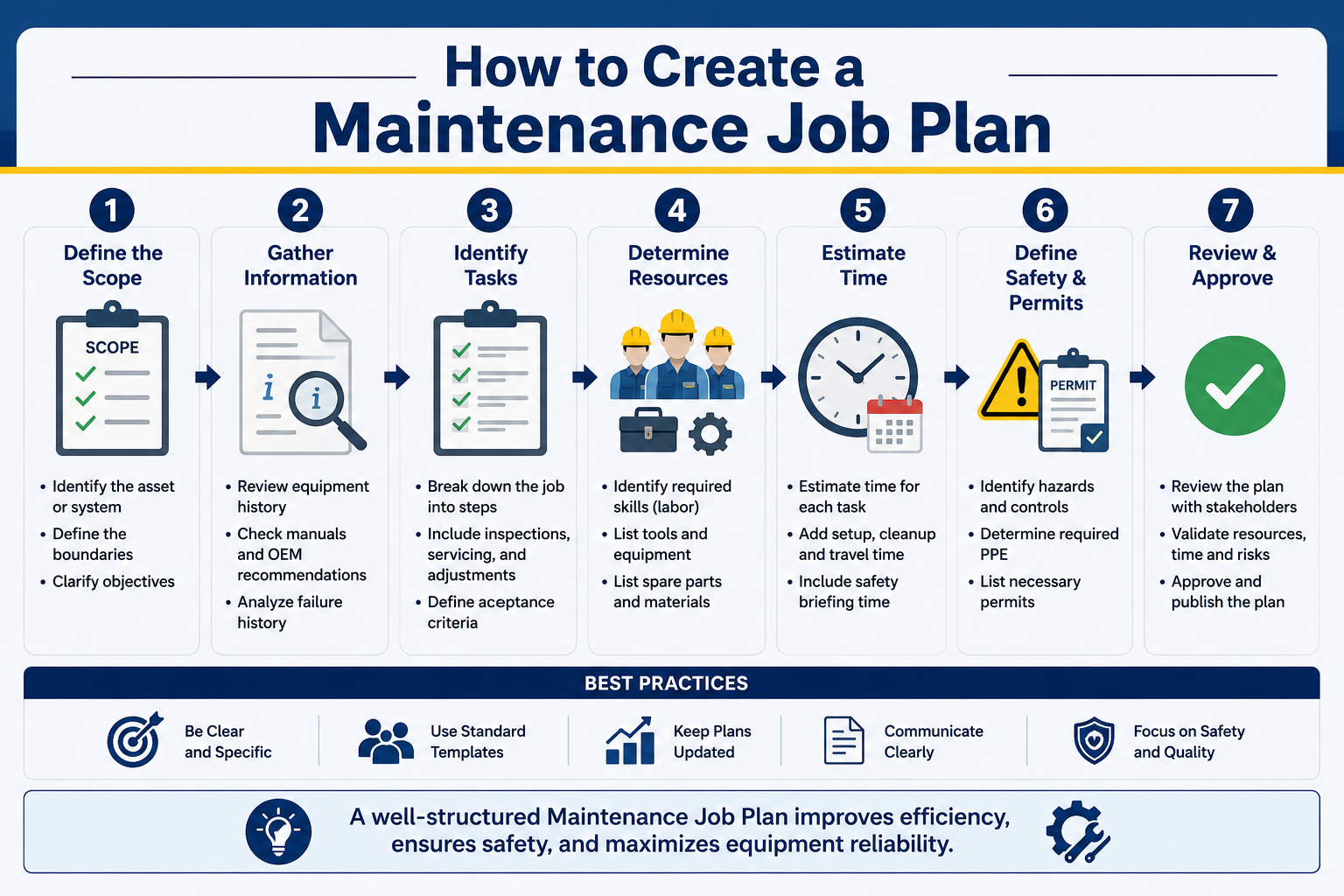
Choosing a maintenance strategy starts with understanding what happens when equipment fails. Engineers assess failure frequency, safety implications, repair costs, downtime, and whether deterioration can be detected before the machine stops.
The following practical steps help organise the decision:
- Identify the component’s function and the consequences of failure.
- Review maintenance records and identify recurring faults.
- Determine whether deterioration can be detected through inspection or monitoring.
- Compare planned maintenance costs with the potential cost of failure.
- Select the strategy, document the decision, and review its effectiveness using operating data.
For critical equipment, maintenance decisions should also follow site procedures, applicable regulations, and manufacturer guidance. A strategy that works for one machine may not be suitable for another, even when both perform similar tasks.
23. What Should You Do When the Same Machine Fails Repeatedly?
Repeated failures usually indicate that the original problem has not been fully addressed. A repair may restore operation temporarily without removing the condition that caused the damage.
For example, replacing a coupling may not solve a problem caused by shaft misalignment. Likewise, replacing a damaged bearing without correcting contamination or lubrication problems may only postpone the next failure.
A structured investigation includes reviewing the failure history, inspecting the damaged parts, checking operating conditions, identifying the root cause, and verifying the effectiveness of corrective action. Photographs, measurements, maintenance records, and operating data can help support the investigation.
In an interview, avoid saying that you would simply replace the failed component. Explain how you would confirm the fault, identify its cause, and prevent recurrence.
24. What Is the Difference Between Impact Loading and Cyclic Loading?
Impact loading occurs when a force is applied suddenly, creating a potentially high peak stress over a short period. Cyclic loading occurs when a component experiences repeated changes in stress over time.
A hammer striking a metal part is an example of impact loading. A rotating shaft exposed to repeating bending stress is an example of cyclic loading.
Both can cause damage, but the failure mechanisms and assessment methods may differ. Impact can produce local deformation or fracture, while repeated loading can initiate and propagate fatigue cracks. Some real components experience both conditions.
25. How Can You Improve the Efficiency of Mechanical Equipment?
Improving efficiency begins with identifying where useful energy is being lost. The appropriate solution depends on whether losses arise from friction, leakage, unnecessary throttling, poor alignment, unsuitable operating conditions, or equipment sizing.
For example, correcting shaft alignment can reduce unnecessary bearing and coupling loads. Selecting suitable lubricants can reduce friction, while repairing leakage in a fluid system can improve useful output. A pump or motor operating far from its intended duty point may also benefit from a proper system assessment.
Engineers should verify improvements through measurements whenever practical. A lower temperature or quieter operating sound may indicate a change, but power measurements and operating data provide stronger evidence of improved performance.
Frequently Asked Questions About Mechanical Engineering Interviews
1. Which mechanical engineering interview questions should freshers prepare first?
Freshers should begin with torque, power, RPM, efficiency, thermodynamics, strength of materials, manufacturing processes, engineering materials, machine design, and basic maintenance. They should also practise explaining formulas with units and simple numerical examples.
2. How should I answer technical questions when I do not know the complete answer?
Start with the part of the concept you understand. Explain the relevant principle, state any assumptions, and work through the reasoning. Avoid inventing facts or formulas. A clear explanation of your thought process is more useful than an unsupported guess.
3. Are numerical problems asked in mechanical engineering interviews?
Yes, depending on the position. Interviewers may ask candidates to calculate torque, power, efficiency, stress, or other basic engineering quantities. Practise using consistent units and explaining what the result means physically.
4. How can I prepare for a mechanical maintenance interview?
Review lubrication, bearings, couplings, pumps, gearboxes, alignment, vibration, preventive maintenance, predictive maintenance, and root cause analysis. Prepare examples that show how you would investigate a fault while following safety procedures.
5. What is the best way to practise mechanical engineering interview questions?
Study one topic at a time, explain the answer aloud, solve a related numerical problem, and connect the concept to an actual machine or component. Revisiting difficult questions and practising concise explanations can improve recall and confidence.
Conclusion
Preparing for interview questions related to mechanical engineering requires more than memorising definitions. Strong candidates connect fundamental concepts with practical decisions, including equipment selection, component sizing, troubleshooting, and maintenance planning.
Focus on understanding why a formula works, which units it requires, and what the result tells you about a real system. Practise explaining the difference between related concepts, such as torque and power or preventive and predictive maintenance. When answering failure related questions, discuss the cause as well as the repair.
For additional technical learning, explore the engineering guides available on Mechstera and use reliable technical references such as the Engineering Toolbox to review formulas and engineering principles.