Pick the wrong valve and your system will tell you about it, loudly. I learned that the hard way when a gate valve chattered itself to pieces on a half-open line. Ever wondered why plant engineers get so opinionated about valves? Because the right one keeps everything humming, and the wrong one ruins your week.
This guide covers the main types of industrial valves and their uses in plain English. Grab a coffee and let’s get going.
What Is a Valve, Anyway?
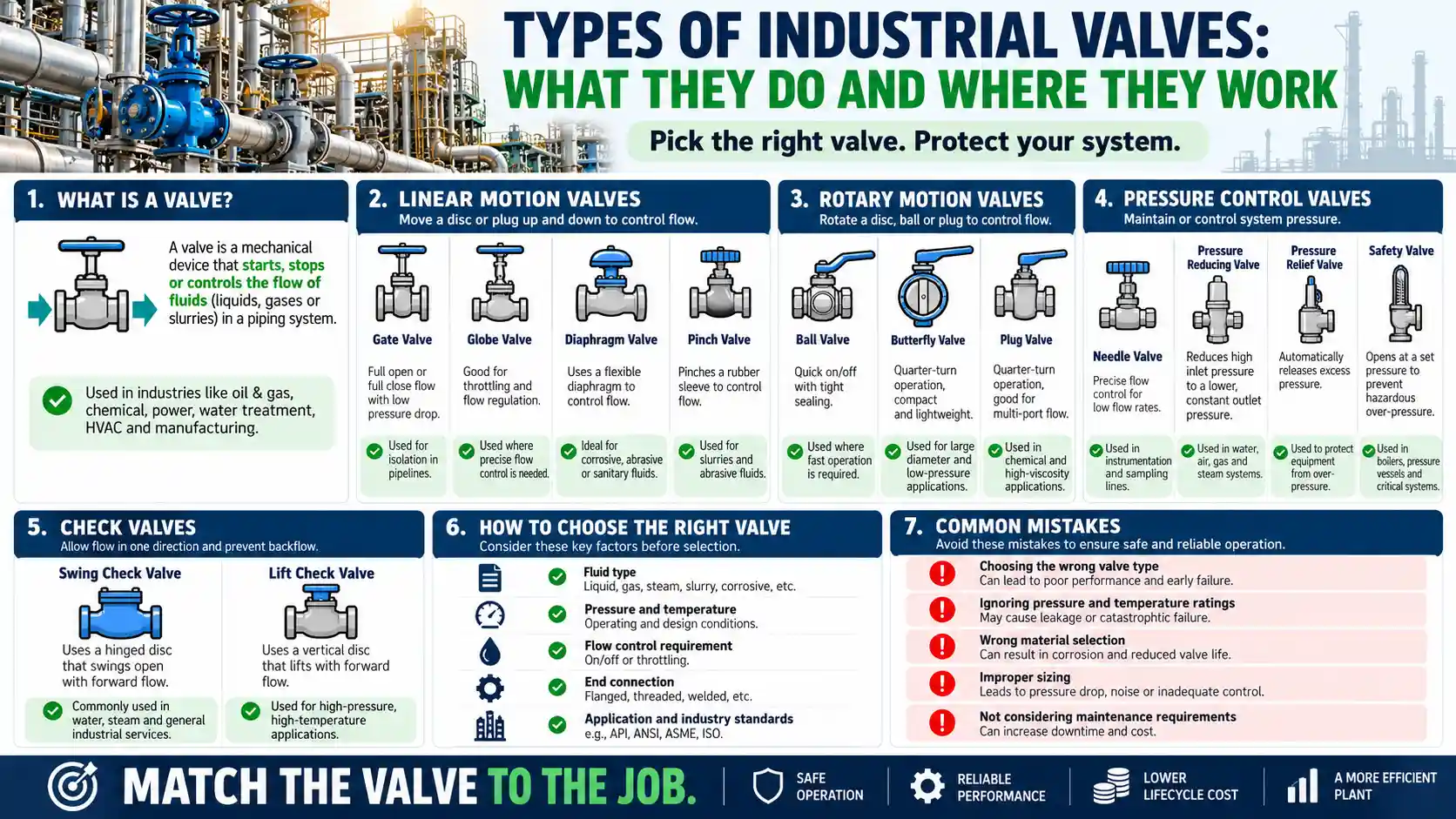
A valve is a mechanical device that controls and regulates the flow of fluid and pressure inside a system. You find valves in HVAC systems, office water lines, and even the fuel system of your car. Industrial plants, factories, and science labs rely on them every day.
Think of a valve as the bouncer of your piping system. It decides what gets in, how much gets in, and which way it travels. Choose well and the whole process runs smoothly. Choose badly and you’ll get to know your maintenance team personally.
What Do Valves Actually Do?
Every valve handles one or more of these jobs:
- Stopping and starting fluid flow
- Varying the amount of flow
- Controlling the direction of flow
- Regulating downstream pressure
- Relieving over-pressure in equipment or piping
Keep this list handy. Each valve below fits one or several of these roles, and the right pick depends on the job you need done.
Linear Motion Valves
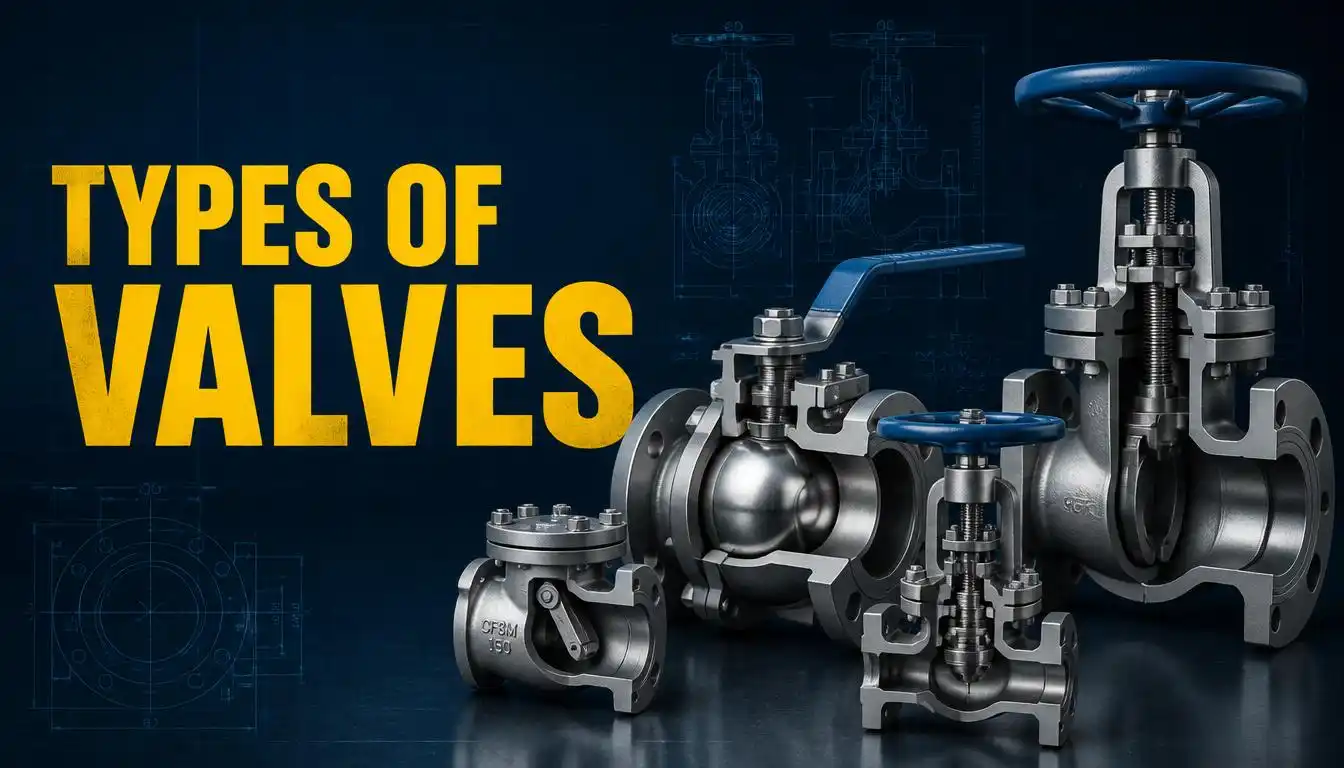
Linear motion valves move a disc or stem in a straight line to open or close the flow path. They tend to give you good control, though some pay for it with pressure loss. Here are the four you’ll meet most often.
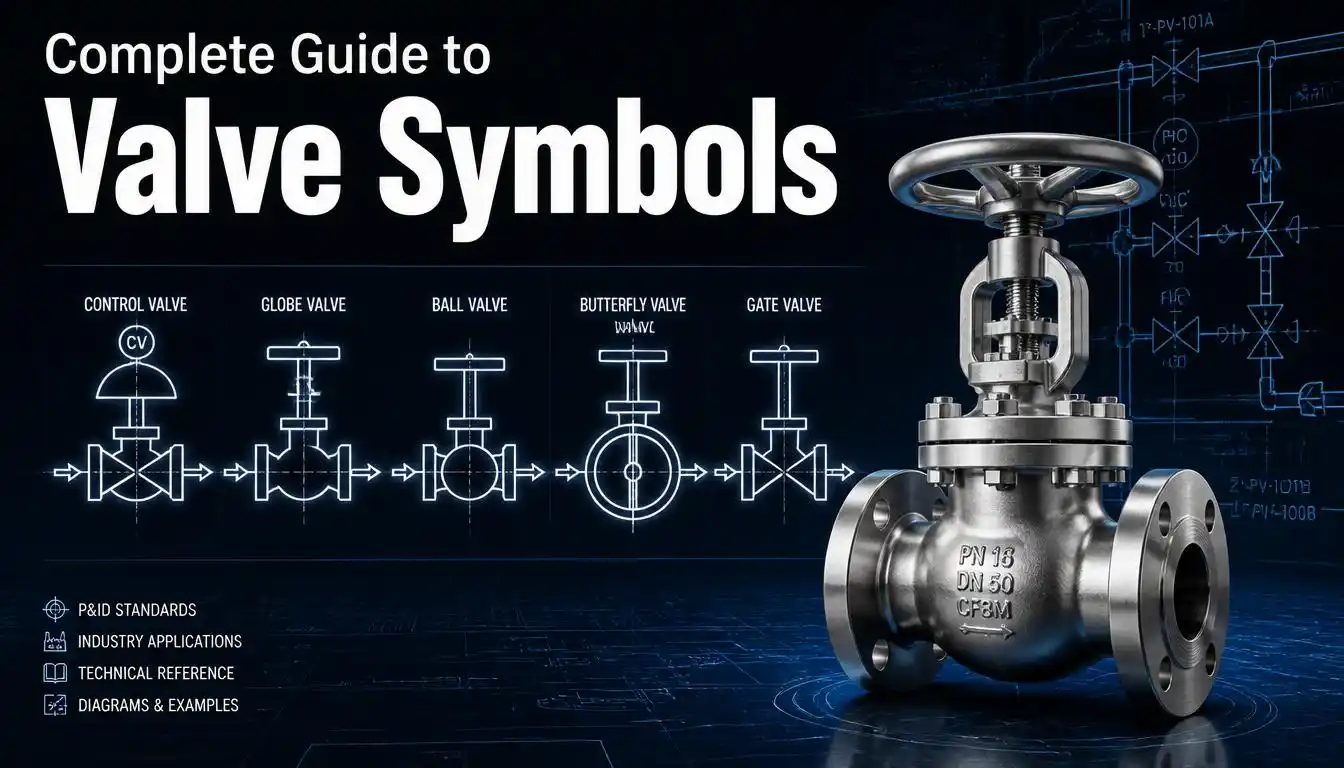
Gate Valve
A gate valve starts or stops flow, and that’s all it does. It doesn’t regulate or throttle. Run one partially open and it vibrates like crazy, which is exactly what happened to me. IMO, using a gate valve as a throttle is the classic rookie mistake.
You’ll find gate valves in the oil and gas industry, automotive work, pharmaceuticals, and manufacturing plants.
Globe Valve
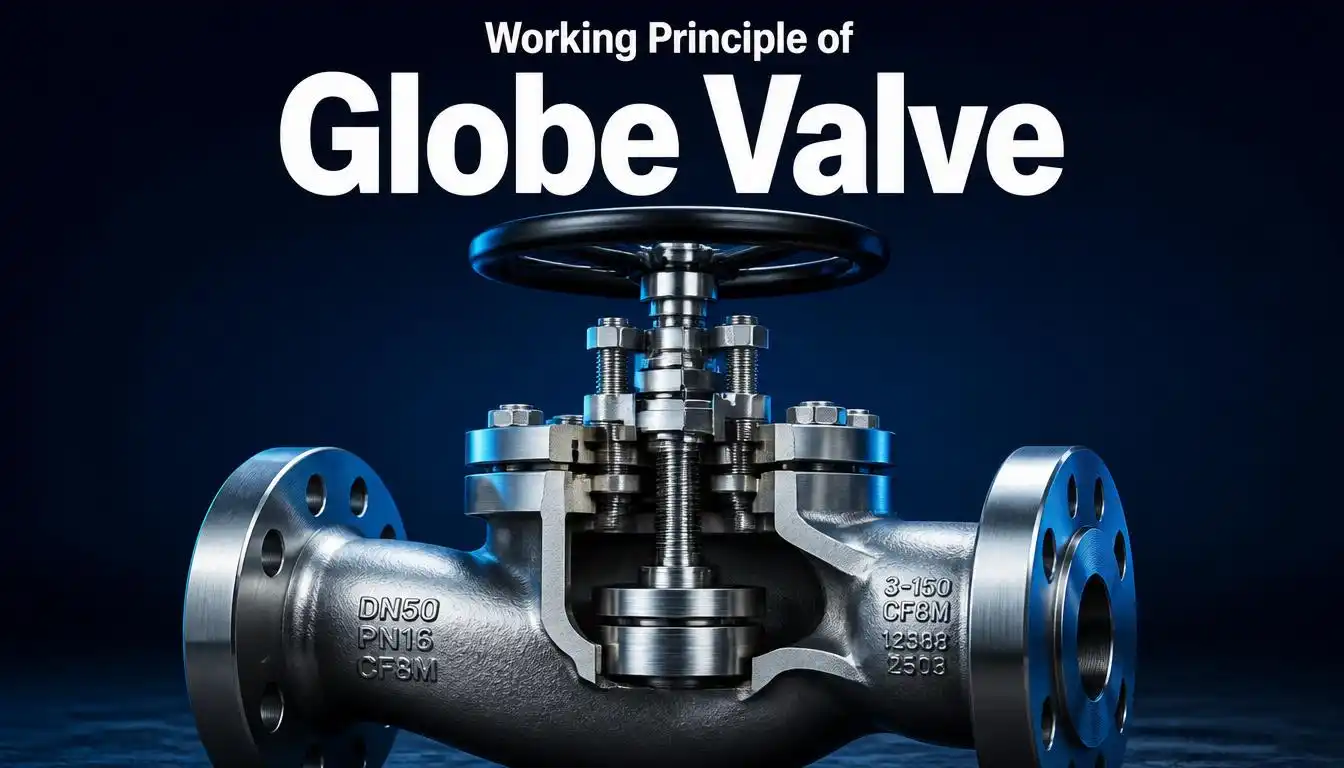
A globe valve stops, starts, and regulates flow. The disk moves perpendicular to the seat, which gives you real control over the flow rate. The trade-off? Obstructions and turns in the flow path cause head loss, so you lose some pressure.
Here’s how the two compare:
- Gate valve: minimal resistance when open, but on/off duty only
- Globe valve: excellent flow control, but more pressure drop
Plants use globe valves in water cooling systems, feedwater and chemical feed systems, and boiler and main steam vents.
Diaphragm Valve
A diaphragm valve starts, regulates, and stops flow. Its flexible disc presses against a seat in the valve body to form a tight seal. Because the diaphragm isolates the fluid from the working parts, it handles nasty stuff well.
It shines with corrosive fluids, fibrous slurries, and radioactive fluids. Operators also use it for vacuum service.
Pinch Valve
Picture a lab clamp squeezing rubber tubing. That’s the idea behind a pinch valve. It handles on/off and throttling duty, and the throttling range usually sits between 10 and 95 percent of rated flow capacity.
Pinch valves work best with slurries, liquids carrying lots of suspended solids, and systems that convey solids pneumatically. Why? Nothing snags inside the valve, because the fluid only touches the tube.
Rotary Motion Valves
Rotary valves turn a disc, ball, or plug to open and close the flow path. They usually run compact and quick to operate. Three types dominate here.
Ball Valve
A ball valve uses a ball-shaped disc to stop or start flow. It’s compact, needs no lubrication, and gives a tight seal with low torque. It’s also generally the cheapest valve configuration and costs little to maintain.
Do I love ball valves? Absolutely. They solve most simple shutoff problems without drama. You’ll see them in the oil and natural gas industry, chemical storage, and even residential plumbing.
Butterfly Valve
A butterfly valve stops, regulates, and starts flow with a disc that rotates inside the pipe. Compared with globe and gate valves, it saves weight, space, and money. That makes it a favorite when you have a big pipe and a small budget.
It also copes well with slurries and liquids carrying lots of suspended solids. FYI, when I need a large-diameter line shut off cheaply, a butterfly valve is usually my first call.
Plug Valve
The name comes from the disc, which looks like a tapered or cylindrical plug. The valve body gets machined to receive that plug. Turn it and the flow starts or stops.
People use plug valves for directional flow control, gas or liquid fuels, and slurries with suspended solids. They also suit low-pressure, low-temperature services.
Precision and Pressure Control Valves
Sometimes you don’t want on/off. You want fine control, or you want the valve to manage pressure on its own. These two do exactly that.
Needle Valve
A needle valve makes fine adjustments to flow. Its signature feature is a long, tapered, needle-like point on the stem. That shape lets you open or close the passage very gradually.
Engineers use needle valves in constant-pressure pump governors, automatic combustion control systems, and as reducing valves. Need to dial in a tiny flow? This is your valve.
Pressure Reducing Valve
A reducing valve automatically drops supply pressure to a preset level. It works as long as the supply pressure stays at least as high as your selected setting. High pressure at the valve inlet controls the operation.
The best part? It needs no external power source. You’ll spot reducing valves on high-pressure steam lines and in hydraulic presses, where they control ram pressure.
Check Valves: The Backflow Bouncers
Check valves let fluid move one way and block it from returning. Flow itself operates them, so no one has to touch a handle. Two designs cover most needs.
Swing Check Valve
A swing check valve allows full, unobstructed flow and closes automatically as pressure drops. It sits fully closed when flow reaches zero, which prevents backflow. Installers often pair it with a gate valve, since both give relatively free flow.
Use it on low-velocity lines. Skip it on lines with pulsating flow, because the disc will slap open and shut. Ever heard a check valve hammer in a pipe? It’s not a fun sound :/
Lift Check Valve
A lift check valve fits piping systems that already use globe valves for flow control. Its seating arrangement resembles a globe valve’s. You can install it in horizontal lines or vertical lines with upward flow.
It performs well with steam, air, gas, water, and vapor lines with high flow velocities. The catch is orientation. Install it the wrong way up and it simply won’t do its job.
Relief Valve vs. Safety Valve
These two sound identical, and plenty of people mix them up. Both prevent equipment damage by relieving accidental over-pressure. The real difference lies in how far they open at the set pressure.
Relief Valve
A relief valve opens only as much as needed to ease the over-pressure condition. It works mostly with incompressible fluids like water or oil. Think of it as a gentle pressure release.
Safety Valve
A safety valve pops fully open the instant pressure hits its setting. It stays open until the pressure falls below a reset pressure. Operators use safety valves mainly with compressible fluids such as steam and other gases.
Here’s the short version:
- Relief valve: opens proportionally, handles liquids
- Safety valve: snaps fully open, handles steam and gases
How Do You Pick the Right Valve?
Start with the job. Ask yourself what the valve must do, then match it to the fluid and the conditions. A quick cheat sheet helps:
What is the most common type of industrial valve?
Gate valves and ball valves are the most widely used in industrial piping systems. Gate valves dominate in large-diameter isolation service, while ball valves are preferred for smaller lines where quick on/off operation is needed.
Can a ball valve be used for throttling?
Standard ball valves are not recommended for sustained throttling because the partially open ball creates turbulent flow and uneven seat wear. Characterized ball valves with V-shaped ports are designed for throttling, but a standard ball valve should be limited to on/off service.
What is the difference between a relief valve and a safety valve?
A relief valve opens gradually in proportion to overpressure and is typically used for liquids. A safety valve pops fully open at the set pressure and is used for steam and gases. Both protect equipment from overpressure, but they respond differently based on the compressibility of the media.
How do I know what size valve I need?
Valve sizing depends on the required flow rate, allowable pressure drop, and the properties of the fluid. The flow coefficient (Cv) is the standard metric for comparing valve capacity. Undersizing causes excessive pressure drop; oversizing causes premature wear. Use the STAMPED method and consult manufacturer sizing data for accurate selection.
Then check the fluid. Corrosive, radioactive, or abrasive media rule out several options right away. Pressure, temperature, and budget finish the job of narrowing the list.
Final Thoughts on Types of Valves and Their Uses
Valves look simple, but they decide whether your system works or fails. Gate valves start and stop flow, globe valves regulate it, and ball and butterfly valves offer quick, affordable control. Needle valves give fine adjustment, check valves block backflow, and relief and safety valves protect your equipment from over-pressure.
Match the valve to the job and the fluid, and you’ll avoid most headaches. So look at your own system today. Which valve sits in the wrong spot, quietly planning its revenge? 🙂