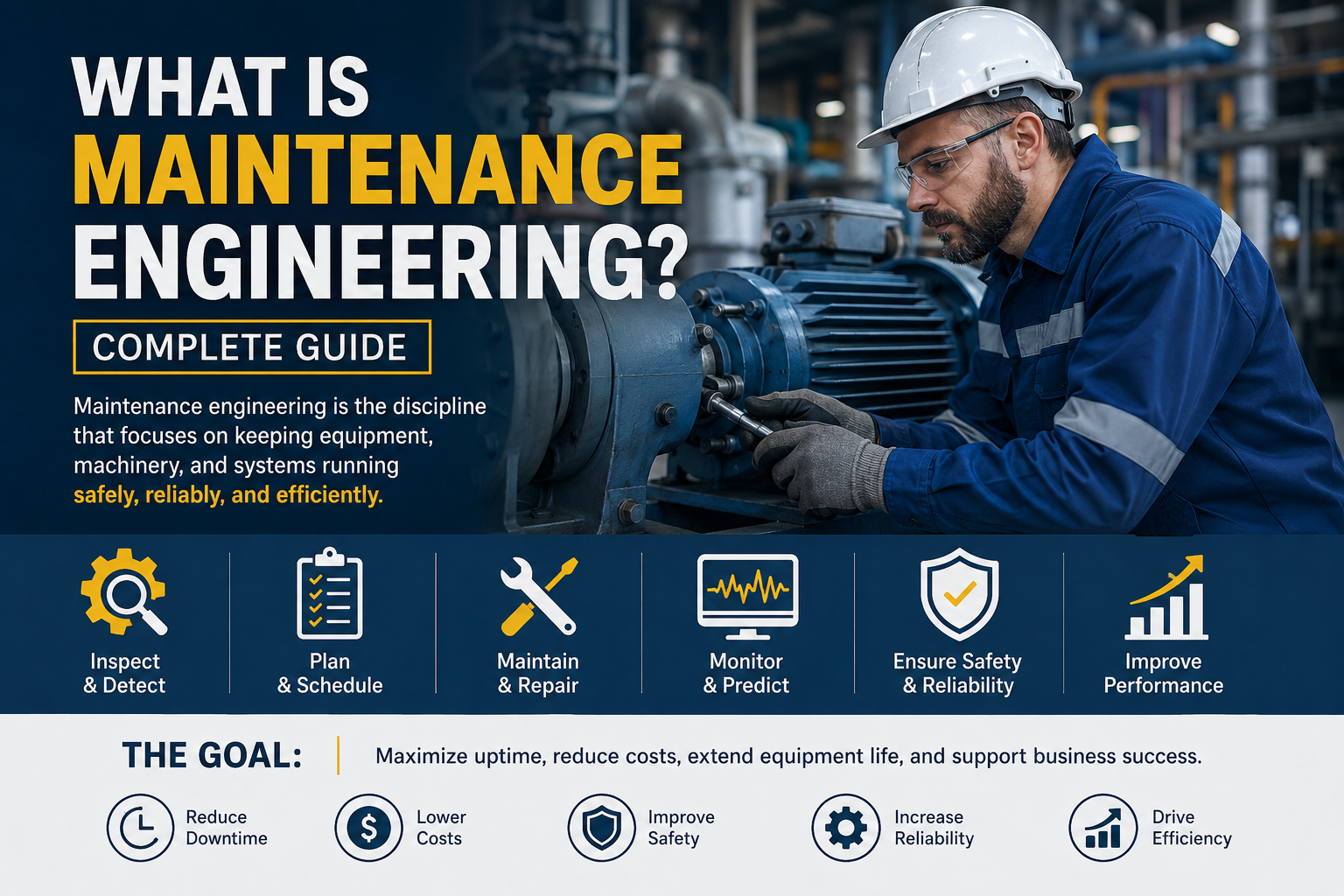
Maintenance engineering is one of the most important disciplines in modern industrial operations. Every manufacturing plant, power station, oil and gas facility, processing plant, commercial building, and large-scale industrial operation depends on equipment that must remain safe, reliable, and available.
When machines fail unexpectedly, organizations can face production delays, expensive repairs, safety risks, product-quality problems, and significant financial losses. Maintenance engineering helps prevent these problems by ensuring that equipment is properly inspected, maintained, repaired, and improved throughout its operational life.
But what exactly is maintenance engineering, and what does a maintenance engineer do?
This complete guide explains the fundamentals of maintenance engineering, its importance, major maintenance strategies, responsibilities, benefits, and its relationship with reliability and asset management.
What Is Maintenance Engineering?
Maintenance engineering is the engineering discipline concerned with maintaining, inspecting, repairing, optimizing, and improving equipment, machinery, systems, and physical assets so they can operate safely, efficiently, and reliably.
Maintenance engineering combines engineering principles, maintenance strategies, data analysis, planning, troubleshooting, and asset management to reduce equipment failures and improve operational performance.
The main objective is not simply to repair machines after they fail. Modern maintenance engineering focuses increasingly on preventing failures, identifying potential problems early, extending equipment life, and improving overall asset reliability.
A maintenance engineer may work with mechanical, electrical, instrumentation, hydraulic, pneumatic, structural, or automated systems depending on the industry.
Why Is Maintenance Engineering Important?
Industrial equipment operates under demanding conditions. Bearings wear, lubrication deteriorates, electrical components fail, seals leak, pumps lose efficiency, and rotating equipment can develop vibration problems.
Without an effective maintenance strategy, small defects can develop into major failures.
Maintenance engineering helps organizations:
- Reduce unplanned equipment downtime
- Improve equipment reliability
- Increase asset availability
- Extend equipment operating life
- Reduce maintenance and repair costs
- Improve workplace safety
- Maintain product quality
- Improve energy efficiency
- Optimize spare-parts inventory
- Support production targets
- Reduce the risk of catastrophic equipment failure
For example, detecting abnormal bearing vibration during a condition-monitoring inspection can allow a maintenance team to replace the bearing during a planned shutdown instead of dealing with an unexpected machine failure during production.
What Does a Maintenance Engineer Do?
The responsibilities of a maintenance engineer vary by industry and organization, but the role generally involves maintaining the reliability and performance of physical assets.
Typical responsibilities include:
1. Equipment Inspection
Maintenance engineers help establish inspection programs to identify signs of deterioration, wear, corrosion, overheating, vibration, leakage, or other abnormal conditions.
Regular inspection allows potential problems to be identified before they develop into serious failures.
2. Maintenance Planning
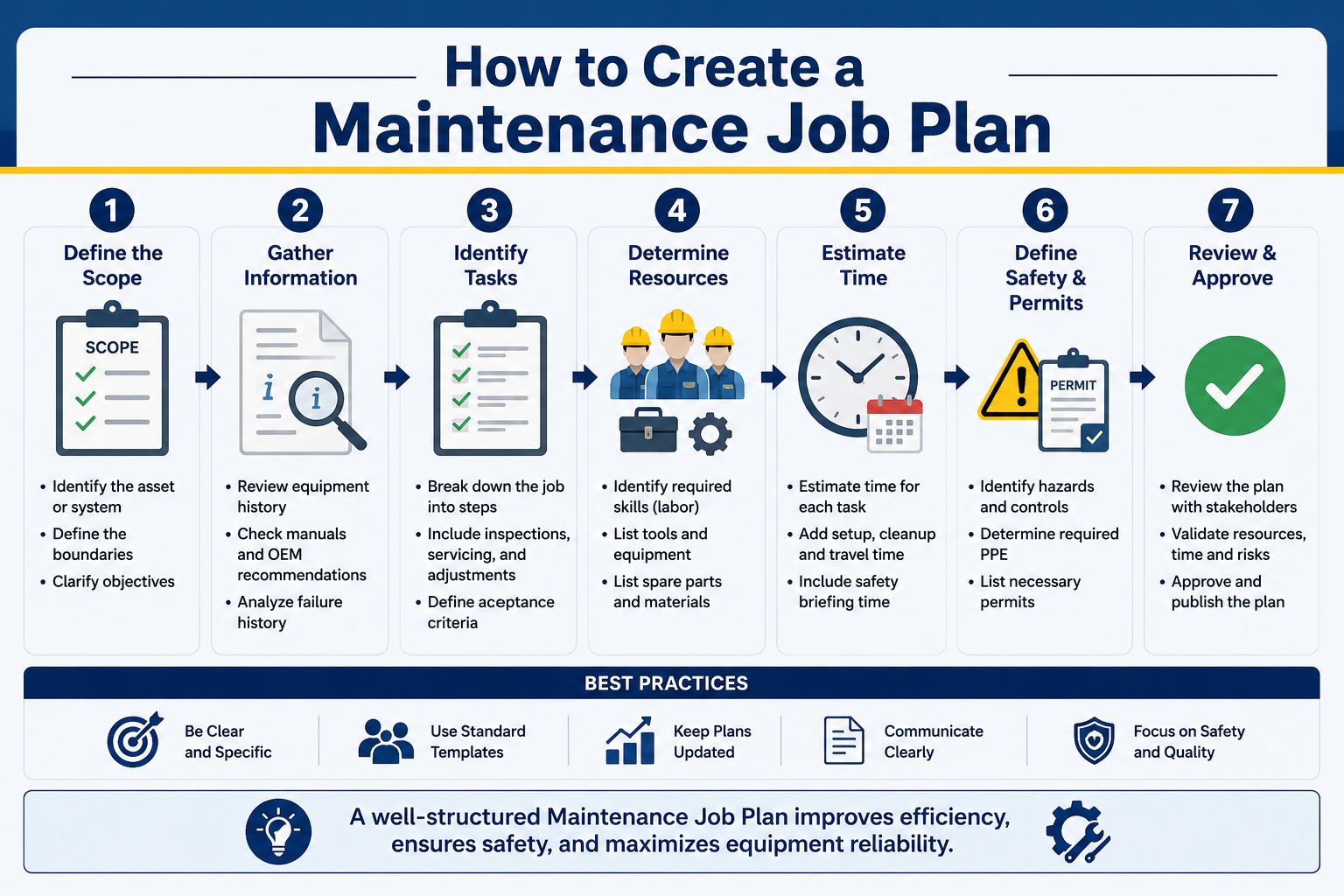
Maintenance engineers determine what maintenance activities need to be performed, how frequently they should be performed, what resources are required, and how the work should be executed.
Effective planning can reduce equipment downtime and improve technician productivity.
3. Preventive Maintenance
Preventive maintenance involves performing maintenance activities at predetermined intervals to reduce the probability of equipment failure.
Examples include:
- Lubrication
- Filter replacement
- Belt inspection
- Bearing inspection
- Electrical testing
- Calibration
- Cleaning
- Tightening connections
The objective is to identify and address potential degradation before failure occurs.
4. Predictive Maintenance
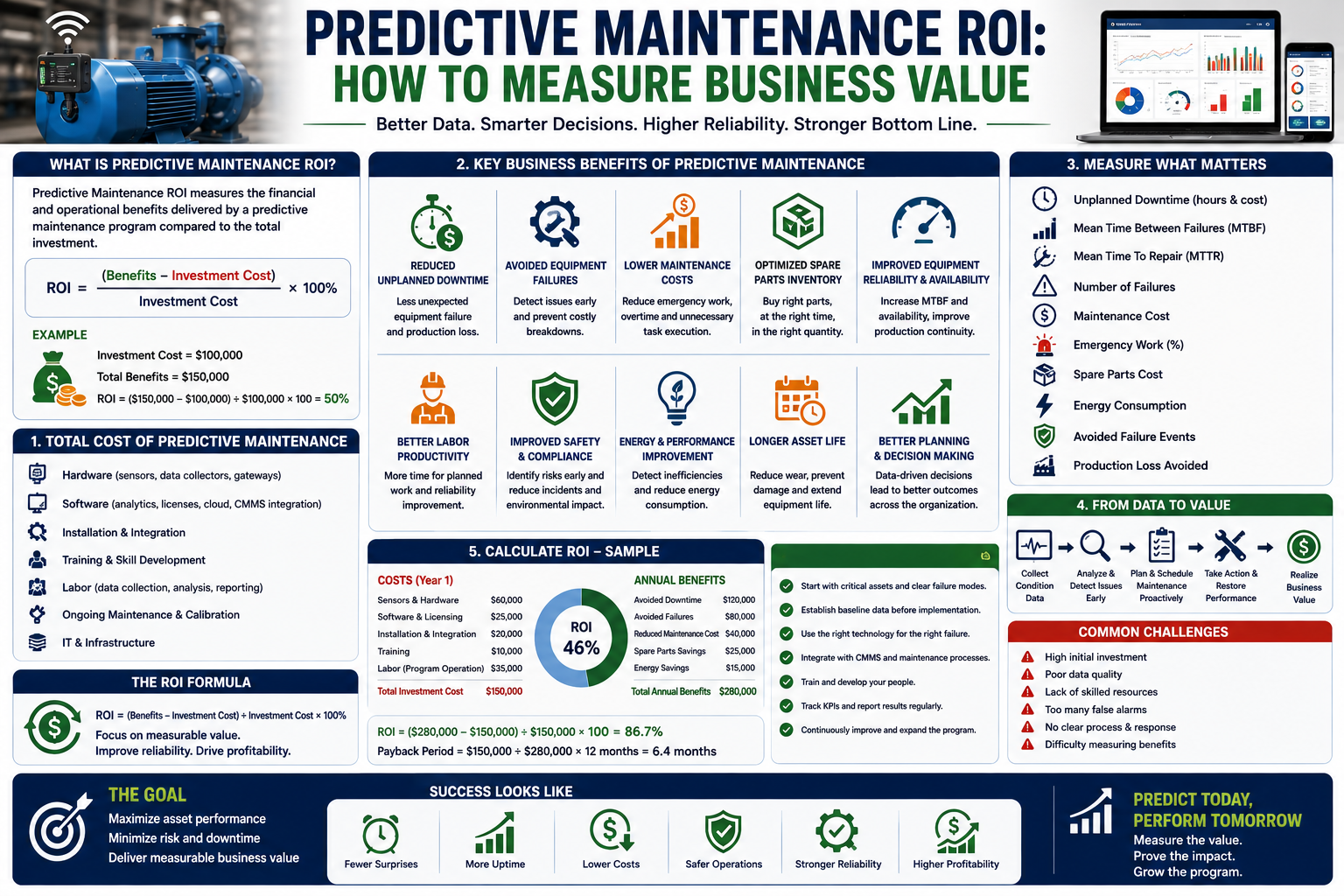
Predictive maintenance uses equipment-condition information to determine when maintenance may be required.
Common predictive maintenance techniques include:
- Vibration analysis
- Infrared thermography
- Oil analysis
- Ultrasonic inspection
- Motor current analysis
- Condition monitoring
- Online equipment sensors
Instead of replacing components simply because they have reached a certain age, predictive maintenance uses actual equipment condition to support maintenance decisions.
5. Troubleshooting Equipment Failures
When equipment fails, maintenance engineers help identify the cause and determine the appropriate corrective action.
Troubleshooting may involve reviewing operating conditions, maintenance history, inspection results, equipment design, and failure symptoms.
However, simply repairing a failed component may not prevent the same problem from happening again.
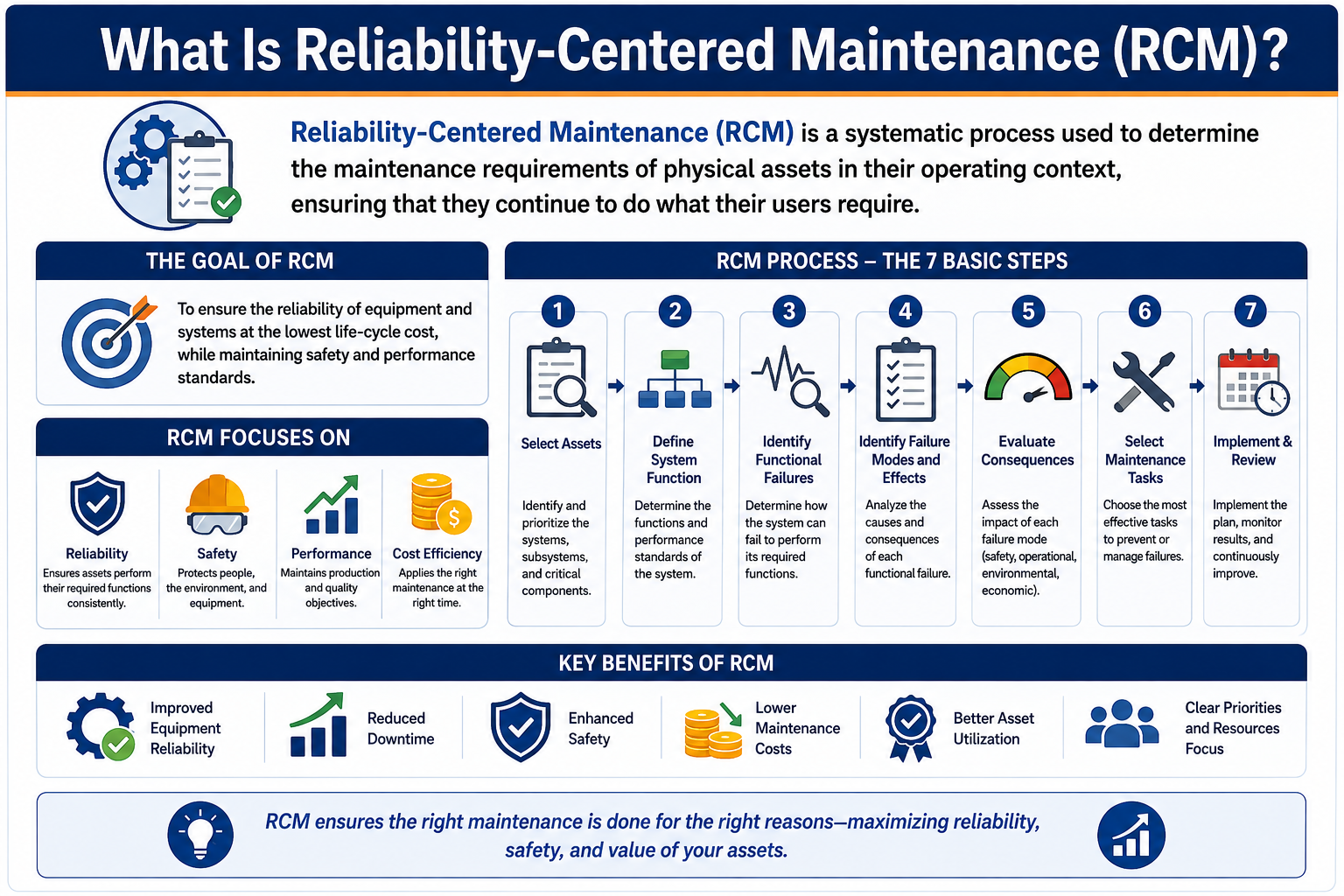
This is why maintenance engineering often involves Root Cause Analysis (RCA).
Maintenance Engineering and Root Cause Analysis
Root Cause Analysis is used to identify the underlying reason an equipment failure occurred.
For example, suppose a pump repeatedly experiences bearing failures.
Simply replacing the bearing solves the immediate problem, but it may not solve the underlying cause.
An investigation might reveal:
Bearing failure → excessive vibration → shaft misalignment → incorrect installation → inadequate alignment procedure.
Correcting the installation and alignment process can prevent repeated failures.
Common RCA tools include:
- 5 Whys Analysis
- Fishbone Diagrams
- Fault Tree Analysis
- Failure Mode and Effects Analysis (FMEA)
- Cause-and-effect analysis
This approach helps maintenance teams move from reactive maintenance to proactive reliability improvement.
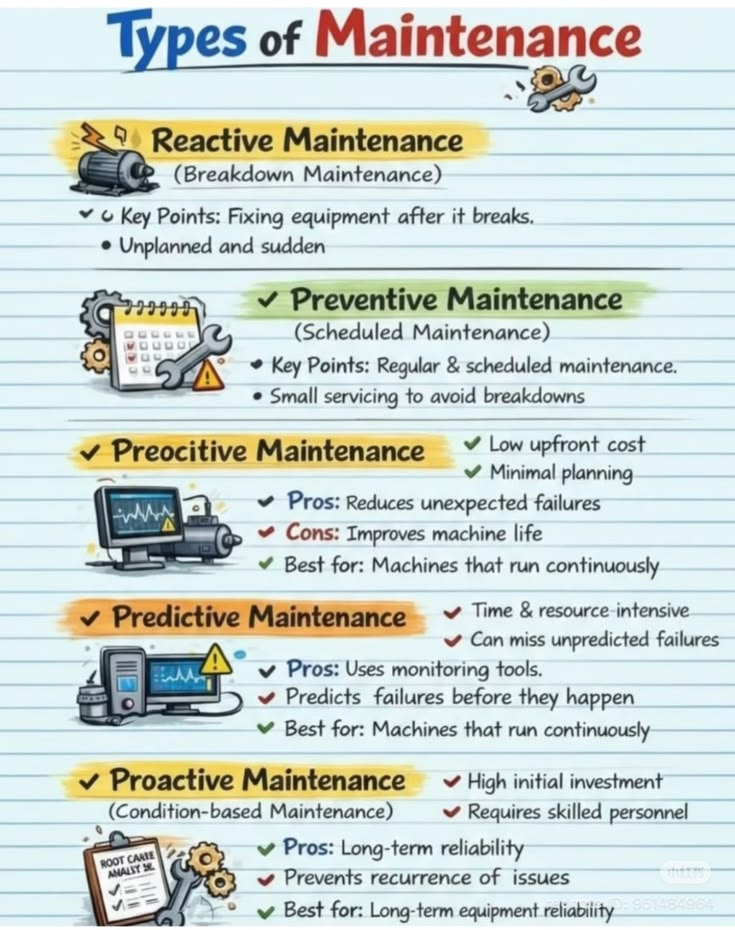
Major Types of Maintenance
Reactive Maintenance
Reactive maintenance occurs after equipment has already failed.
The equipment is repaired or replaced after the failure occurs.
Although reactive maintenance can be appropriate for certain low-criticality assets, excessive reliance on it can result in high downtime and emergency repair costs.
Preventive Maintenance
Preventive maintenance is performed according to a predetermined schedule.
For example, a gearbox may be inspected every three months, while a filter may be replaced after a specific number of operating hours.
Predictive Maintenance
Predictive maintenance uses condition information and monitoring technologies to identify developing problems.
This can allow maintenance to be performed closer to the actual point when intervention is required.
Proactive Maintenance
Proactive maintenance focuses on eliminating the underlying causes of failures rather than repeatedly correcting their symptoms.
Examples include improving lubrication practices, correcting alignment problems, eliminating contamination, improving installation procedures, and modifying equipment design.
Maintenance Engineering vs Reliability Engineering
Maintenance engineering and reliability engineering are closely related, but they are not exactly the same.
Maintenance engineering focuses heavily on maintaining and restoring equipment so that it remains operational.
Reliability engineering focuses on understanding and improving the ability of an asset or system to perform its required function without failure for a specified period under specified conditions.
A simple way to understand the difference is:
Maintenance asks:
“How do we keep this equipment operating?”
Reliability asks:
“Why does this equipment fail, and how can we make it fail less often?”
The two disciplines work together to improve asset performance.
Maintenance Engineering and Asset Management
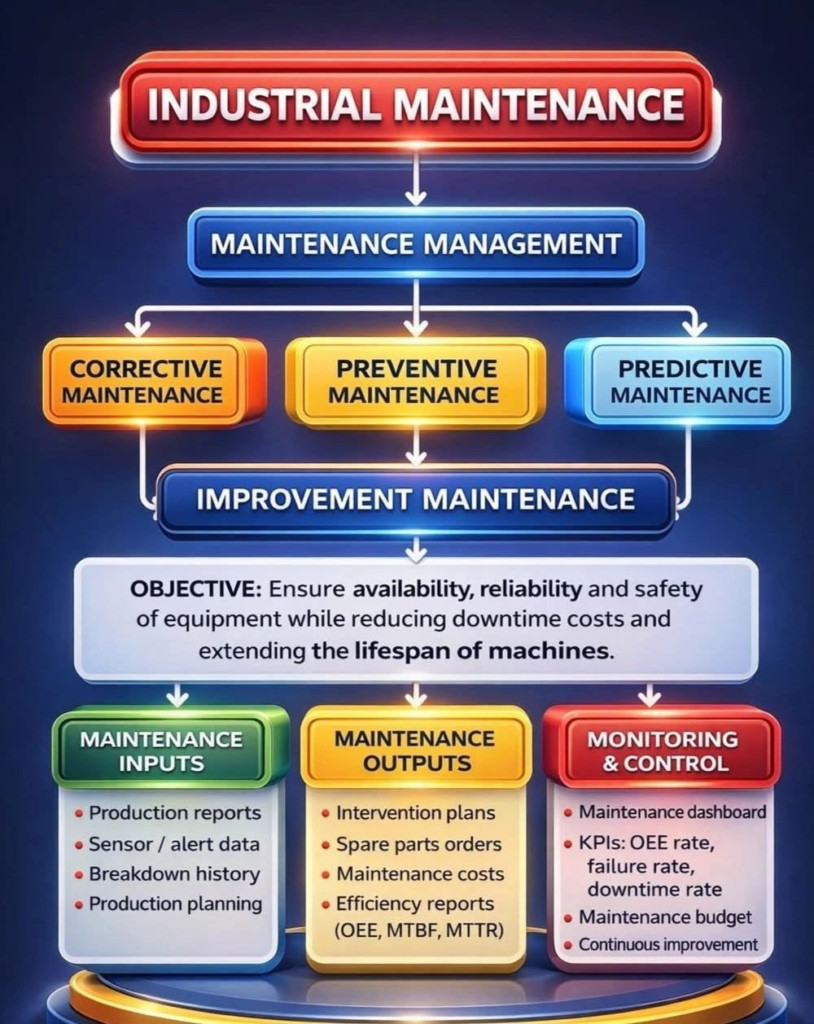
Maintenance is an important part of overall asset management.
Asset management considers the entire lifecycle of an asset—from acquisition and installation to operation, maintenance, refurbishment, and eventual replacement.
Maintenance engineers can contribute to asset-management decisions by providing information about:
- Equipment condition
- Failure history
- Maintenance costs
- Reliability performance
- Asset criticality
- Remaining useful life
- Repair vs replacement decisions
This information helps organizations make better long-term decisions about their physical assets.
Important Maintenance Engineering KPIs
Maintenance performance should be measured using meaningful Key Performance Indicators (KPIs).
Some commonly used maintenance KPIs include:
Mean Time Between Failures (MTBF)
MTBF measures the average operating time between failures for a repairable asset.
A higher MTBF generally indicates better equipment reliability.
Mean Time To Repair (MTTR)
MTTR measures the average time required to restore equipment after a failure.
Reducing MTTR can improve equipment availability.
Equipment Availability
Availability indicates how much of the required operating time an asset is capable of performing its intended function.
Overall Equipment Effectiveness (OEE)
OEE combines availability, performance, and quality to provide a broader view of manufacturing equipment effectiveness.
Other useful KPIs include preventive-maintenance compliance, schedule compliance, maintenance backlog, planned vs unplanned work, maintenance cost per asset, and repeat-failure rate.
The Role of Technology in Maintenance Engineering
Technology has significantly changed maintenance engineering.
Modern maintenance departments may use Computerized Maintenance Management Systems (CMMS) and Enterprise Asset Management (EAM) platforms to manage work orders, maintenance schedules, equipment history, spare parts, inspections, and maintenance KPIs.
Industrial Internet of Things (IIoT) sensors can also continuously collect equipment data such as temperature, vibration, pressure, speed, and energy consumption.
Artificial intelligence and machine learning are increasingly being explored to identify patterns in equipment data and support predictive maintenance.
These technologies can help maintenance teams make more informed, data-driven decisions.
Skills Required for a Maintenance Engineer
A successful maintenance engineer typically needs a combination of technical, analytical, and management skills.
Important skills include:
- Mechanical engineering knowledge
- Electrical and instrumentation knowledge
- Equipment troubleshooting
- Maintenance planning
- Reliability engineering
- Failure analysis
- Root Cause Analysis
- FMEA
- Preventive and predictive maintenance
- Data analysis
- Project management
- Safety awareness
- Communication and teamwork
The exact skills required depend on the industry and equipment involved.
How to Build an Effective Maintenance Engineering Program
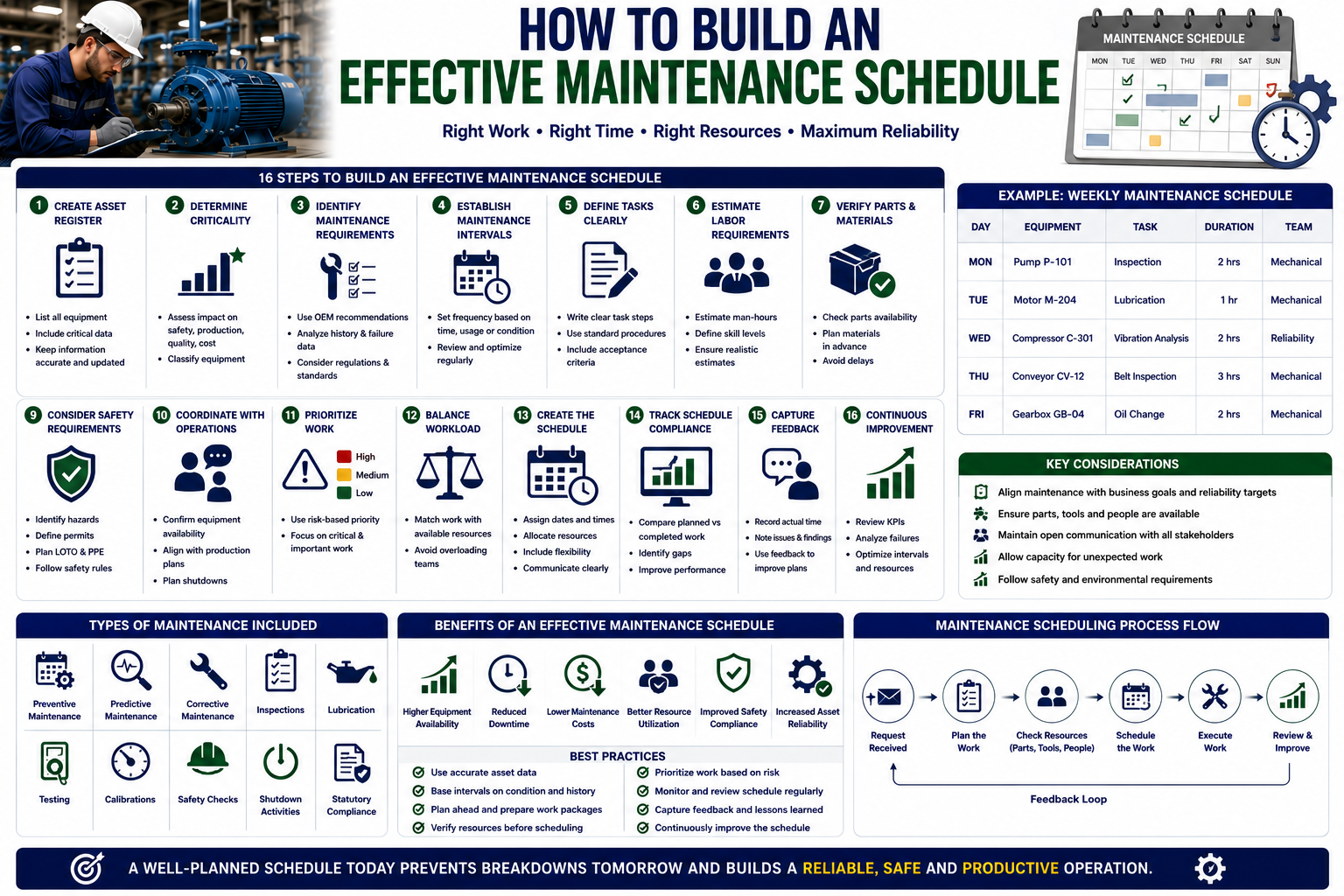
A strong maintenance program should begin with a clear understanding of the organization’s assets.
A practical approach is to:
- Create an accurate asset register.
- Develop an equipment hierarchy.
- Identify critical assets.
- Understand common failure modes.
- Establish preventive-maintenance tasks.
- Introduce condition monitoring where appropriate.
- Develop maintenance procedures.
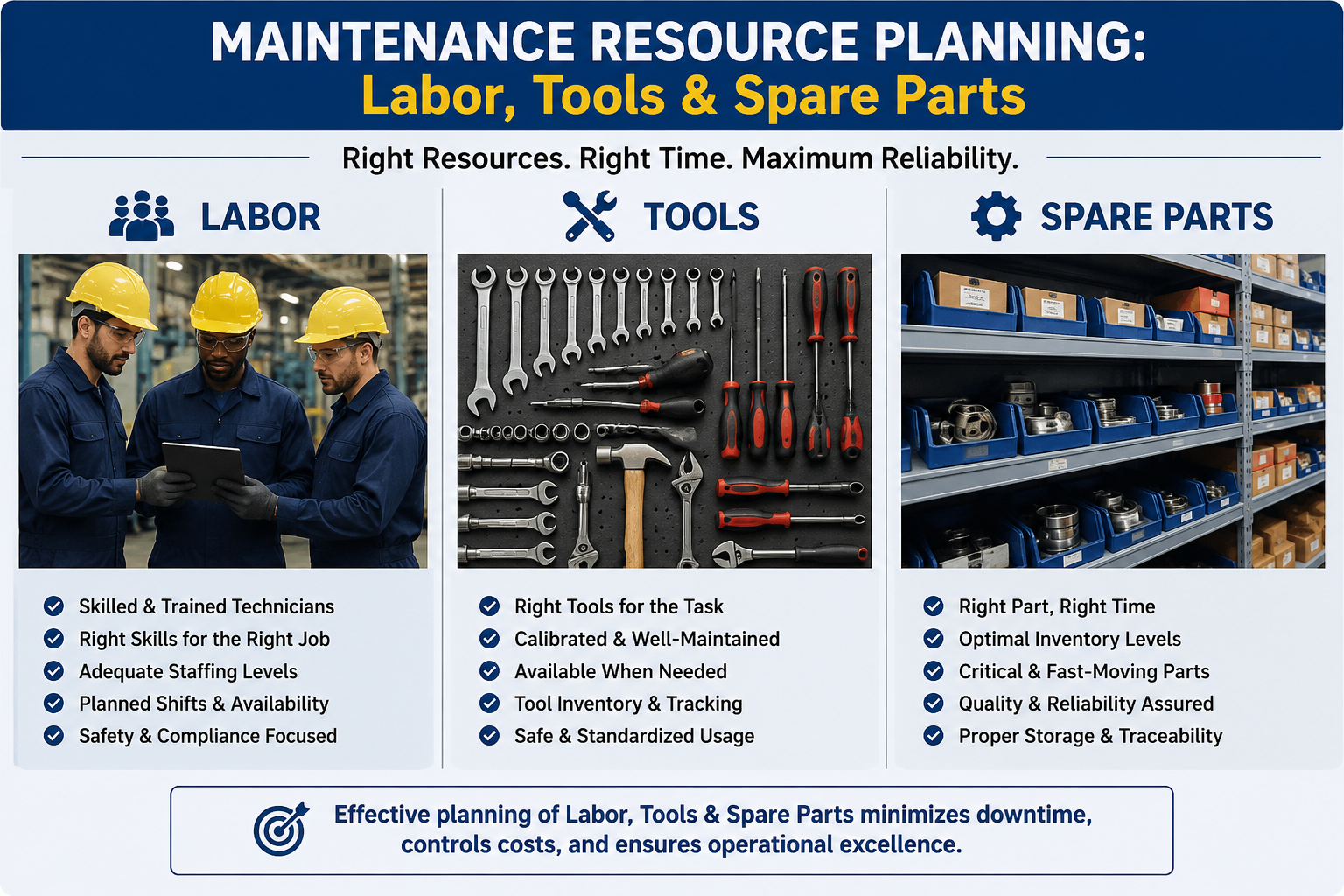
- Improve spare-parts management.
- Track maintenance KPIs.
- Perform Root Cause Analysis on significant failures.
- Review and optimize maintenance intervals.
- Continuously improve the maintenance strategy.
The goal should not be to perform more maintenance. The goal is to perform the right maintenance at the right time and for the right reason.