Water systems, whether in homes, factories, or large-scale irrigation networks, rely on precise regulation to function efficiently. This is where a flow control valve for water becomes essential. Without the ability to manage how much water moves through a pipe at any given moment, systems would either waste resources, suffer pressure imbalances, or fail entirely under fluctuating demand.
In this guide, we’ll break down everything you need to know about flow control valves — how they work, the different types available, their role in hydraulic systems, common symbols used in engineering diagrams, and practical tips for installation and troubleshooting.
What is a Flow Control Valve?
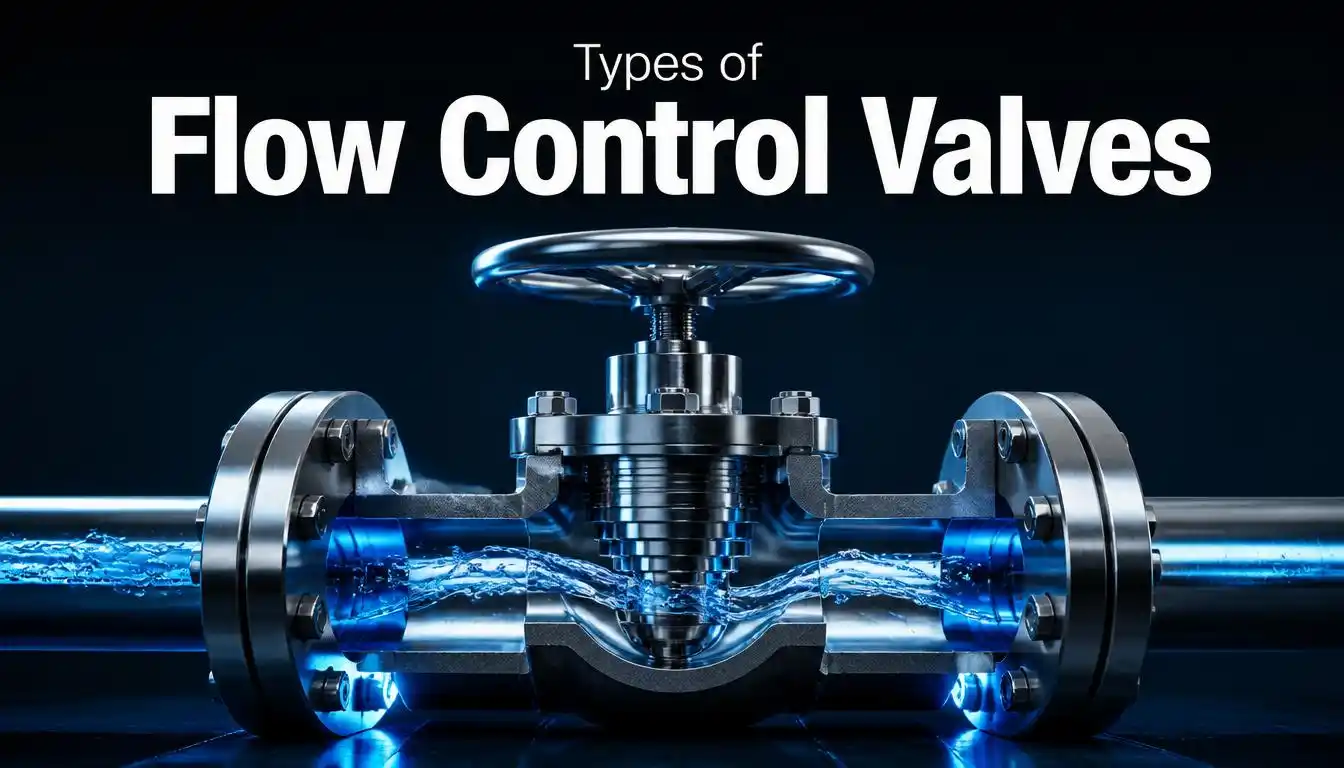
A flow control valve is a mechanical device used to regulate the rate, direction, or pressure of fluid flowing through a pipeline. Unlike a simple on/off valve, a flow regulating valve allows operators to fine-tune exactly how much liquid or gas passes through the system, making it a critical component in industrial automation, plumbing, and hydraulic machinery.
These valves are found in virtually every fluid-handling system — from residential water lines to complex hydraulic flow control valve setups in construction equipment. According to Wikipedia’s entry on control valves, control valves manipulate flow by varying the size of the flow passage as directed by a signal from a controller, enabling automatic regulation of variables like pressure, temperature, and flow rate.
Whether you’re searching for a valve with flow control for a home irrigation system or a heavy-duty flow control valve for an industrial hydraulic circuit, the underlying principle remains the same: controlled restriction of flow to maintain system stability.
How a Flow Control Valve Works
At its core, a flow control valve works by adjusting the internal opening (orifice) through which fluid passes. As the valve opening changes, it either increases or decreases the resistance to flow, directly affecting the flow rate.
Here’s a simplified breakdown of the working mechanism:
- Sensing – The valve detects current flow conditions, either manually (via a handwheel or lever) or automatically (via a sensor/actuator).
- Actuation – Based on the setting or signal, an internal mechanism (needle, disc, or diaphragm) moves to change the valve opening.
- Restriction – The narrowed or widened passage alters the flow rate accordingly.
- Stabilization – Some flow valves also compensate for pressure changes upstream or downstream, ensuring a consistent flow rate regardless of pressure fluctuations.
This is particularly important in hydraulic flow control valves, where maintaining a steady flow rate is critical to the smooth operation of cylinders, motors, and actuators in machinery. Engineering ToolBox offers useful technical references on how flow control components function within broader fluid power systems.
Types of Flow Control Valves
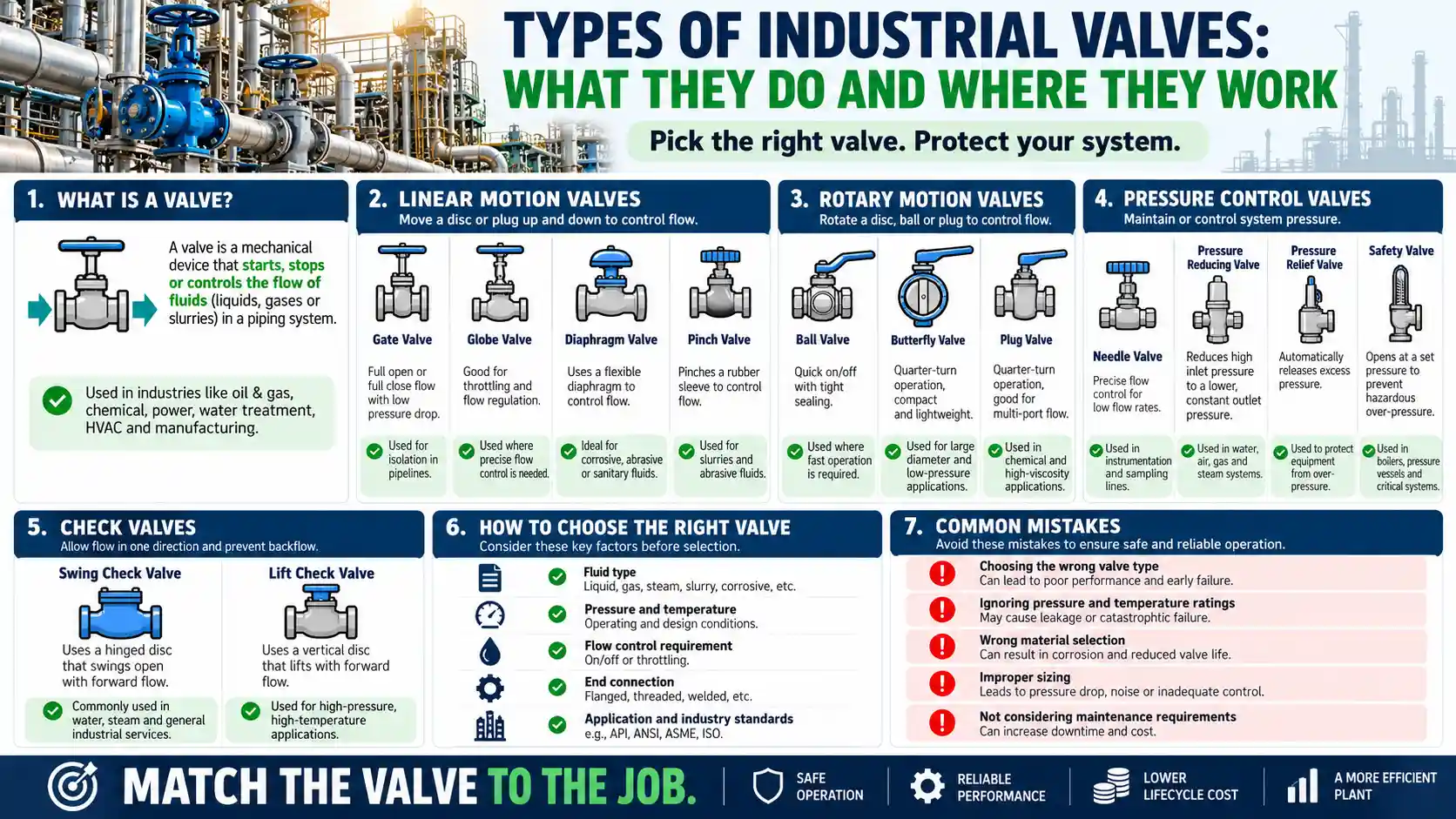
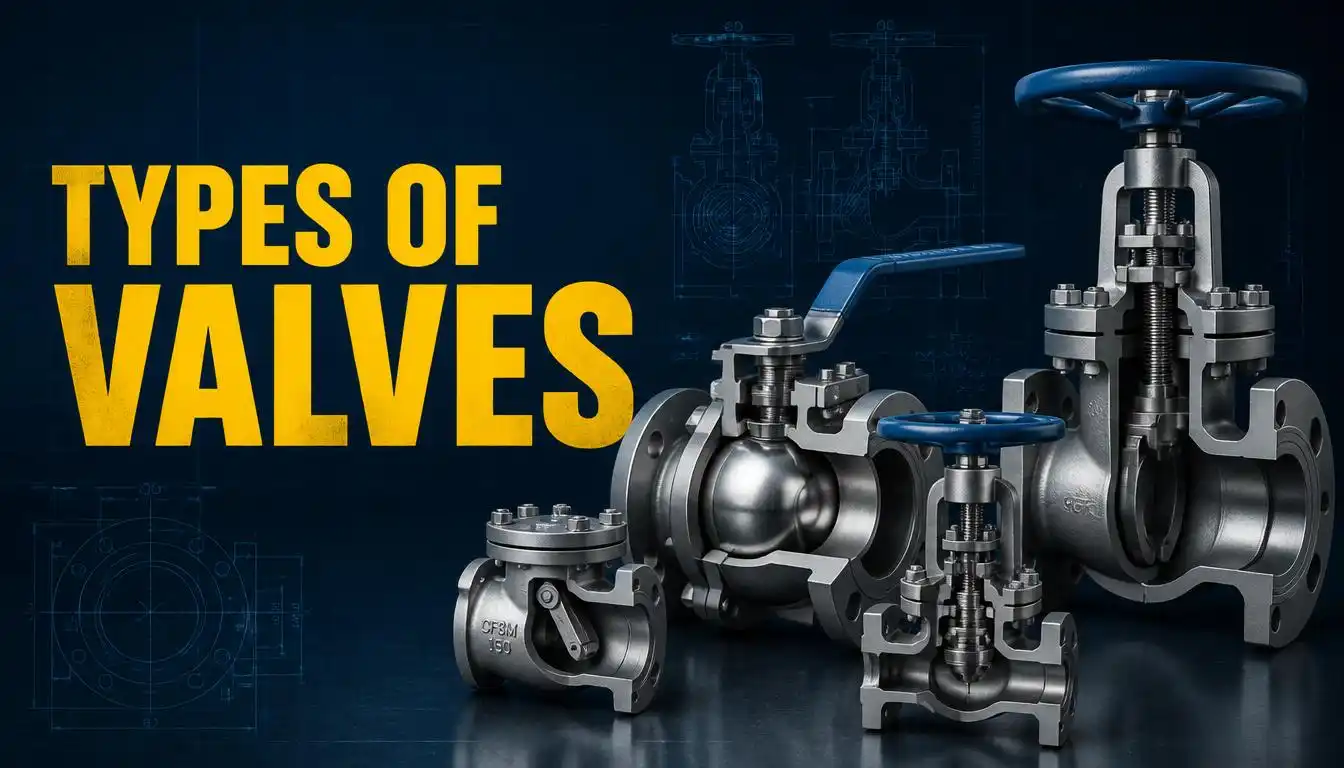
Understanding the different flow control valve types helps in selecting the right one for your specific application. Here are the most common types:
1. Needle Valves
Needle valves use a tapered, needle-like plunger to precisely regulate flow through a small orifice. They’re ideal for applications requiring fine control over low flow rates, such as laboratory equipment or instrumentation.
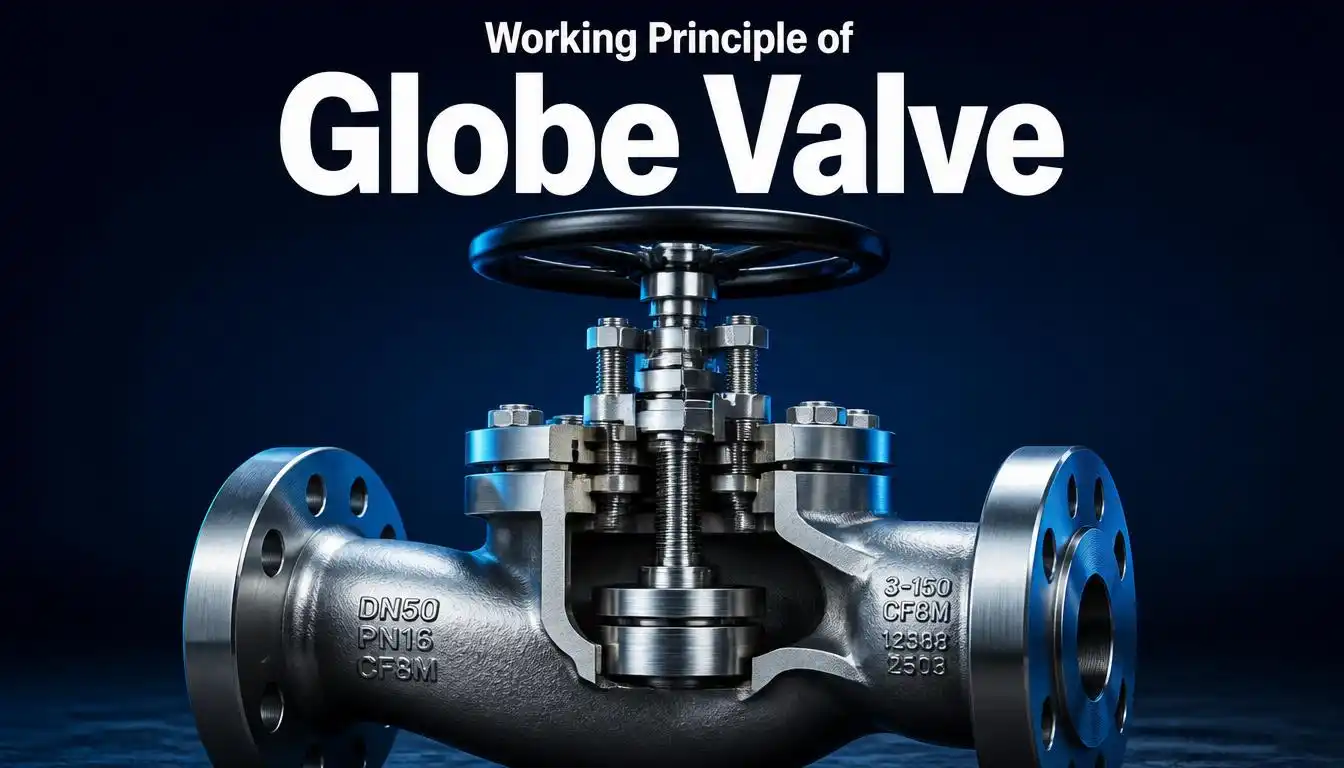
2. Globe Valves
Globe valves use a movable disc-type element and a stationary ring seat to regulate flow. They’re widely used in water and steam systems where throttling is required.
3. Diaphragm Valves
These valves use a flexible diaphragm to control flow, making them suitable for handling corrosive or abrasive fluids without contamination risk.
4. Butterfly Valves
Featuring a rotating disc, butterfly valves are compact, lightweight, and commonly used in large-diameter water pipelines due to their quick operation and low-pressure drop.
5. Pressure-Compensated Flow Control Valves
These automatically adjust to maintain a constant flow rate despite variations in inlet or outlet pressure — commonly used in hydraulic systems where load pressure changes frequently.
6. Ball Valves with Flow Control
A valve with flow control functionality built into a ball valve design offers durability and precise throttling in a compact footprint.
Each of these flow valve types serves distinct purposes depending on the fluid type, pressure requirements, and precision needed.
Hydraulic Flow Control Valves
A hydraulic flow control valve is specifically engineered to regulate the flow of hydraulic fluid within a closed-loop system, typically to control the speed of hydraulic actuators like cylinders and motors.
These valves are essential in heavy machinery, construction equipment, agricultural machines, and industrial presses. There are generally three configurations:
- Meter-in valves – control flow entering the actuator
- Meter-out valves – control flow exiting the actuator
- Bleed-off valves – divert excess flow away from the actuator
A hydraulic flow regulator valve often incorporates pressure compensation to ensure the actuator moves at a consistent speed regardless of load variations. This is crucial in applications like excavator arms or hydraulic lifts, where inconsistent speed could compromise safety and precision.
For deeper technical insight into hydraulic circuit design, Fluid Power Journal publishes detailed resources on hydraulic components and system design best practices.
Know More About: What is a Control Valve ? Working, Types & Parts
Water Flow Control Valves
When it comes to water flow control valve applications, the focus shifts toward managing supply consistency, pressure regulation, and conservation. A flow control valve for water is commonly used in:
- Residential plumbing systems to balance water pressure across fixtures
- Irrigation systems to regulate water distribution across zones
- Municipal water treatment plants to manage flow between treatment stages
- HVAC systems to control chilled or hot water circulation
Flow control valve water applications often require materials resistant to corrosion and mineral buildup, such as brass, stainless steel, or engineered plastics like PVC and CPVC, depending on the water type and system pressure.
The U.S. EPA’s WaterSense program highlights how proper flow regulation contributes significantly to water conservation efforts in both residential and commercial buildings, reinforcing why selecting the right water flow control valve matters beyond just functionality — it also supports sustainability goals.
Flow Control Valve Symbols
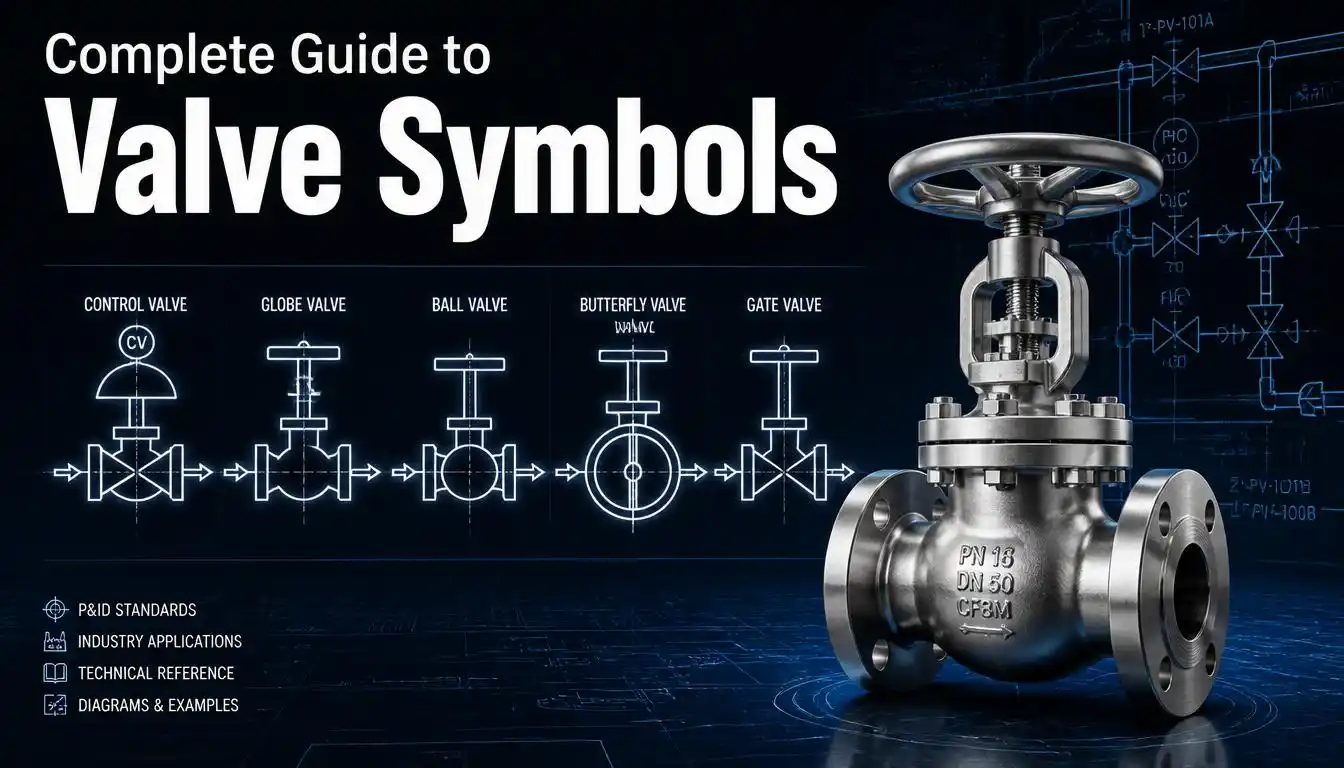
Understanding flow control valve symbols is essential for anyone reading hydraulic or plumbing schematics. These standardized symbols, often based on ISO 1219 standards, allow engineers across the world to interpret circuit diagrams consistently.
Common elements you’ll encounter in a flow control valve symbol:
- A triangle within a circle or box – represents adjustable flow restriction
- A diagonal arrow through the flow path – indicates variable/adjustable control
- Parallel lines with an arrow – represents a check valve combined with flow control (common in hydraulic circuits)
For pressure-compensated valves, the symbol typically includes an additional spring element to denote the compensation mechanism. Familiarity with flow control valve symbols is especially important for technicians and engineers working with P&ID (Piping and Instrumentation Diagrams) or hydraulic schematics. The ISO standards page provides official documentation on fluid power system symbols used internationally.
Applications of Flow Control Valves
Flow control valves are used across a wide range of industries due to their versatility. Key applications include:
- Industrial Manufacturing – Regulating coolant, lubricant, or process fluid flow in machinery
- Agriculture – Managing irrigation water distribution across fields
- Construction Equipment – Controlling hydraulic actuator speeds in excavators, cranes, and loaders
- HVAC Systems – Balancing water/refrigerant flow for consistent climate control
- Municipal Water Systems – Regulating pressure and distribution across city water networks
- Oil and Gas – Managing flow rates in pipelines and processing equipment
- Medical and Laboratory Equipment – Precisely controlling fluid delivery in diagnostic or treatment devices
Each application demands specific valve characteristics — pressure rating, material compatibility, and control precision — which is why understanding flow control valve types is so important before making a selection.
Installation Tips for Flow Control Valves
Proper installation significantly affects the performance and lifespan of a flow control valve. Here are some practical guidelines:
- Choose the Correct Size – An undersized or oversized valve can lead to poor flow regulation or excessive pressure drop.
- Install in the Correct Orientation – Many valves have directional flow arrows; installing them backward can impair function or damage internal components.
- Use Proper Sealing – Ensure gaskets, O-rings, or thread sealants are appropriate for the fluid type and system pressure.
- Allow Adequate Access – Position the valve where the valve opening adjustment mechanism is easily accessible for maintenance and recalibration.
- Flush the System First – Debris in pipelines can damage delicate valve components, especially in needle valves or pressure-compensated designs.
- Follow Manufacturer Torque Specifications – Over-tightening connections can warp valve bodies or damage seals.
Taking these steps seriously during installation reduces the likelihood of leaks, pressure inconsistencies, or premature valve failure.
Troubleshooting Common Flow Control Valve Issues
Even well-installed flow control valves can develop issues over time. Here are common problems and their likely causes:
Inconsistent Flow Rate
Caused by debris buildup, worn seals, or a damaged internal orifice. Solution: disassemble and clean, or replace worn components.
Valve Won’t Fully Close
Often due to sediment lodged in the seat or a damaged sealing surface. Solution: inspect and clean the seat; replace if scoring or wear is present.
Excessive Pressure Drop
May indicate an undersized valve or partial blockage. Solution: verify sizing calculations and check for obstructions.
Erratic Actuator Speed (Hydraulic Systems)
Usually linked to a failing pressure compensator or air trapped in the system. Solution: bleed the hydraulic circuit and inspect the compensator mechanism.
Leaking at the Valve Opening Mechanism
Typically caused by worn stem seals or O-rings. Solution: replace seals; check for correct torque on packing nuts.
Routine inspection and preventive maintenance go a long way in avoiding costly downtime, especially in industrial or hydraulic applications where valve failure can halt entire operations.
Flow Control Valve Price Considerations
Flow control valve price varies significantly based on several factors:
- Material – Brass and stainless steel valves cost more than PVC or plastic alternatives but offer better durability
- Valve Type – Simple needle valves are generally more affordable than pressure-compensated or automated hydraulic flow control valves
- Size and Pressure Rating – Larger valves rated for higher pressures command higher prices
- Brand and Certification – Valves certified for specific industry standards (NSF, ISO, ANSI) often carry a premium
- Automation Features – Electronically actuated flow control valves cost considerably more than manually operated ones
For budgeting purposes, it’s wise to request quotes from multiple suppliers and compare based on total cost of ownership — including expected maintenance and replacement part availability — rather than upfront price alone. ThomasNet’s industrial supplier directory can help compare specifications and pricing across manufacturers.
Frequently Asked Questions (FAQs)
Q1. What is the difference between a flow control valve and a regular shut-off valve?
A shut-off valve simply opens or closes flow, while a flow control valve allows precise regulation of the flow rate at various positions between fully open and fully closed.
Q2. Can a flow control valve be used for both water and hydraulic fluid?
While the basic mechanism is similar, valves are typically designed and rated for specific fluid types. Using a valve outside its intended fluid application can lead to premature failure or seal degradation.
Q3. How do I choose the right flow control valve type for my system?
Consider the fluid type, required flow precision, pressure rating, pipe size, and whether manual or automated control is needed.
Q4. What does the arrow on a flow control valve symbol mean?
The diagonal arrow typically represents the adjustable nature of the valve, indicating that the flow restriction can be varied rather than fixed.
Q5. Why does my hydraulic flow control valve cause jerky actuator movement?
This is often due to trapped air in the hydraulic line or a malfunctioning pressure compensator. Bleeding the system and inspecting the compensator usually resolves the issue.
Q6. Are pressure-compensated flow control valves worth the extra cost?
For applications where load pressure fluctuates, yes — they maintain consistent flow rates regardless of pressure changes, improving system reliability and performance.
Conclusion
A reliable flow control valve for water — or any fluid system, for that matter — is central to maintaining efficient, safe, and consistent operations. From simple needle valves in residential plumbing to sophisticated pressure-compensated hydraulic flow control valves in industrial machinery, selecting the right type, understanding proper installation, and staying ahead of maintenance needs can dramatically extend equipment life and system performance.
Whether you’re comparing flow control valve types, decoding flow control valve symbols on a schematic, or evaluating flow control valve price across suppliers, having a solid grasp of the fundamentals ensures you make informed decisions for your specific application.