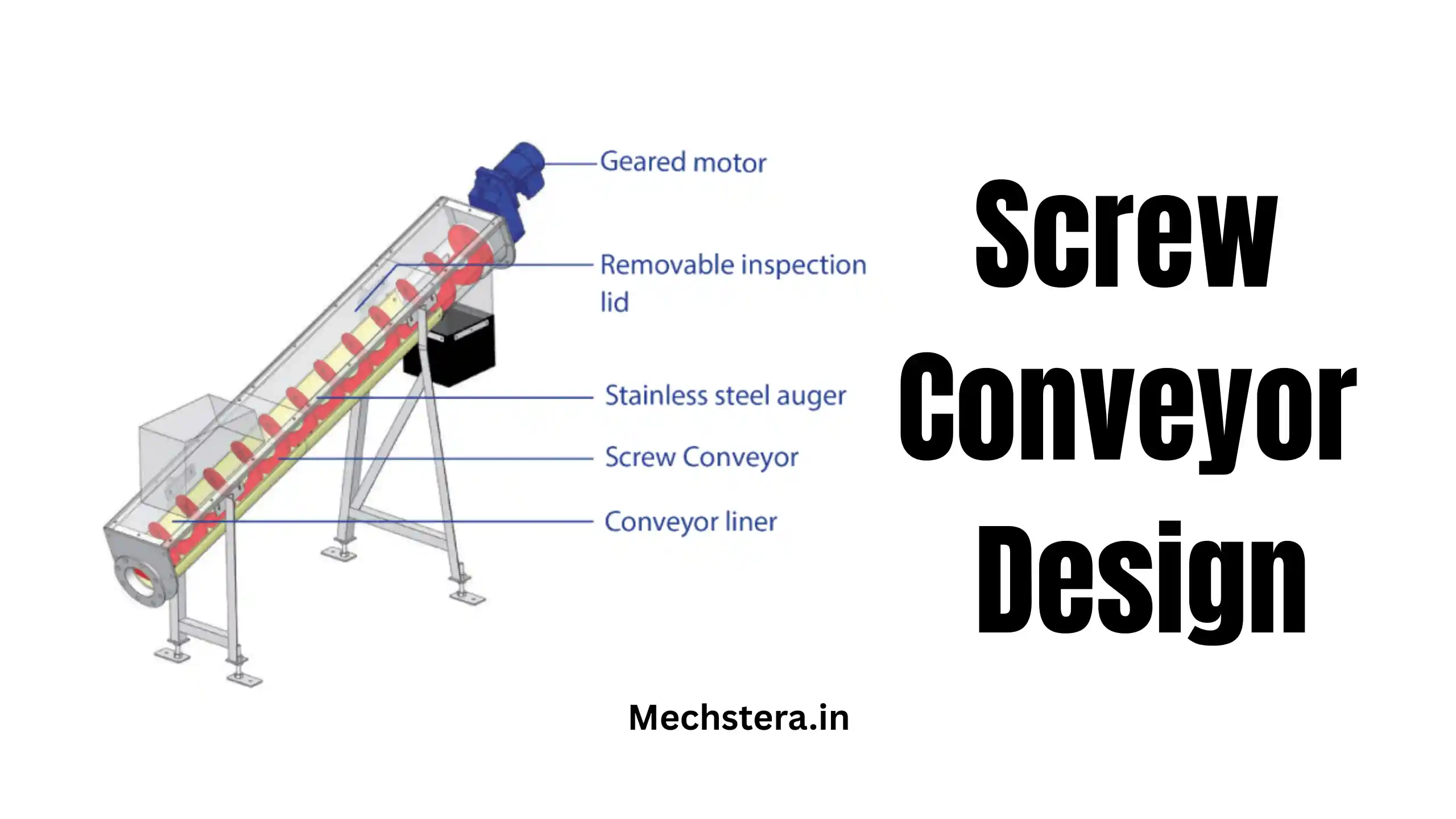
If you’ve spent any time around a bulk handling plant, you’ve probably walked past a screw conveyor without giving it a second thought a long tube or trough with a helical screw turning inside, quietly moving powder or granules from point A to point B. Simple looking. Not simple to get right.
A screw conveyor works by rotating a helical flight inside a trough or enclosed tube, and that rotation pushes material forward along the shaft. That’s the whole idea. But the gap between “it moves material” and “it moves material reliably, at the right rate, without chewing through bearings every six months” is where actual screw conveyor design lives. At Mechstera, we’ve seen plants install a conveyor screw sized off a rough guess and then spend a year fighting jams and motor trips that a proper calculation would have caught on day one.
This guide covers how the equipment works, the math behind sizing one, and what actually separates good screw conveyor manufacturers from ones just quoting a price off a catalog.
How a Screw Conveyor Actually Works
Picture a screw conveyor diagram for a second: an inlet at one end, a discharge at the other, a helical flight welded to a central shaft, and hanger bearings spaced along the length to keep everything from sagging. Material drops in at the inlet, sits in the bottom of the trough, and gets pushed forward as the screw turns no exposed moving parts above the material bed, which is a big part of why these units are popular in dusty or enclosed environments.
Compared to a belt or bucket elevator, a screw auger conveyor is compact and relatively low fuss. It can also dose material, not just move it, which is why you’ll find them under hoppers feeding batching systems as often as you’ll find them moving raw material between process steps.
Why the Design Details Actually Matter
Here’s the thing people underestimate: get the sizing wrong and it’s not a minor inconvenience. Undersize the screw and you’ll never hit your throughput target — the motor works harder than it should, wear accelerates, and eventually something fails. Oversize it and you’ve spent money and floor space on a unit that runs half empty most of the day, which isn’t great for the material either since some products need a certain fill level to convey properly.
The material itself drives most of the decision making. A free flowing plastic pellet behaves nothing like a sticky, cohesive powder that wants to bridge or clump in the trough. So before anyone picks a diameter, the real first step in screw conveyor design is understanding what you’re actually conveying — its bulk density, how it flows, whether it’s abrasive.
The Calculations Behind Screw Conveyor Design
The capacity formula most engineers reach for ties together diameter, pitch, rotational speed, loading ratio, bulk density, and a correction factor for incline. Roughly: capacity in kilograms per hour comes from the cross-sectional area of the screw, multiplied by the pitch length, the speed, how full the trough is running, the density of the material, and — if the conveyor isn’t flat — a penalty for the angle.
In practice, the process looks something like this. You start with the throughput you actually need. Then you assume a diameter and pick a pitch relative to it — standard pitch matches the diameter, while shorter or longer pitches get used for more controlled or gentler conveying depending on the product. From there you estimate a loading ratio based on how the material flows: sluggish powders get loaded lighter, free-flowing granules can run fuller. Then you dial in speed until the calculated capacity clears your target, and check that speed against the maximum recommended for that diameter — because running too fast brings wear, noise, and in dusty applications, real explosion risk.
The Conveyor Equipment Manufacturers Association has published detailed standards that most serious designers cross-check against, and it’s worth a look at the CEMA screw conveyor publications before finalizing anything meant for daily production use, rather than relying on a single formula in isolation.
Reading a Screw Conveyor Diagram
Every screw conveyor diagram you’ll come across has roughly the same cast of characters, even if the proportions change wildly by application: the screw diameter and the pipe or shaft diameter, which together set how much material can actually fit in the cross-section; the trough or tube that contains everything; hanger bearings holding the shaft steady over longer runs; and the inlet and discharge points, whose placement affects how efficiently material actually loads into the flight.
Incline is worth calling out separately because it trips people up. A flat, horizontal screw conveyor is basically always the better option if you have the choice gravity isn’t fighting you. Tilt the conveyor and capacity drops, sometimes more than expected, because material slips backward over the flight instead of moving forward with it. A ten-degree incline, for instance, typically knocks capacity down by around 20%, which means compensating with a bigger screw or higher speed just to hit the same numbers you’d get on flat ground.
Pitch Types, at a Glance
| Pitch Type | How It’s Sized | Where It’s Used |
|---|---|---|
| Standard | Equal to the screw diameter | General-purpose conveying |
| Short | Two-thirds of the diameter | Inclined runs, metering duty |
| Half | Half the diameter | Fine dosing, sticky or sluggish materials |
| Long | 1.5 times the diameter | Free-flowing material, low resistance |
Loading ratios follow a similar pattern. Poor-flowing materials usually get loaded to only 12–15% of the trough to avoid packing and torque spikes. Moderately flowable powders run closer to 25–30%. Genuinely free-flowing granules can push up toward 40–45% without much trouble. Push past those ranges without checking the numbers first, though, and you’re basically asking for premature wear.
Weighing the Tradeoffs: Screw Conveyors vs. the Alternatives
Screw conveyors aren’t the right answer for everything, and it’s worth being honest about where they fall short before committing to one.
| Where They Win | Where They Struggle |
|---|---|
| Smaller footprint than belt or bucket systems | Shorter effective conveying distance |
| Enclosed design keeps dust and spillage down | Wear climbs fast with abrasive materials |
| Doubles as a metering or dosing device | Not forgiving with fragile or lumpy product |
| Handles horizontal and moderate inclines fine | Steep inclines hurt capacity significantly |
| Mechanically straightforward | Hanger bearings need regular attention |
What Actually Separates Screw Conveyor Manufacturers
Comparing screw conveyor manufacturers on price alone is how plants end up disappointed a year later. A few things actually matter more than the number on the quote.
- Does the manufacturer design against recognized industry standards, or their own internal shortcuts? Equipment built to established practice tends to bolt onto existing plant infrastructure without surprises.
- What construction options do they actually offer for abrasive or corrosive products hardened steel, specific coatings versus a generic mild-steel unit dressed up as custom?
Beyond that, ask whether they’ll actually show you the capacity math behind their diameter recommendation, rather than just handing you a number. And pay attention to how they handle hanger bearing spacing and sealing, especially if you’re dealing with dust or hazardous material that’s usually where the cheap units start failing first.
Mechstera builds every quote around the actual capacity numbers for the material in question, not a generic catalog size, which is part of why our screw conveyor price reflects what the job needs rather than a one-size-fits-all figure.
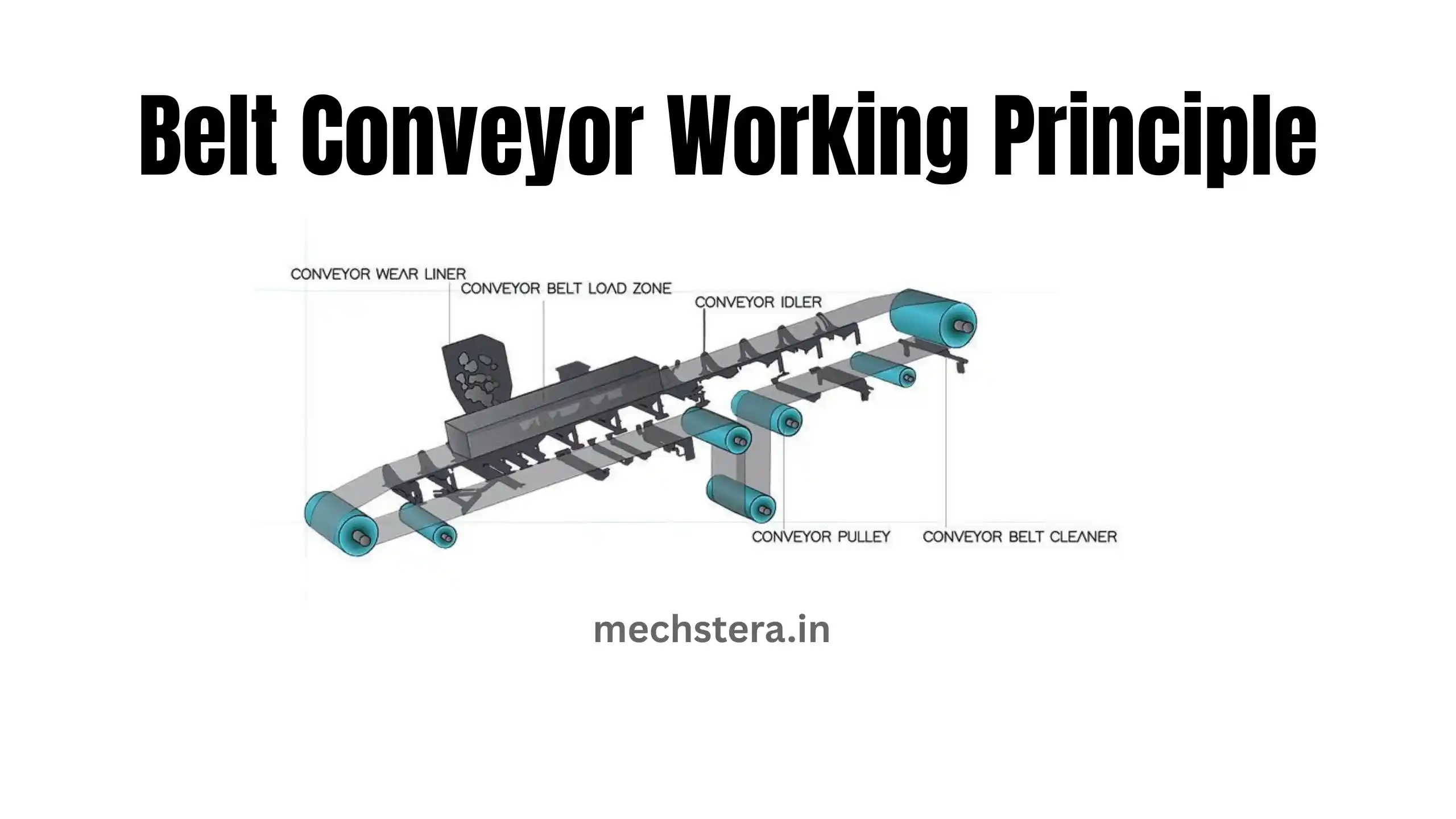
Meanwhile, you can also checkout our Blog on : Belt Conveyor: Essential Design and Working Guide
What Drives Screw Conveyor Price
Screw conveyor price swings a lot, and it’s rarely just about length. Diameter matters most obviously bigger screws need more steel, heavier bearings, stronger motors. Material of construction is close behind: carbon steel is cheap, but stainless or abrasion-resistant alloy builds cost meaningfully more, and for the right application, they’re not optional. Custom touches variable pitch sections, multiple inlets, jacketed troughs, explosion-proof drives all stack on top of the base price too.
The mistake we see most often is buyers chasing the lowest upfront screw conveyor price and ignoring what happens over the next few years. A unit built with thin flighting or undersized bearings might look like a bargain on day one, but the replacement parts and downtime it generates usually cost more than the savings within a couple of years of real use.
Frequently Asked Questions
How is screw conveyor capacity calculated?
It comes down to multiplying the cross-sectional area of the screw by pitch length, speed, loading ratio, bulk density, and an inclination correction factor if the conveyor isn’t flat. The result tells you whether a given diameter can actually handle your required throughput without overloading the shaft.
What does loading ratio mean in screw conveyor design?
It’s the percentage of the trough’s cross-section that’s filled with material during normal operation. Abrasive or poor-flowing products get a lower ratio to reduce wear and torque, while free-flowing materials can run fuller without issue.
Does incline really change how much a screw auger conveyor can move?
Yes, more than most people expect. Gravity pulls material backward over the flight as the angle increases, and even a modest ten-degree tilt can cut capacity by roughly 20%, which usually means a bigger screw or faster speed is needed to make up the difference.
Can the same screw conveyor handle more than one type of material?
Sometimes. If the materials are reasonably similar in density and flow behavior, one unit can handle both with a speed adjustment. But materials that behave very differently usually call for separate conveyors, or at least a removable flighting section built for each one.
Final Thoughts
Good screw conveyor design isn’t complicated in theory match diameter, pitch, and speed to how the material actually behaves, then check the math against established standards instead of guessing. Where it gets tricky is in the details: incline penalties, loading ratios, wear from abrasive product, and manufacturers who cut corners you won’t notice until year two. Whether you’re speccing a new auger conveyor or comparing screw conveyor manufacturers for a replacement, it pays to ask for the numbers behind the recommendation, not just the price tag. That’s the gap Mechstera tries to close before any steel gets cut.