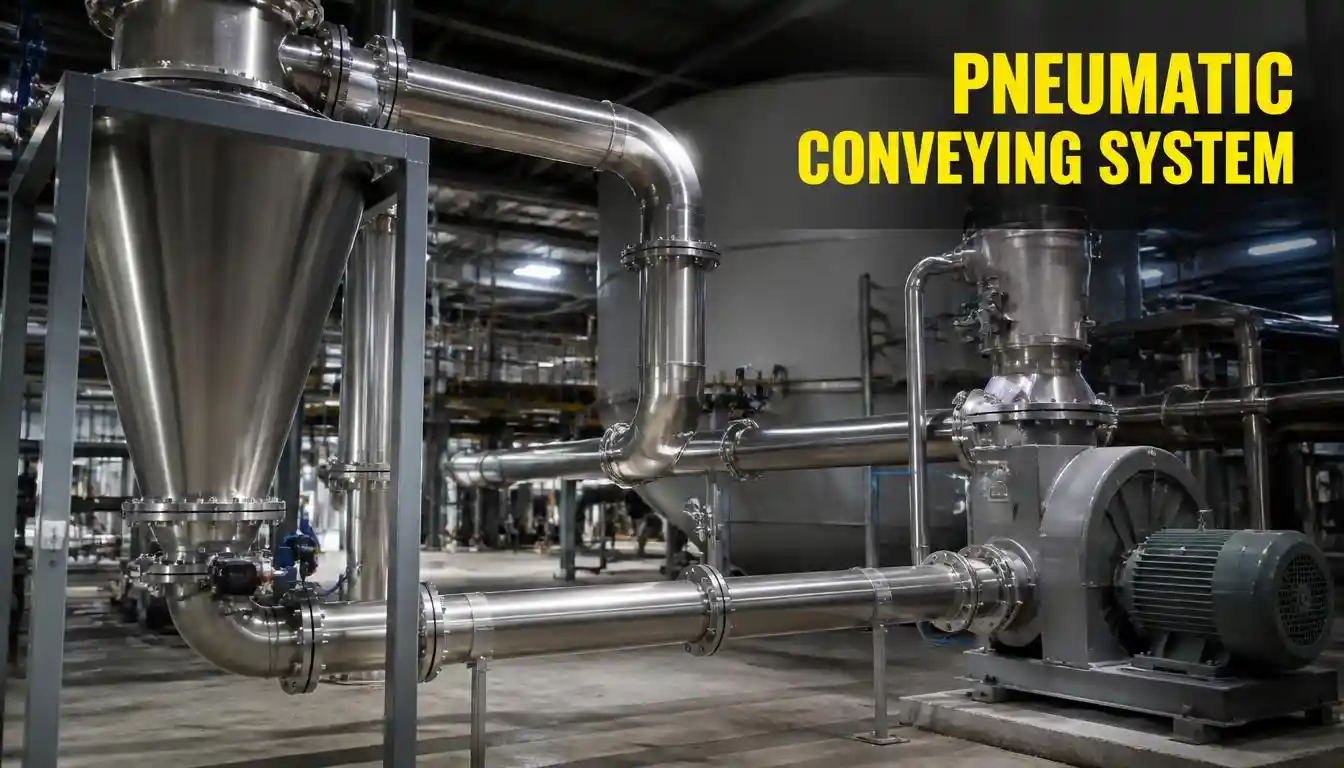
Anyone who’s spent time on a plant floor knows the moment a material handling line goes down, everything else stops with it. That’s usually when a pneumatic conveying system gets a second look — not as some abstract engineering concept, but as the thing standing between a smooth shift and a shutdown. At Mechstera, we’ve worked with enough facilities to say this plainly: the plants that treat conveying as an afterthought are the ones that call us during a crisis, not before one.
A pneumatic conveying system, put simply, moves bulk solids — powders, pellets, grains, granules — through enclosed pipework using a stream of air or another gas rather than belts, screws, or buckets. There’s no dramatic machinery to watch, no visible moving parts doing the heavy lifting. Air pressure (or vacuum) does the work instead. That’s part of why pneumatic conveying has become the default choice in food processing, pharmaceuticals, plastics, cement, and chemical manufacturing — industries where contamination control and layout flexibility matter as much as raw throughput.
Here’s the thing about this technology: it looks simple on paper and gets complicated fast in practice. The physics behind pneumatic conveyor systems depends on getting air velocity, particle size, pipe diameter, and material characteristics to work together. Get one of those wrong and you’re looking at line blockages, excessive attrition, or a compressor working overtime for no good reason.
How a Pneumatic Conveyor System Actually Works
The basic pneumatic conveyor working principle comes down to pressure differential. A blower or compressor generates airflow, that air enters a sealed pipeline carrying the bulk material, and the pressure difference between the intake and discharge ends pushes everything through. At the receiving end, a filter or cyclone separator pulls the product out of the air stream and the cleaned air either vents or recirculates.
What trips people up is assuming one design fits every material. It doesn’t. A pneumatic conveyor diagram for flour handling looks nothing like one built for abrasive mineral powders — the pipe routing, bend radius, and air mover sizing all shift based on what’s actually moving through the line. We’ve seen operators try to force a system built for gentle food-grade transfer into service for something dense and abrasive, and it never ends well. Wear rates spike, energy costs climb, and the maintenance team ends up patching the same elbow section every few months.
Dense Phase vs. Dilute Phase Air Conveying
This is where most of the real engineering decisions happen. Broadly, air conveyors run in one of two modes, and the choice affects everything downstream — energy use, particle damage, pipe sizing, distance capability.
| Factor | Dilute Phase | Dense Phase |
|---|---|---|
| Air velocity | High | Low |
| Material-to-air ratio | Low | High |
| Particle attrition | Higher | Lower |
| Operating pressure | Lower (roughly 0.5–1 bar) | Higher (often 2.5+ bar) |
| Best suited for | Light, non-fragile materials | Abrasive or fragile materials |
| Energy efficiency | Less efficient over distance | More efficient per unit moved |
There’s a transitional zone between the two, sometimes called strand phase or medium phase, where materials move partly suspended and partly in slower moving pockets. Selecting the right mode isn’t something you eyeball — it typically calls for bench testing the actual material, because bulk density, moisture content, and particle shape all shift the numbers. A methodology for making this decision has been laid out well by the American Institute of Chemical Engineers, which notes that pneumatic conveying design and selection isn’t generally taught in university engineering programs, leaving many facilities to lean on suppliers and trial-and-error instead. That’s a gap we try to close with clients directly rather than leaving it to guesswork. uspto
Where Pneumatic Conveying Systems Earn Their Keep
The appeal isn’t just theoretical. Compared with mechanical conveying — screws, belts, drag chains — pneumatic conveyor systems route around existing equipment using relatively small-diameter pipe, which matters enormously in retrofit projects where floor space is already spoken for. Dust containment is another real advantage; a sealed pipeline keeps fine powders from escaping into the plant atmosphere, which matters for both housekeeping and worker safety. And because there are fewer moving parts than a mechanical system, wear items are limited mostly to bends, diverter valves, and the air mover itself.
That said, buyers chasing the lowest upfront price on an air conveying package usually regret it within the first year. Undersized blowers, thin-wall piping, and skipped wear-liner sections are the most common corners cut, and they all show up later as unplanned downtime. A system priced right the first time, sized around real material data rather than a rough estimate, almost always costs less over its working life.
Pros and Cons of Pneumatic Conveying Systems
| Pros | Cons |
|---|---|
| Flexible pipe routing around existing plant layout | Higher energy use than some mechanical alternatives if poorly sized |
| Enclosed system limits dust and contamination | Abrasive materials can cause pipe and bend wear |
| Fewer moving parts, generally lower maintenance | Not ideal for very sticky or cohesive materials |
| Suitable for long distances and multiple elevation changes | Requires trial data for accurate sizing |
| Good product containment for food and pharma applications | Higher capital cost for dense phase setups |
Power Consumption and Practical Sizing Notes
Power draw in a pneumatic conveying system isn’t a single number you can pull from a catalog — it’s shaped by pipe bore, total pressure drop, conveying distance, and the flow rate of solids moving through the line. Oversizing components is a mistake we see constantly. A blower sized for “extra safety margin” often just burns more energy without moving more product, and an oversized rotary airlock valve can actually introduce more air leakage than it prevents. Matching the feeder speed to the actual material flow rate, rather than running it wide open, tends to be the single biggest lever for cutting energy waste.
Materials matter here too. Free-flowing pellets and granules with good air retention behave predictably in dense phase; sticky or cohesive powders often don’t tolerate pneumatic transport well at all and may need a hybrid or purely mechanical solution instead. Knowing which category a material falls into before committing to a design saves a lot of rework later.
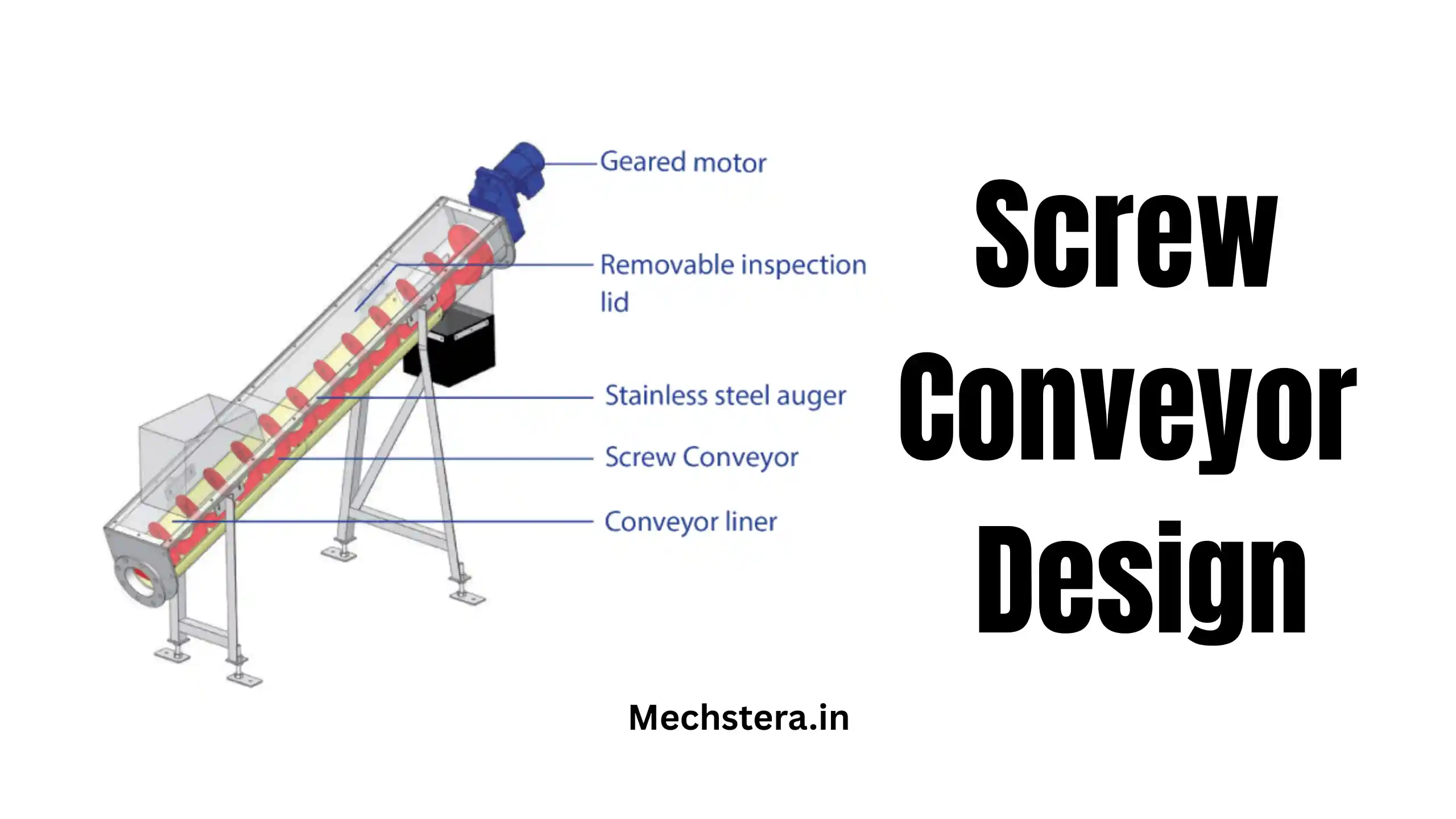
Meanwhile you can also checkout our Blog : Screw Conveyor Design: Ultimate Engineering Guide
Modifying or Expanding an Existing System
Retrofitting a pneumatic conveyor system is rarely as simple as tapping into an existing line. Adding a new destination, rerouting a run, or increasing capacity all change the pressure balance across the whole system, not just the section being touched. We typically start by re-collecting real data on the material being conveyed — particle size, bulk density, moisture — because assumptions from the original install often don’t hold years later, especially if the source material has changed suppliers or formulations.
Two things worth checking before any modification:
- Confirm current air pressure and flow rates against what the original design called for — drift happens gradually and often goes unnoticed until capacity drops.
- Test material attrition tolerance again, particularly if the product formulation or particle grading has shifted since commissioning.
Frequently Asked Questions
What’s the difference between an air conveyor and a pneumatic conveying system?
They’re generally the same thing — “air conveyor” is just informal shorthand for a pneumatic conveying system, since air is the medium doing the actual work of moving material.
Can a pneumatic conveying system handle abrasive materials?
Yes, though dense phase conveying is usually the better fit, since lower velocities reduce wear on both the pipeline and the material itself.
How far can a pneumatic conveyor system move material?
Distances well beyond a thousand meters are achievable with the right dense-phase design, though efficiency and pressure requirements scale with distance, so longer runs need careful engineering rather than just a bigger blower.
Are pneumatic conveying systems more expensive than mechanical conveyors?
Upfront costs can run higher, particularly for dense phase setups, but the reduced maintenance and better dust containment often even things out over the equipment’s working life.
Is vacuum or pressure conveying better?
It depends on the material and layout — vacuum systems tend to suit shorter runs and situations needing extra containment at the pickup point, while pressure systems generally handle longer distances more efficiently.