If you’ve ever stood next to a running belt conveyor on a factory floor, you know the sound before you know the machine: that low, steady hum of a motor doing exactly what it’s built to do. At Mechstera, we’ve installed and serviced enough of these systems to say this plainly: the belt conveyor working principle isn’t complicated, but getting the details right is what separates a system that runs for fifteen years from one that’s back in the maintenance log every month.
What a Belt Conveyor Actually Does
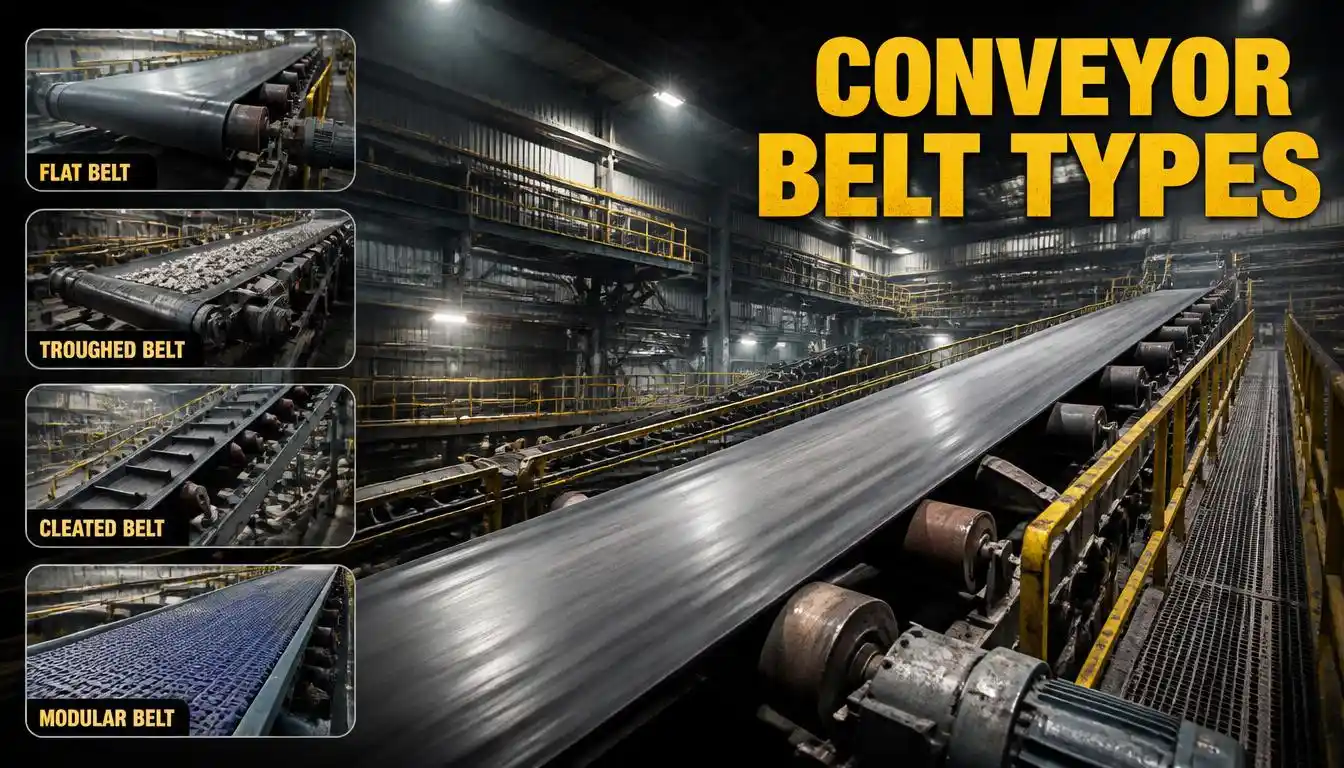
Strip away the jargon and a belt conveyor is just a loop of material usually rubber, PVC, or fabric-reinforced belting stretched between two or more pulleys, moving items from point A to point B without anyone having to lift a finger. It sounds almost too simple to matter, but that simplicity is the whole point. Factories, warehouses, mines, and airports all lean on this same basic mechanism because it scales. A small parts-assembly line and a mile-long mining conveyor both run on the same core idea, just at wildly different sizes.
The Belt Conveyor Working Principle Explained
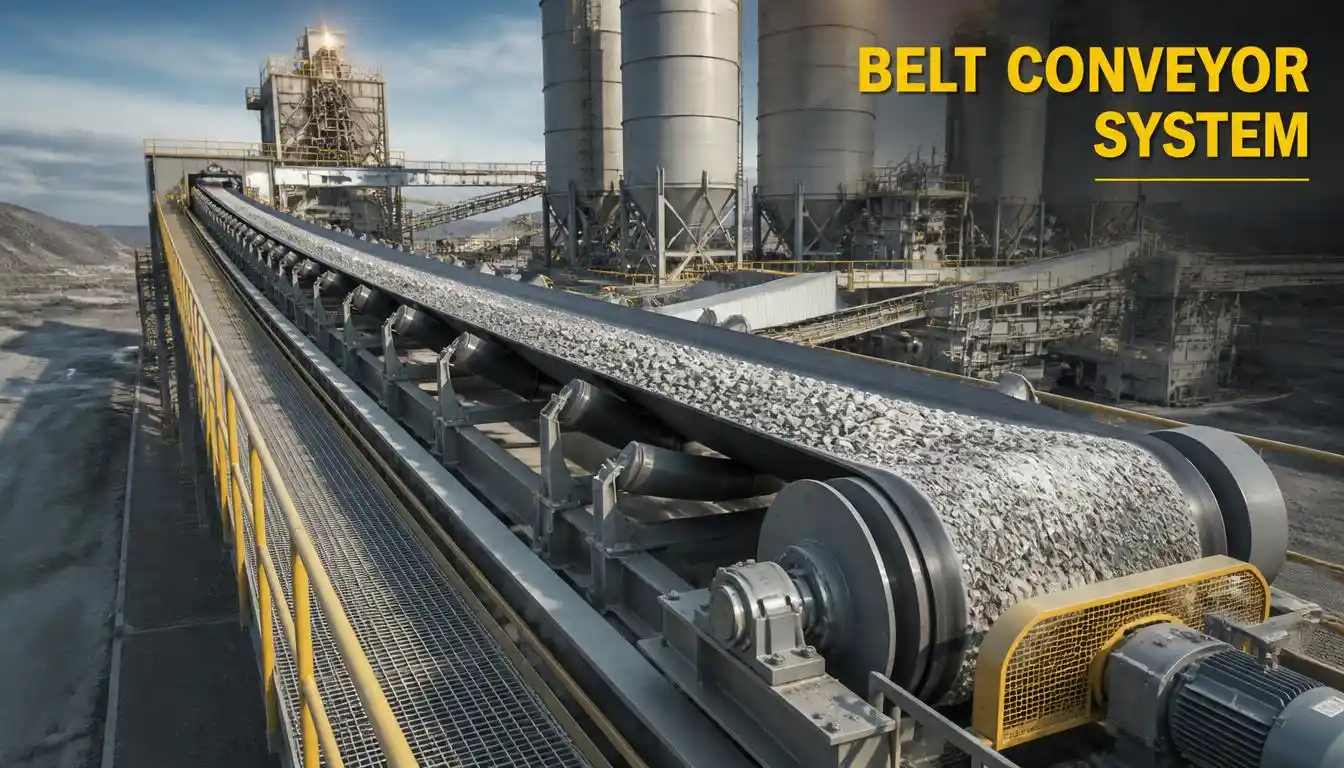
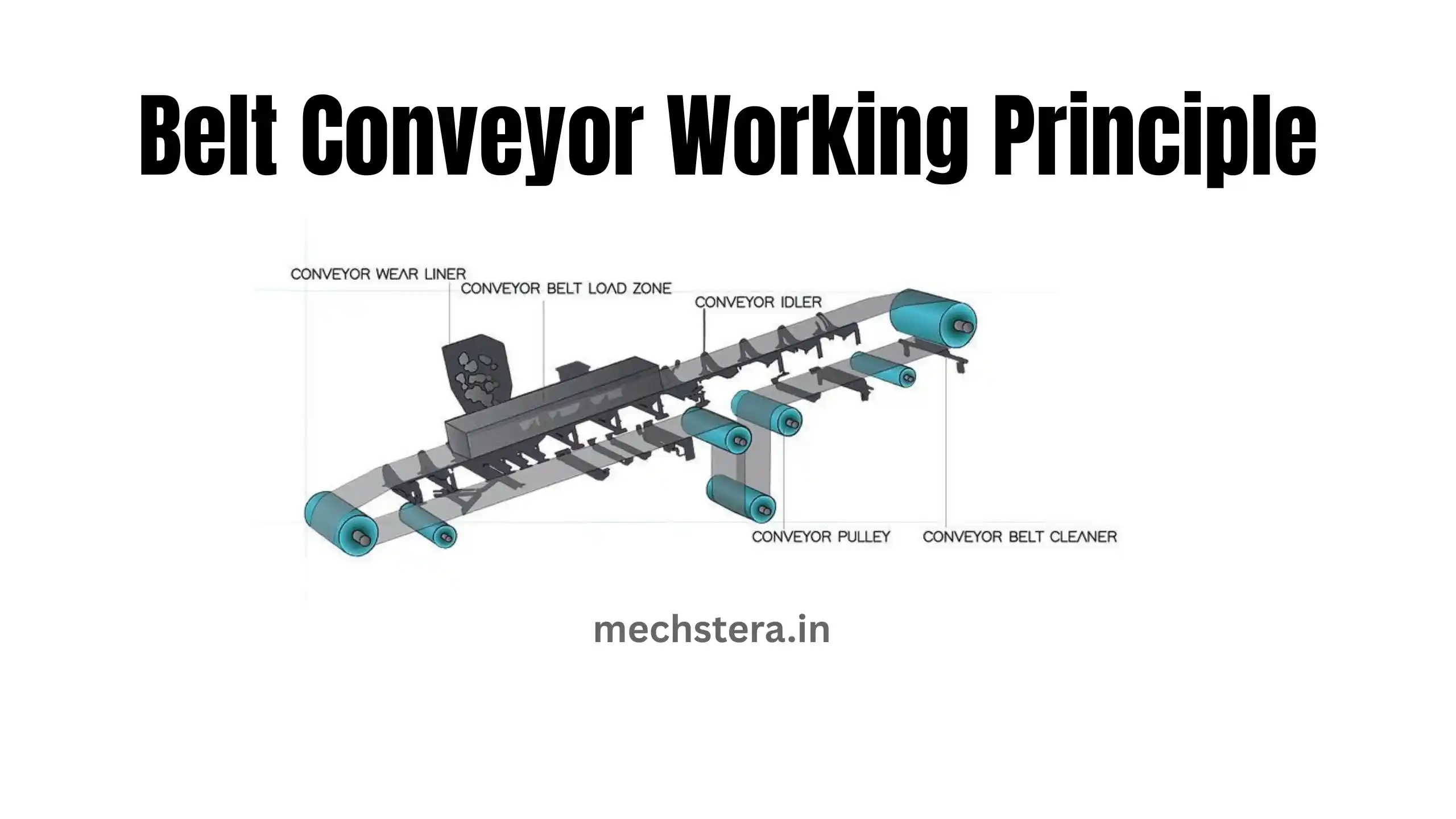
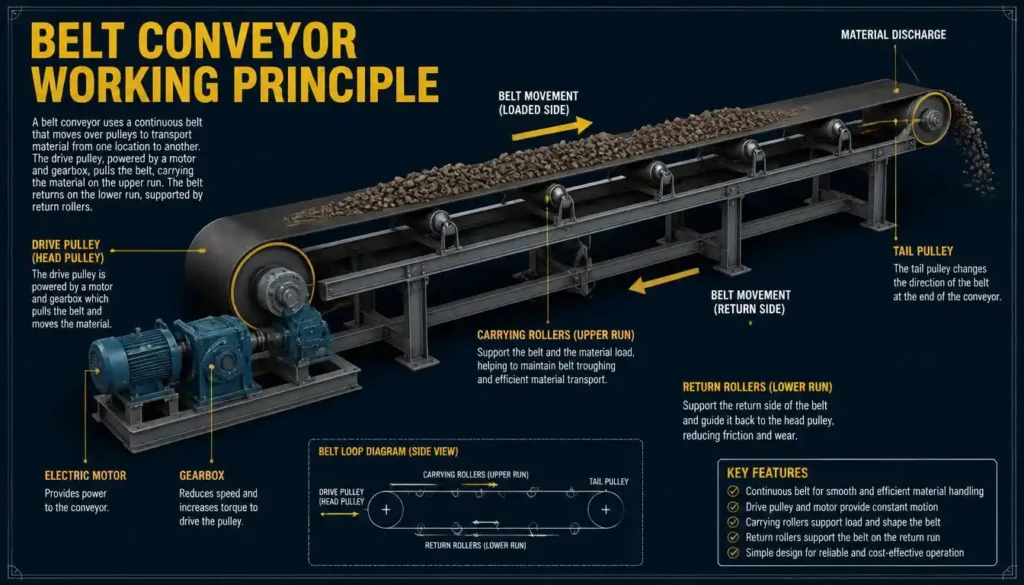
Here’s the part people actually want to understand: how does the belt conveyor working principle translate into motion? A motor drives one pulley we call this the drive pulley or head pulley and as it spins, friction between the pulley’s surface and the underside of the belt drags the belt along with it. That’s really the entire mechanism in one sentence. No gears grinding against the material itself, no chains pulling boxes one by one. Just friction, applied continuously, moving a loop of belting around its path.
The second pulley, sometimes called the tail pulley or bend pulley, doesn’t power anything its job is just to keep the belt tensioned and change its direction so the loop closes properly. In practice, longer conveyors add extra idler rollers underneath to stop the belt from sagging under load, because a sagging belt wastes energy and wears out faster than one held taut. We’ve seen plants try to cut costs by skimping on idler spacing, and it almost always costs more in belt replacement down the line.
The Parts That Make the Belt Conveyor Working Principle Possible
None of this works without three structural pieces doing their jobs quietly in the background. The frame is the skeleton it has to be rigid enough to carry the dead weight of the belt plus whatever’s riding on it, and if it flexes under load, everything downstream of that point starts misbehaving. The drive mechanism, meaning the motor and gearbox pairing, is what converts electrical energy into the rotational force the pulley needs. And the loading zone, wherever material actually gets placed onto or removed from the belt, tends to be where operators spend most of their attention, since that’s where jams and misalignment usually start.
Mechstera’s Take: Pros and Cons of Belt Conveyor Systems
| Advantage | Trade-off |
|---|---|
| Handles high volumes continuously without manual labor | Initial installation cost can be steep for long runs |
| Works across inclines, declines, and straight runs | Belt wear and tear requires scheduled replacement |
| Low noise and energy use compared to mechanical alternatives | Not ideal for very fine powders or fragile items without modification |
| Easy to automate with PLCs and sensors | Sagging or misalignment reduces efficiency if idlers aren’t maintained |
| Scales from small assembly lines to mile-long mining routes | Fixed path less flexible than pneumatic conveying systems for scattered layouts |
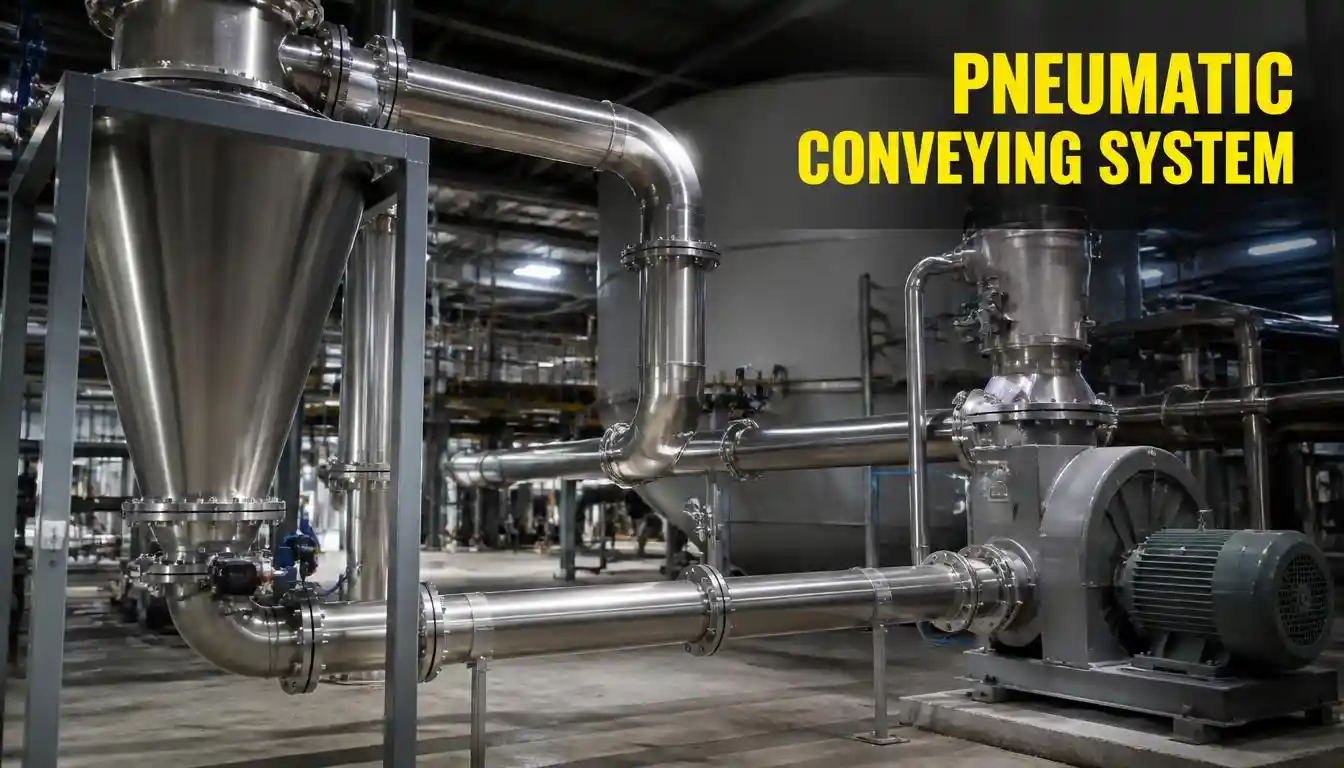
That last row is worth sitting with. If your material handling needs involve moving powders or granules through enclosed piping rather than an open belt, a pneumatic conveying system often makes more sense than adapting a belt conveyor to a job it wasn’t built for. We tell clients this upfront, even when it means recommending a different product line altogether.
Speed, Control, and Where Automation Fits In
Modern conveyor installations rarely run on a simple on/off switch anymore. Variable frequency drives adjust belt speed to match whatever’s happening downstream, which matters a lot on a packaging line where one station is slower than the next. Direction control lets certain belts reverse, which is handy in sortation systems where items need to go two different ways depending on a scan result. And sensors proximity switches, load cells, alignment trackers feed data back to a programmable logic controller that makes micro-adjustments faster than a human operator ever could. Honestly, the automation layer is where most of the real engineering happens today; the mechanical belt conveyor working principle underneath hasn’t changed much in decades, but the intelligence wrapped around it keeps getting sharper.
Types of Belt Conveyor Systems Compared
| Type | Best Suited For | Notable Limitation |
|---|---|---|
| Flat belt conveyor | General-purpose, high-volume moving | Limited to relatively flat or gently inclined paths |
| Incline/decline conveyor | Moving items between floor levels | Needs cleats or textured belting to prevent slippage |
| Curve belt conveyor | Routing items around obstacles or corners | More complex frame engineering than straight runs |
| Sandwich belt conveyor | Steep inclines or loose/fragile materials | Higher cost due to dual-belt design |
| Sanitary/washdown conveyor | Food, pharma, and cleanroom environments | Stainless components add to upfront investment |
A Few Signs It’s Time to Service Your Conveyor
- The belt tracks off-center even after tension adjustments
- You’re hearing a rhythmic squeal that wasn’t there a month ago
- Material is spilling at the loading zone more than usual
- The motor runs noticeably hotter than normal operating temperature
- Idler rollers have visible flat spots or won’t spin freely by hand
Catching these early is cheaper than replacing an entire belt run, and in our experience, plants that build a five-minute daily walk-past into their routine avoid the majority of unplanned downtime.
Choosing the Right Belt Conveyor for Your Operation
There isn’t a universal answer here, and anyone who tells you otherwise is probably trying to sell you the same conveyor regardless of your application. What actually matters is the weight and shape of what you’re moving, the physical footprint you have available on the floor, how fast material needs to move to keep up with the rest of your line, and whether the environment is dry, wet, dusty, or food-grade. Cost matters too, obviously, but buyers chasing the lowest sticker price usually regret it once maintenance bills start piling up. A slightly more expensive belt with better wear resistance almost always wins out over a two-year horizon.
If you want the deeper mechanical breakdown belt tracking, transverse rigidity, edge guiding this fabric conveyor engineering guide from Pooley Inc. goes into the kind of technical detail that’s genuinely useful for anyone specifying a custom system.
Meanwhile, you can also check out our guide on : Belt Conveyor: Essential Design and Working Guide
How the Belt Conveyor Principle of Construction and Working Comes Together
Put simply, once you understand the belt conveyor principle of construction and working, the rest of the system automation, sensors, custom framing is just refinement layered on top of a friction-driven loop. That’s the diagram most engineering textbooks show, and it holds up in real plants just as well as it does on paper.
FAQs
How does a belt conveyor actually move material?
A motor turns the drive pulley, and friction between the pulley and belt pulls the belt and whatever’s on it along the conveyor path.
What’s the difference between a drive pulley and an idler pulley?
The drive pulley is powered and moves the belt; idler pulleys are unpowered and simply support or tension the belt along its run.
Can belt conveyors run in reverse?
Yes reversing the motor’s direction lets the belt move materials both ways, which is common in sortation and loading applications.
Are belt conveyors better than pneumatic conveying systems?
Not universally. Belt conveyors suit bulk solid items on a fixed path; pneumatic conveying systems handle powders or granules through enclosed tubing and fit different layout needs.
How often should a belt conveyor be inspected?
Daily visual checks plus a more thorough monthly inspection of tension, alignment, and idler condition is a reasonable baseline for most industrial setups.