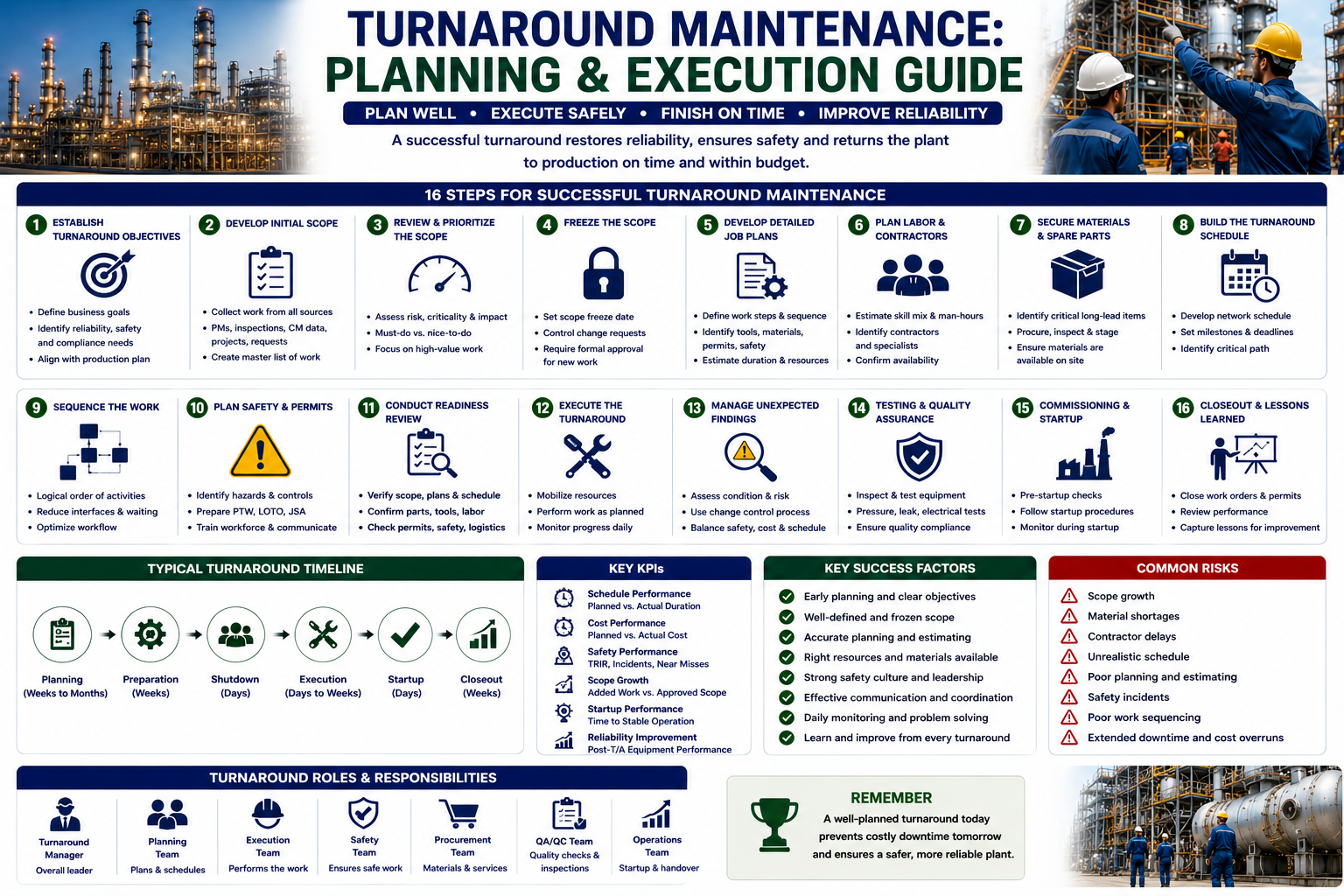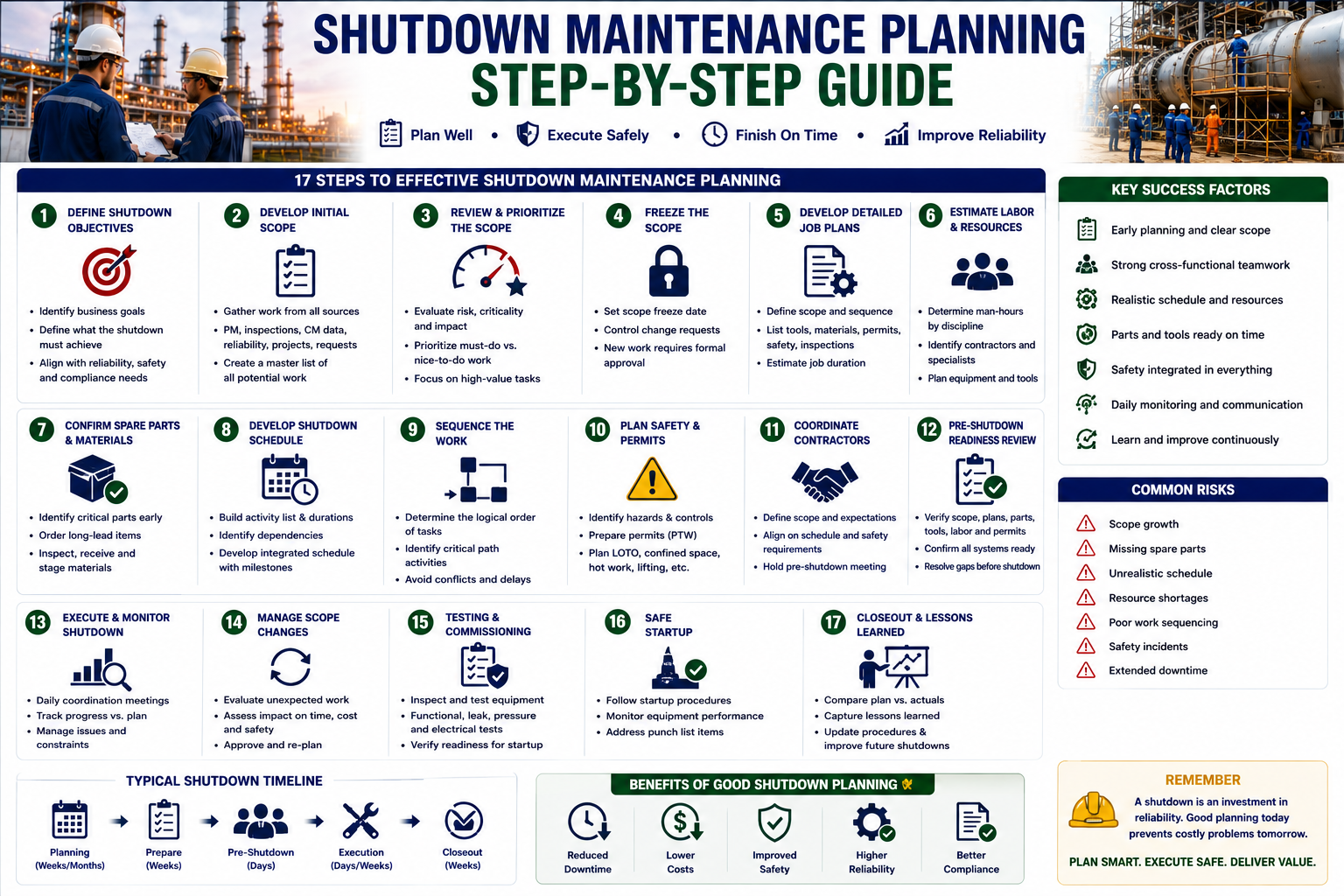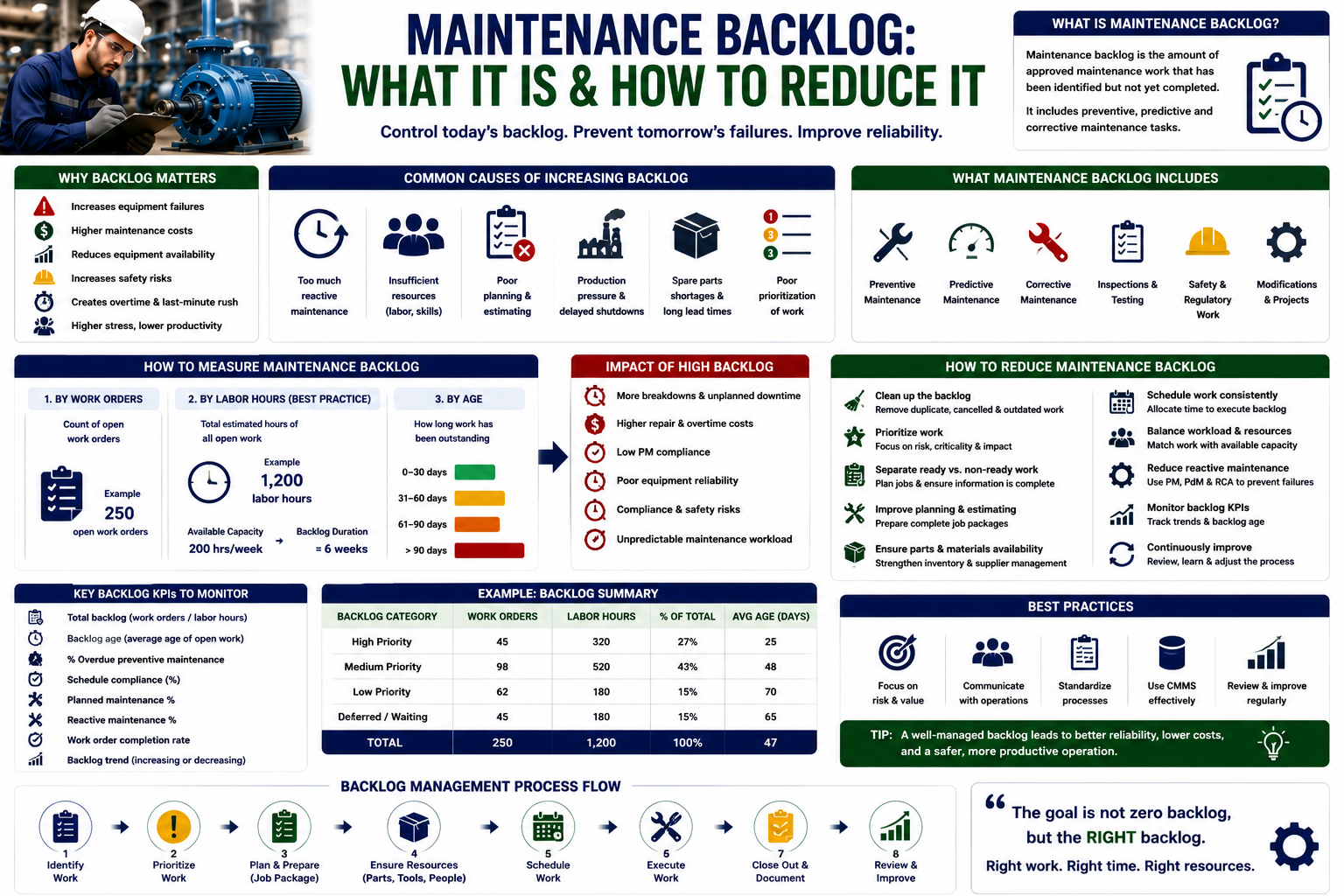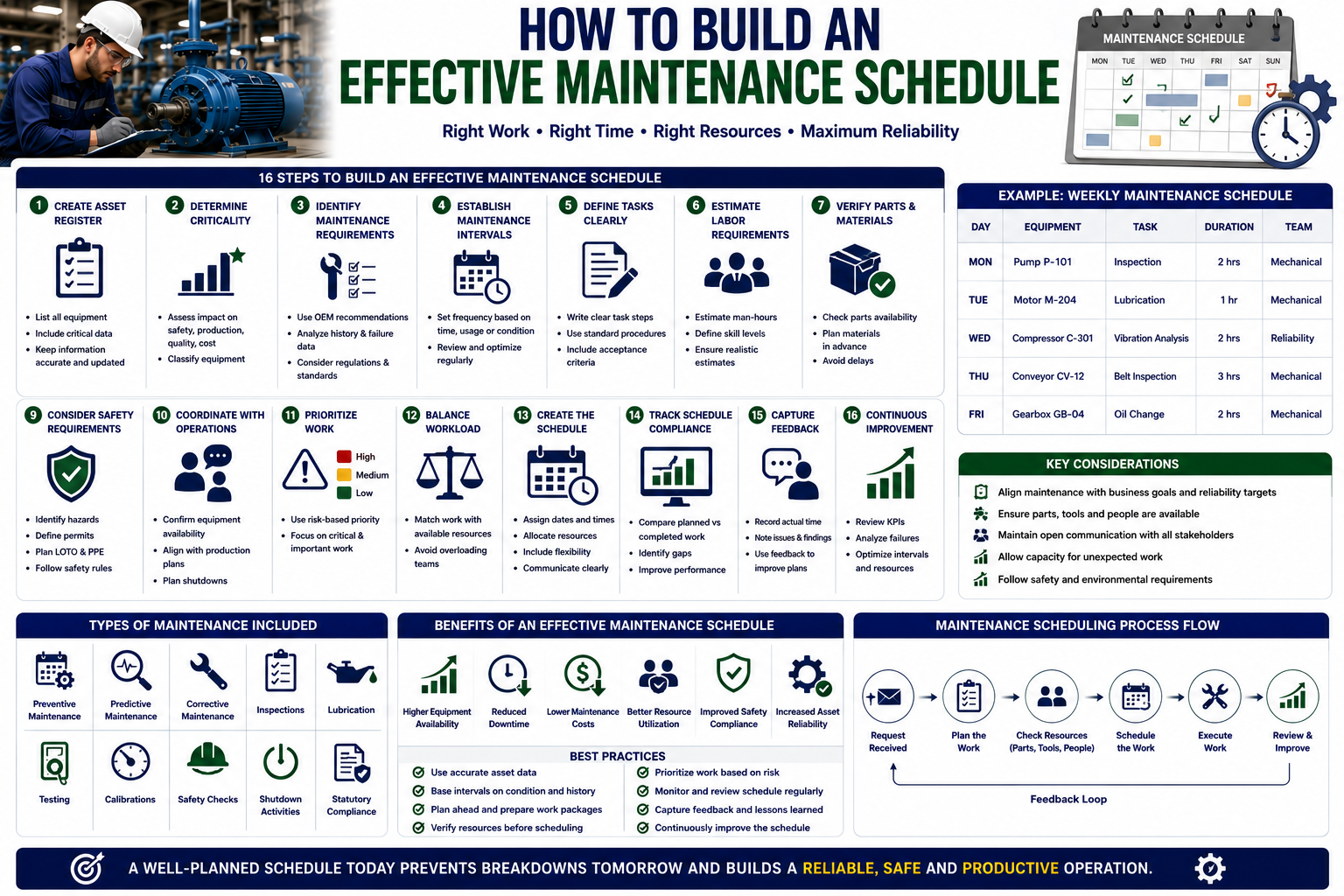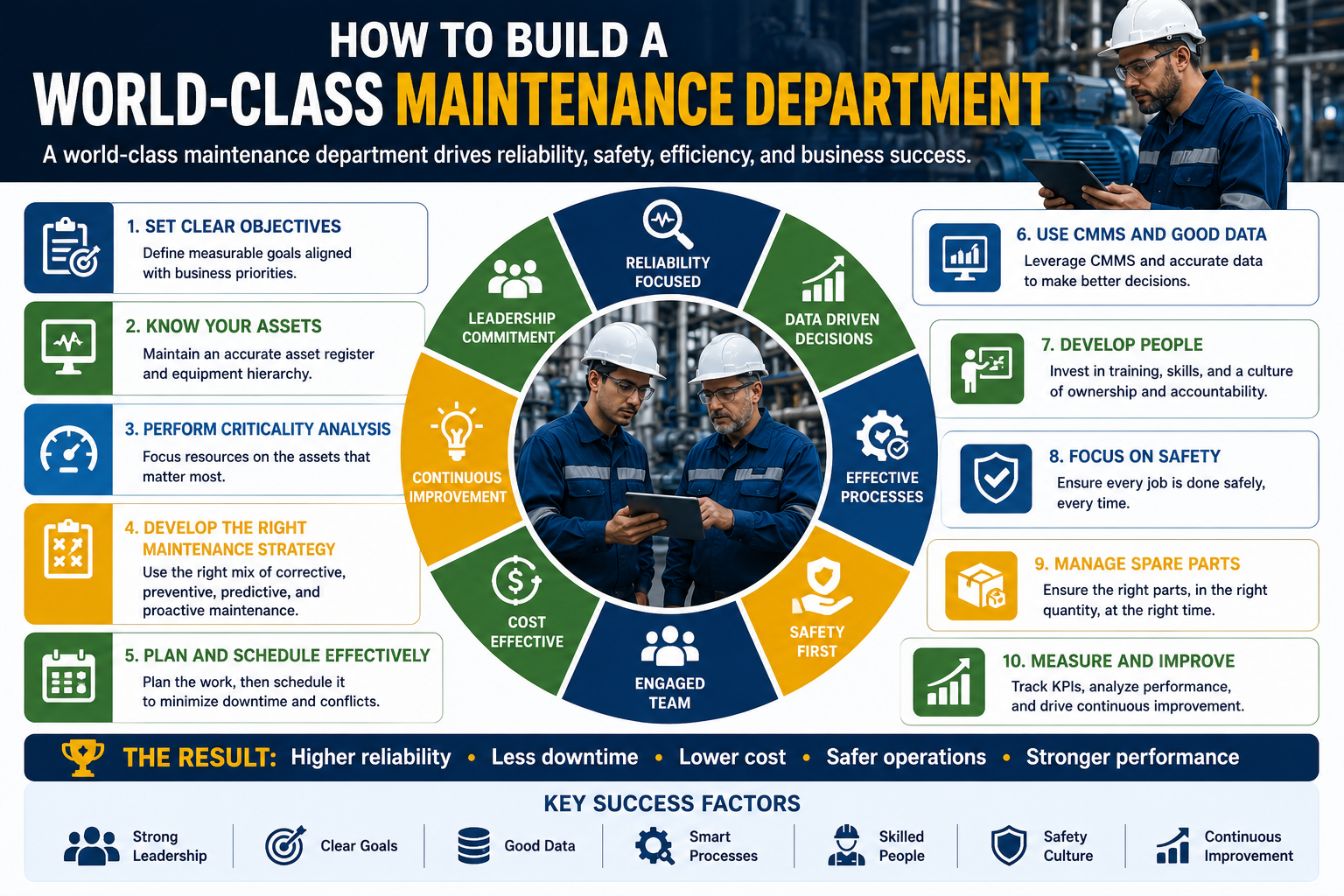
A world-class maintenance department is more than a team that repairs equipment when it breaks down. In modern industry, maintenance is a strategic function that directly influences production, safety, reliability, product quality, energy efficiency, and operating costs.
Manufacturing plants, oil and gas facilities, power plants, mining operations, processing facilities, and other industrial organizations depend on reliable equipment. When maintenance is poorly managed, organizations experience recurring failures, excessive downtime, emergency repairs, high spare-parts costs, and reduced productivity.
Building a world-class maintenance department requires a structured approach that combines people, processes, technology, reliability engineering, planning, data, and continuous improvement.
This guide explains the key principles organizations can use to develop a high-performing maintenance department.
What Is a World-Class Maintenance Department?
A world-class maintenance department is an organized maintenance function that consistently delivers safe, reliable, efficient, and cost-effective asset performance.
Instead of measuring success simply by how quickly technicians repair failed equipment, a world-class department focuses on preventing failures, improving reliability, optimizing maintenance resources, and supporting the organization’s overall business objectives.
Its characteristics typically include:
- High equipment reliability
- Low unplanned downtime
- Effective preventive maintenance
- Condition-based and predictive maintenance
- Strong maintenance planning and scheduling
- Accurate equipment data
- Effective spare-parts management
- Skilled and engaged employees
- Strong safety culture
- Root Cause Analysis
- Continuous improvement
- Effective use of CMMS and digital tools
The goal is not to perform more maintenance. The goal is to perform the right maintenance at the right time and at the right cost.
1. Establish Clear Maintenance Objectives
The first step in building a world-class maintenance department is defining what success means.
Maintenance objectives should support the organization’s broader business goals.
For example, objectives may include:
- Reducing unplanned downtime
- Improving equipment availability
- Increasing Mean Time Between Failures (MTBF)
- Reducing Mean Time To Repair (MTTR)
- Improving preventive-maintenance compliance
- Reducing maintenance costs
- Improving workplace safety
- Reducing repeat equipment failures
These objectives should be measurable and regularly reviewed.
A maintenance department should avoid focusing only on cost reduction. Cutting maintenance spending without considering reliability can increase failures and create higher costs elsewhere.
The focus should be on optimizing total asset performance and lifecycle cost.
2. Develop an Accurate Asset Register
You cannot effectively manage assets if you do not know what assets you have.
A world-class maintenance department should maintain an accurate asset register containing information such as:
- Equipment identification number
- Equipment description
- Manufacturer
- Model
- Serial number
- Location
- Technical specifications
- Maintenance requirements
- Critical spare parts
- Failure history
Assets should also be organized into a logical equipment hierarchy.
For example:
Plant → Production Area → System → Equipment → Component
A strong asset hierarchy makes maintenance planning, reporting, failure analysis, and CMMS management much easier.
3. Perform Asset Criticality Analysis
Not every piece of equipment deserves the same level of maintenance attention.
Asset criticality analysis helps identify equipment where failure could have significant consequences.
Criticality may be based on:
- Safety impact
- Production impact
- Environmental impact
- Quality impact
- Repair cost
- Replacement cost
- Availability of spare equipment
- Failure frequency
- Recovery time
A critical production compressor, for example, may require sophisticated condition monitoring, while a low-cost non-critical fan may only require basic preventive maintenance.
This allows the department to allocate resources according to risk and business impact.
4. Build the Right Maintenance Strategy
A world-class maintenance department uses different strategies for different assets.
These may include:
Corrective Maintenance
Used where equipment failure can safely and economically be managed.
Preventive Maintenance
Scheduled inspections, servicing, lubrication, and component replacement.
Predictive Maintenance
Condition monitoring based on vibration, temperature, oil analysis, thermography, ultrasonic inspection, and other techniques.
Proactive Maintenance
Eliminating the underlying causes of recurring failures.
The maintenance strategy should be based on equipment failure modes rather than simply applying the same maintenance schedule to every asset.
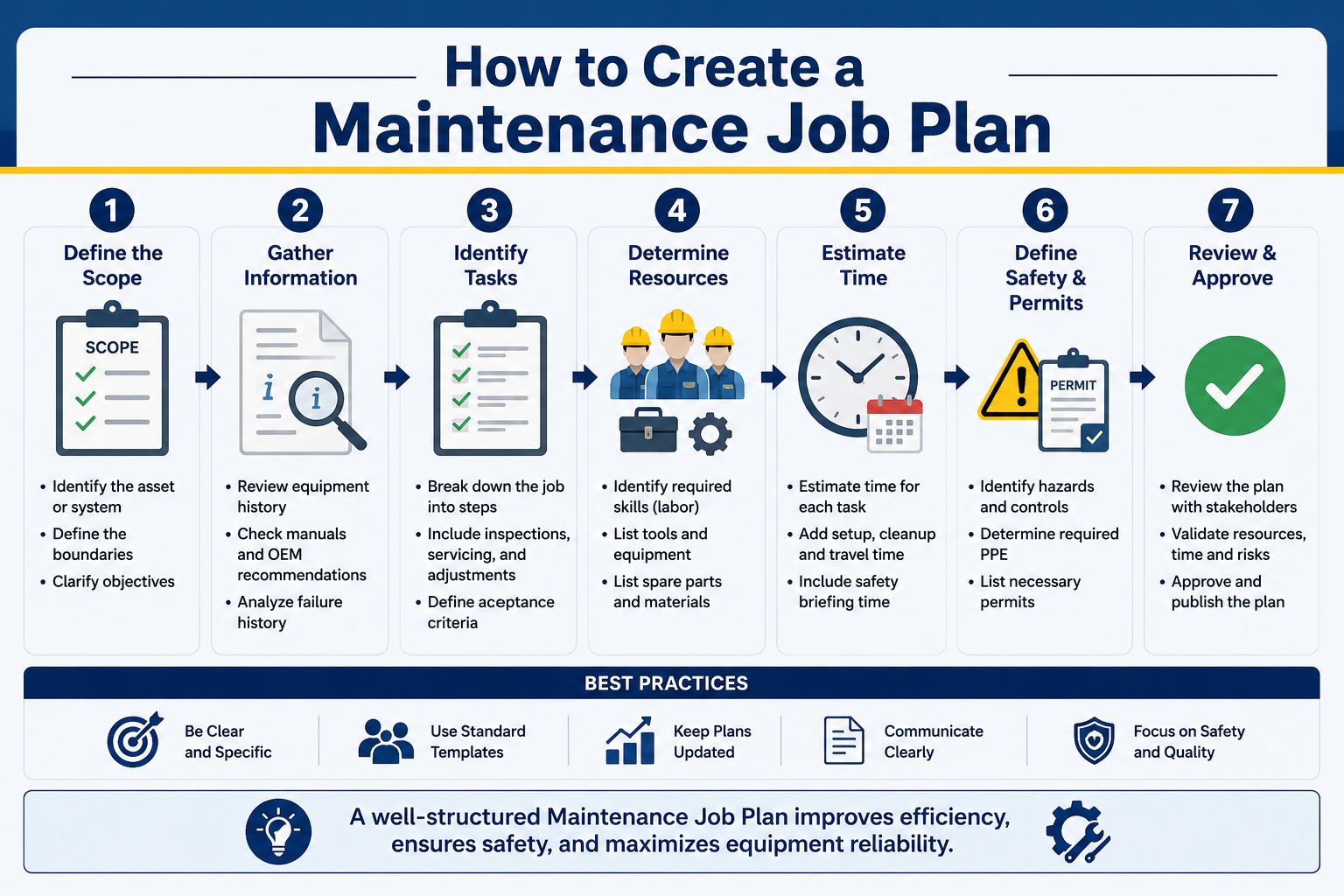
5. Strengthen Maintenance Planning
Poor planning is one of the major causes of inefficient maintenance.
Maintenance planning involves determining:
- What work needs to be done
- How the work should be performed
- What parts are required
- What tools are required
- What labor is required
- What safety requirements apply
- How long the work should take
A planner should prepare work packages before technicians begin the job.
Good planning reduces delays, waiting time, missing tools, incorrect spare parts, and unnecessary equipment downtime.
6. Improve Maintenance Scheduling
Planning and scheduling are related but different.
Planning determines how the work should be done.
Scheduling determines when the work should be performed.
A strong scheduling process coordinates maintenance activities with production requirements and resource availability.
Weekly and daily schedules can help maintenance teams establish priorities and ensure that planned work is completed efficiently.
Emergency work should be controlled rather than allowed to continuously disrupt planned activities.
7. Implement an Effective CMMS
A Computerized Maintenance Management System (CMMS) is an important tool for a modern maintenance department.
A CMMS can help manage:
- Work orders
- Preventive maintenance
- Equipment history
- Spare parts
- Maintenance schedules
- Labor
- Maintenance costs
- Failure information
- Maintenance KPIs
However, technology alone does not create a world-class maintenance department.
The quality of the information entered into the system is critical.
If equipment records are inaccurate or technicians do not properly document completed work, the CMMS cannot provide reliable information for decision-making.
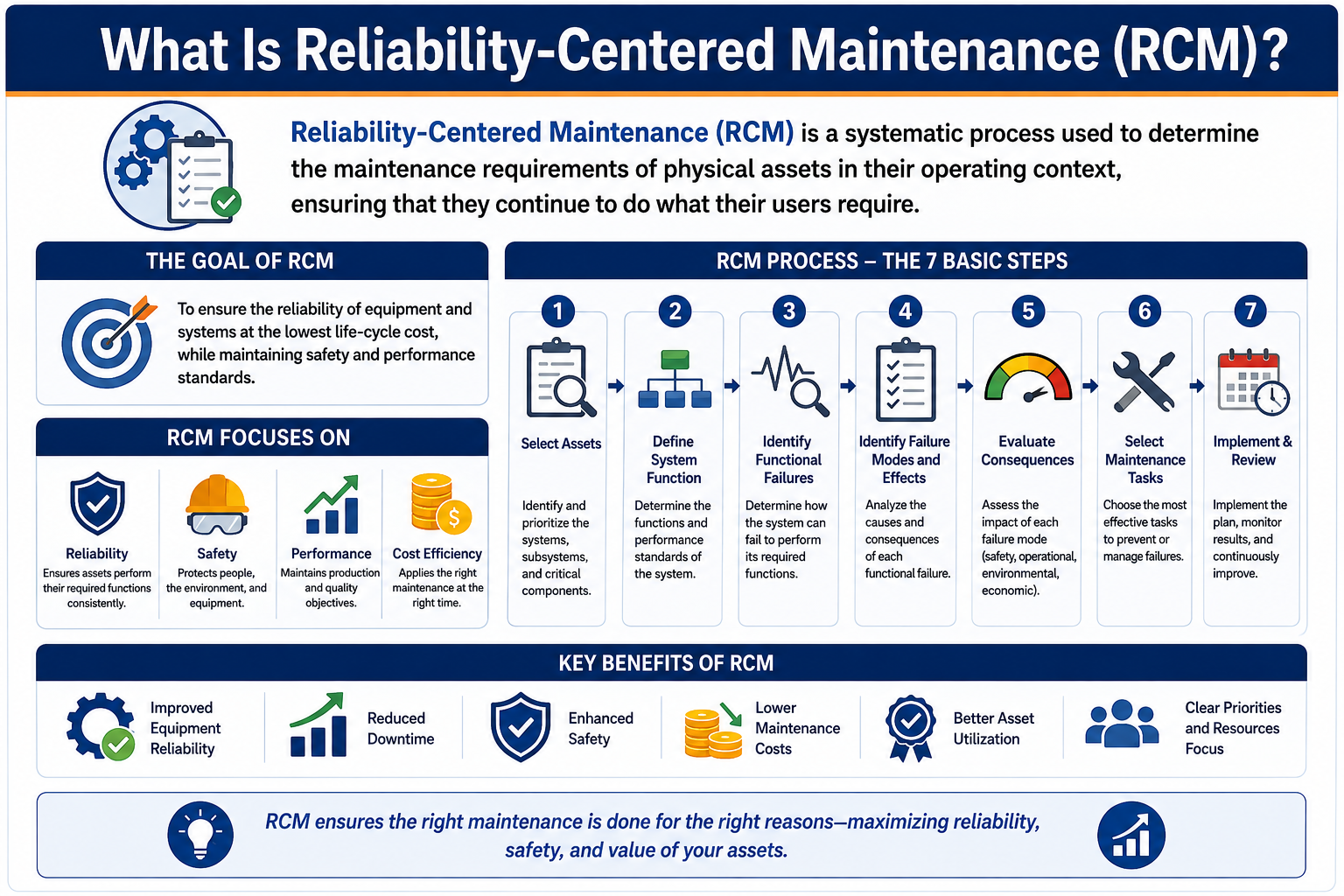
8. Develop a Strong Reliability Program
World-class maintenance departments do not simply repair failures. They work to reduce the probability of future failures.
Reliability activities may include:
- Root Cause Analysis (RCA)
- Failure Mode and Effects Analysis (FMEA)
- Reliability-Centered Maintenance (RCM)
- Bad-actor analysis
- Equipment criticality analysis
- Failure trend analysis
- Reliability improvement projects
For example, if the same pump fails repeatedly, the department should investigate why rather than simply replacing the failed component each time.
The goal is to eliminate recurring problems.
9. Invest in People and Training
People are one of the most important components of a successful maintenance organization.
Maintenance technicians and engineers need appropriate technical and problem-solving skills.
Training may cover:
- Mechanical maintenance
- Electrical maintenance
- Instrumentation
- Equipment troubleshooting
- Lubrication
- Vibration analysis
- Thermography
- Safety
- Root Cause Analysis
- CMMS usage
- Precision maintenance
Training should be based on actual competency requirements rather than simply completing courses for compliance.
A strong maintenance department also creates opportunities for experienced employees to transfer knowledge to newer team members.
10. Build a Strong Maintenance Safety Culture
Maintenance activities often involve significant hazards.
These may include:
- Electrical energy
- Rotating equipment
- Pressurized systems
- Chemicals
- Confined spaces
- Hot work
- Working at height
- Lifting operations
A world-class maintenance department places safety ahead of production pressure.
Important practices include:
- Lockout/Tagout
- Permit-to-work systems
- Risk assessments
- Job safety analysis
- Proper equipment isolation
- Appropriate personal protective equipment
- Safe work procedures
- Regular safety training
The objective is to ensure that maintenance work is completed safely every time.
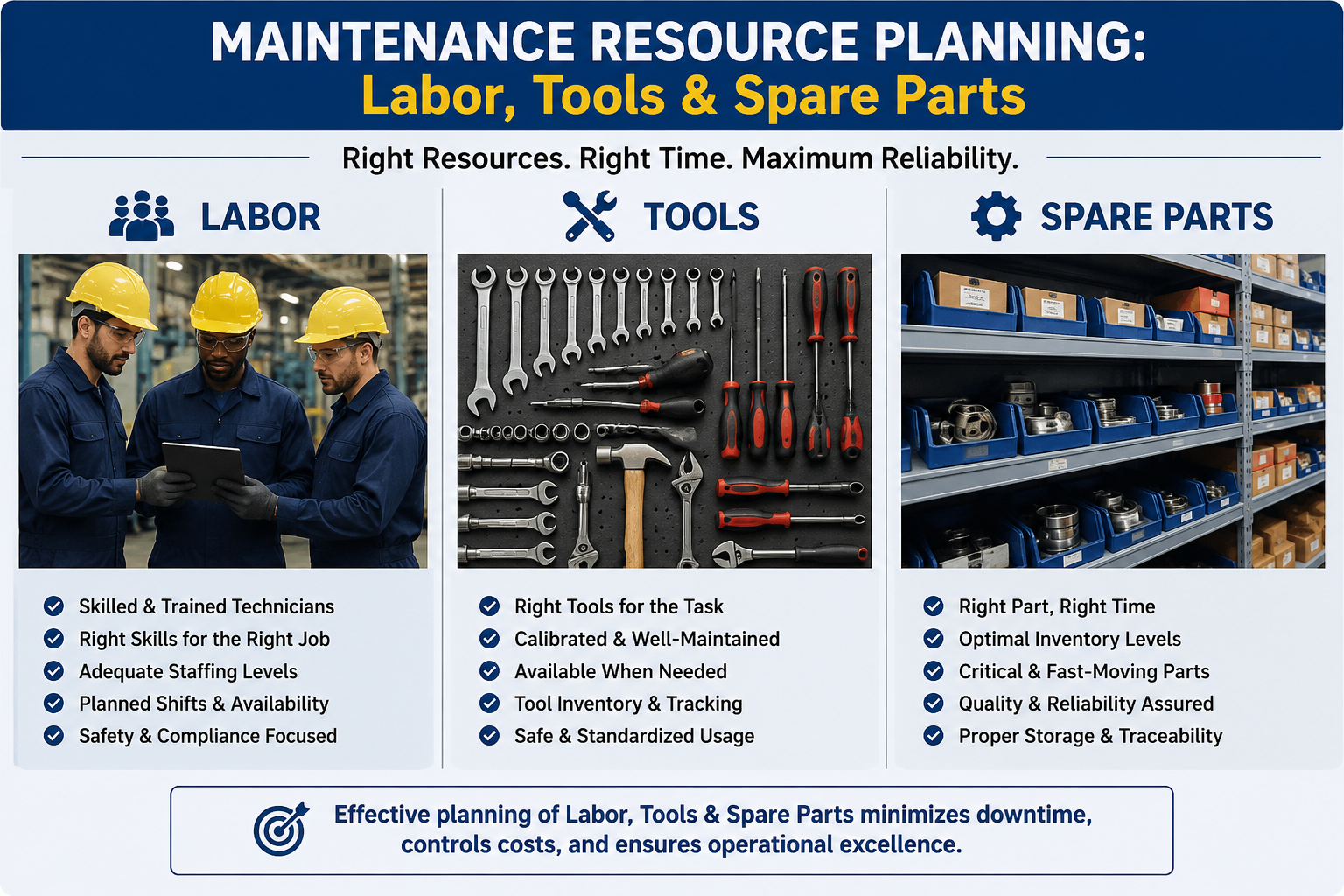
11. Improve Spare-Parts Management
A maintenance team cannot repair equipment efficiently if critical spare parts are unavailable.
At the same time, excessive inventory ties up capital and increases storage costs.
A world-class spare-parts strategy identifies:
- Critical spares
- Long-lead-time components
- Frequently used parts
- Equipment-specific components
- Interchangeable components
- Minimum and maximum stock levels
Spare-parts criticality should be linked to equipment criticality.
For critical equipment, maintaining essential spare parts can significantly reduce repair duration and downtime.
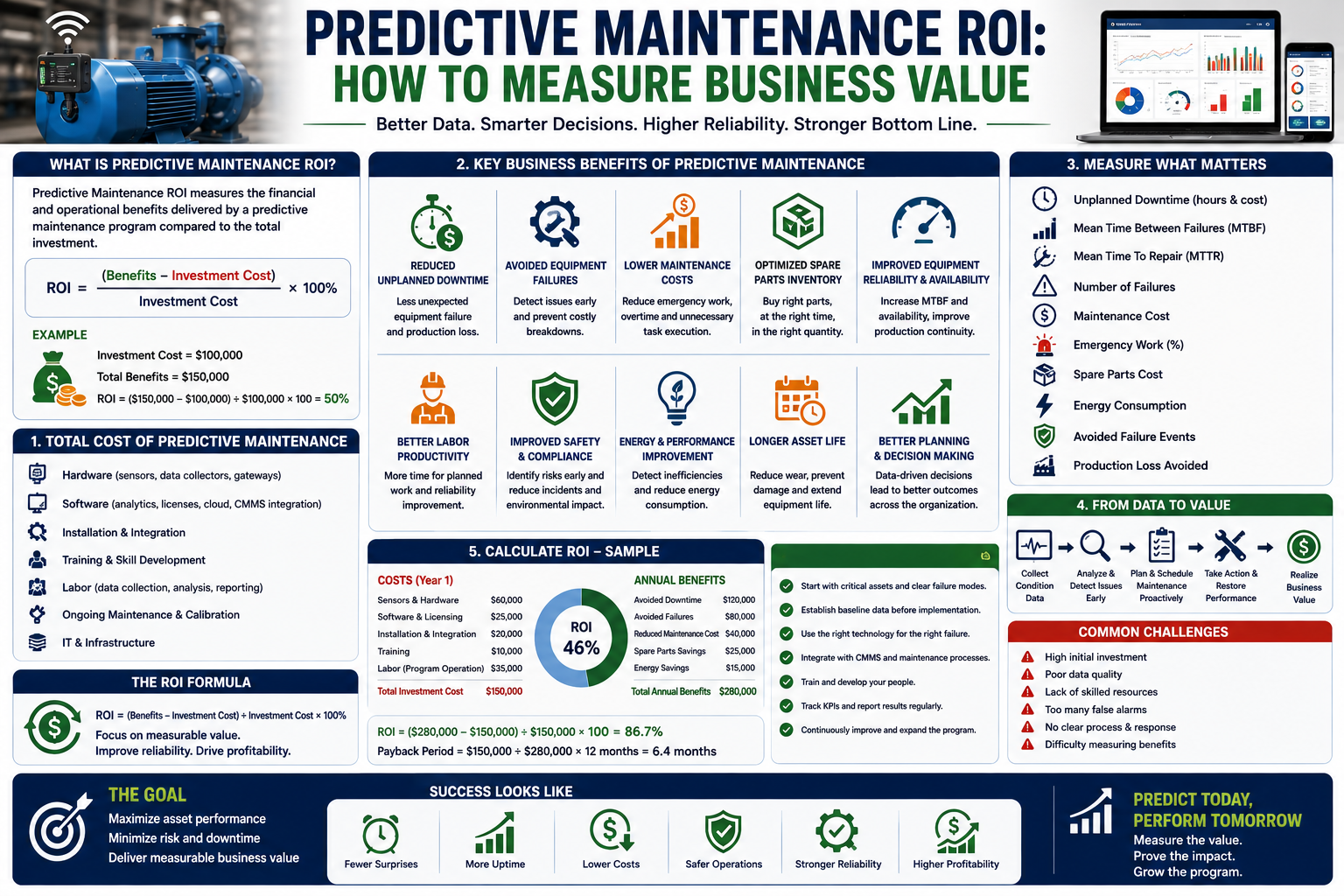
12. Use Maintenance KPIs
What gets measured can be improved.
A world-class maintenance department should monitor meaningful KPIs such as:
MTBF
Mean Time Between Failures measures average operating time between failures.
MTTR
Mean Time To Repair measures the average time required to restore equipment after failure.
Availability
Measures the ability of equipment to perform its intended function when required.
Planned vs Unplanned Work
Shows how much maintenance work is planned compared with emergency work.
Preventive-Maintenance Compliance
Measures whether scheduled maintenance is completed as required.
Maintenance Backlog
Shows the amount of outstanding maintenance work.
Repeat Failure Rate
Identifies equipment that continues to experience recurring problems.
KPIs should be used to drive improvement rather than simply to produce reports.
13. Create a Continuous Improvement Culture
A world-class maintenance department never assumes that its current processes are perfect.
Teams should regularly ask:
- What is causing our biggest downtime?
- Which equipment fails repeatedly?
- Which maintenance tasks provide little value?
- Where are technicians losing time?
- Which spare parts cause delays?
- Which procedures need improvement?
- How can we prevent failures rather than repeatedly repair them?
Small improvements can create significant results when applied consistently.
14. Use Data and Technology Strategically
Modern maintenance departments have access to more equipment data than ever before.
Technologies such as:
- IoT sensors
- Condition monitoring
- Predictive analytics
- Artificial intelligence
- Digital twins
- Mobile CMMS applications
- Automated inspection systems
can improve equipment visibility and decision-making.
However, technology should solve a real maintenance problem.
Organizations should avoid implementing technology simply because it is new. The technology must provide measurable value.
15. Develop Strong Cooperation With Operations
Maintenance cannot operate effectively in isolation.
Production and maintenance teams should work together to improve equipment performance.
Operators can provide valuable information about:
- Abnormal sounds
- Equipment behavior
- Process changes
- Leaks
- Temperature changes
- Performance problems
Operators can also perform basic inspections and identify abnormalities before they become major problems.
Strong cooperation between operations and maintenance creates shared ownership of equipment reliability.
How to Measure Progress Toward World-Class Maintenance
Building a world-class maintenance department does not happen overnight.
Organizations can assess progress by looking at:
- Reduced unplanned downtime
- Improved equipment availability
- Higher MTBF
- Lower MTTR
- Reduced repeat failures
- Increased planned maintenance
- Improved preventive-maintenance compliance
- Better spare-parts availability
- Improved safety performance
- Better maintenance data quality
- Increased employee competency
The department should establish a baseline and track improvement over time.