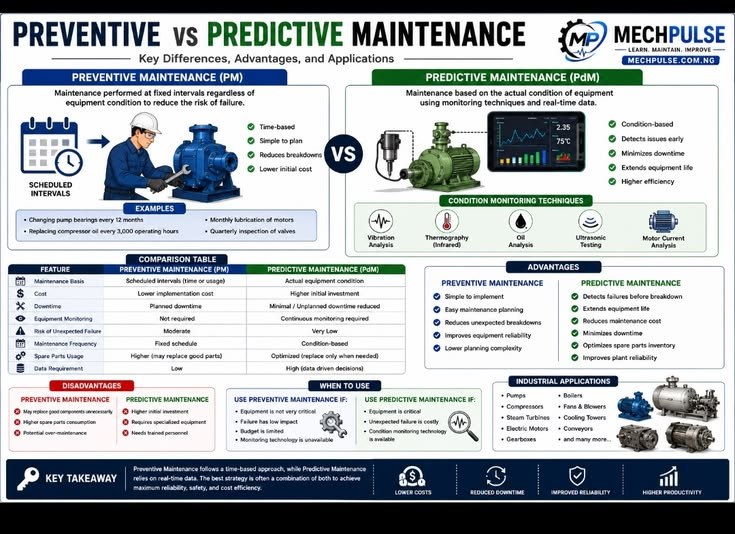
Maintenance plays a major role in the reliability, safety, and performance of industrial equipment. Every machine eventually experiences some form of wear, deterioration, or failure. The difference between a well-managed maintenance operation and a poorly managed one often comes down to how the organization responds to equipment problems.
Two common approaches are reactive maintenance and proactive maintenance.
Reactive maintenance responds to equipment problems after they occur. Proactive maintenance, on the other hand, focuses on identifying and eliminating the causes of equipment problems before they result in repeated failures or major downtime.
Understanding the difference between reactive and proactive maintenance can help organizations improve equipment reliability, reduce downtime, control maintenance costs, and develop a more effective maintenance strategy.
What Is Reactive Maintenance?
Reactive maintenance is a maintenance approach in which action is taken after equipment develops a fault or fails.
In simple terms, the equipment is allowed to operate until a problem occurs, and the maintenance team then responds.
For example, an electric motor may operate normally for several months before its bearing fails. The production team reports the failure, maintenance technicians inspect the motor, the bearing is replaced, and the motor is returned to service.
This is a typical example of reactive maintenance.
Reactive maintenance is sometimes called run-to-failure maintenance or breakdown maintenance, although these terms can have slightly different applications depending on the maintenance program.
Examples of Reactive Maintenance
Reactive maintenance can include:
- Replacing a failed motor
- Repairing a broken conveyor belt
- Replacing a damaged pump seal
- Repairing a failed electrical component
- Replacing a broken bearing
- Repairing a leaking hydraulic hose
- Replacing a failed gearbox
Reactive maintenance is not automatically a poor maintenance strategy. It can be appropriate for assets where failure has minimal consequences and replacement or repair is inexpensive and straightforward.
Advantages of Reactive Maintenance
One advantage of reactive maintenance is that it avoids unnecessary maintenance on equipment that may continue operating reliably for a long period.
Other potential advantages include:
- Simple to understand and implement
- Lower routine maintenance requirements
- Reduced scheduled maintenance for suitable assets
- No need to replace components before they are actually worn out
- Appropriate for low-criticality and non-essential equipment
For example, replacing a low-cost light fitting only when it fails may be more economical than creating an elaborate preventive-maintenance program for it.
Disadvantages of Reactive Maintenance
The biggest problem with excessive reactive maintenance is that failures are unpredictable.
Unexpected equipment failures can lead to:
- Unplanned production downtime
- Emergency repair costs
- Overtime labor
- Expedited spare-parts purchases
- Production losses
- Equipment damage
- Safety risks
- Poor maintenance planning
- Increased operational stress
A small component failure can also cause secondary damage.
For example, a failed bearing that is ignored until catastrophic failure could damage a shaft, coupling, housing, or other connected components.
This can turn a relatively inexpensive repair into a major equipment overhaul.

What Is Proactive Maintenance?
Proactive maintenance focuses on identifying and eliminating the underlying causes of equipment problems before they result in repeated or serious failures.
Rather than simply responding to failures, proactive maintenance asks:
Why is this equipment failing, and what can we change to prevent the failure from happening again?
For example, suppose a pump repeatedly experiences bearing failures.
A reactive maintenance approach would replace the bearing whenever it fails.
A proactive maintenance approach would investigate the reason for the repeated failures. The investigation might discover shaft misalignment, poor lubrication, contamination, excessive loading, incorrect installation, or another underlying problem.
Correcting that cause can prevent future bearing failures.
Examples of Proactive Maintenance
Proactive maintenance may involve:
- Root Cause Analysis (RCA)
- Failure Mode and Effects Analysis (FMEA)
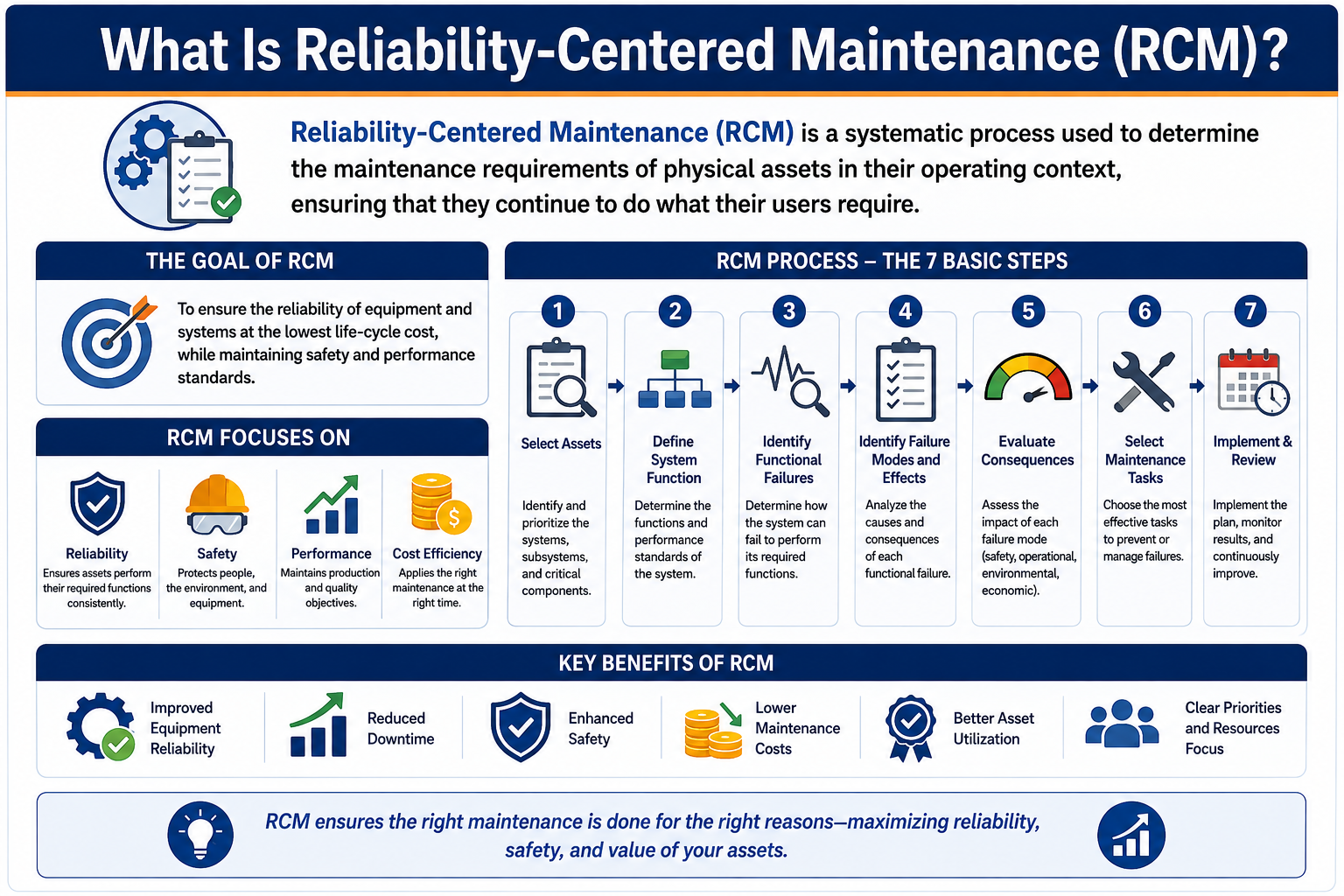
- Reliability-Centered Maintenance (RCM)
- Precision alignment
- Precision balancing
- Lubrication optimization
- Contamination control
- Equipment redesign
- Improved installation procedures
- Improved operating procedures
- Condition monitoring
- Failure trend analysis
The objective is not simply to repair equipment but to improve the equipment and maintenance process so that failures occur less frequently.
Reactive vs Proactive Maintenance: Key Difference
The most important difference between the two approaches is their focus.
Reactive maintenance asks:
“What failed, and how can we repair it?”
Proactive maintenance asks:
“Why did it fail, and how can we prevent it from happening again?”
Reactive maintenance therefore focuses primarily on responding to problems, while proactive maintenance focuses on preventing recurring problems and improving reliability.
Reactive vs Proactive Maintenance Comparison
| Factor | Reactive Maintenance | Proactive Maintenance |
|---|---|---|
| Approach | Responds to failures | Prevents recurring failures |
| Timing | After a problem occurs | Before major failure or recurrence |
| Main objective | Restore equipment | Improve reliability |
| Planning | Often limited | Highly planned |
| Downtime | Can be unpredictable | Generally easier to control |
| Failure analysis | May be limited | Usually emphasized |
| Root-cause focus | Low to moderate | High |
| Maintenance costs | Can become high | Designed to control lifecycle costs |
| Equipment reliability | Often inconsistent | Generally improved |
| Suitable for | Low-criticality assets | Critical and failure-prone assets |
The Role of Root Cause Analysis in Proactive Maintenance
Root Cause Analysis is one of the most important tools used in proactive maintenance.
Consider a conveyor system that repeatedly breaks down because of damaged bearings.
A reactive maintenance process might look like this:
Bearing fails → Replace bearing → Restart conveyor → Bearing fails again.
This process may continue for months.
A proactive process would investigate the repeated failure:
Bearing failure → Investigate failure → Identify misalignment → Correct alignment → Improve installation procedure → Monitor performance.
The result is a long-term improvement rather than another temporary repair.
Common RCA tools include:
- 5 Whys
- Fishbone diagrams
- Fault Tree Analysis
- Failure analysis
- Cause-and-effect analysis
The purpose is to identify the physical, human, procedural, or organizational factors contributing to the failure.
Proactive Maintenance and Predictive Maintenance
Proactive maintenance is sometimes confused with predictive maintenance, but they are not exactly the same.
Predictive maintenance focuses on identifying the condition of equipment and predicting when failure may occur.
For example, vibration analysis may identify a developing bearing defect.
Proactive maintenance focuses on identifying and eliminating the causes that create the defect.
For example, an investigation may discover that poor alignment is causing excessive bearing loading.
The two approaches can work together.
A maintenance team can use predictive technology to detect abnormal equipment behavior and then use proactive techniques to determine why the abnormal condition developed.
When Is Reactive Maintenance Appropriate?
Reactive maintenance can be a reasonable strategy when used selectively.
It may be appropriate for:
Low-Criticality Equipment
Equipment that has little effect on production, safety, or quality may not justify expensive monitoring programs.
Inexpensive Components
Some components are cheaper to replace after failure than to monitor or maintain extensively.
Non-Essential Assets
If failure does not significantly affect the operation, run-to-failure may be acceptable.
Easily Replaceable Equipment
Equipment with readily available spare parts and short replacement times may be suitable for corrective maintenance.
However, organizations should understand the consequences of failure before choosing this strategy.
When Should Proactive Maintenance Be Used?
Proactive maintenance is particularly valuable for equipment where failure has significant consequences.
Examples include:
- Critical production machinery
- Large pumps
- Compressors
- Turbines
- Generators
- Critical electrical systems
- Safety-related equipment
- High-value rotating machinery
- Equipment with repeated failures
If an asset repeatedly causes production losses, simply continuing to repair it may not be an effective long-term strategy.
A proactive reliability investigation can identify opportunities to eliminate recurring failures.
Cost Differences Between Reactive and Proactive Maintenance
The cost difference between reactive and proactive maintenance is not always straightforward.
Reactive maintenance may appear cheaper because the organization does not spend money performing routine analysis or improvement work.
However, the total cost of failure can be much higher.
Reactive failures may involve:
- Lost production
- Emergency labor
- Overtime
- Expedited shipping
- Replacement parts
- Secondary equipment damage
- Cleanup
- Quality losses
- Safety consequences
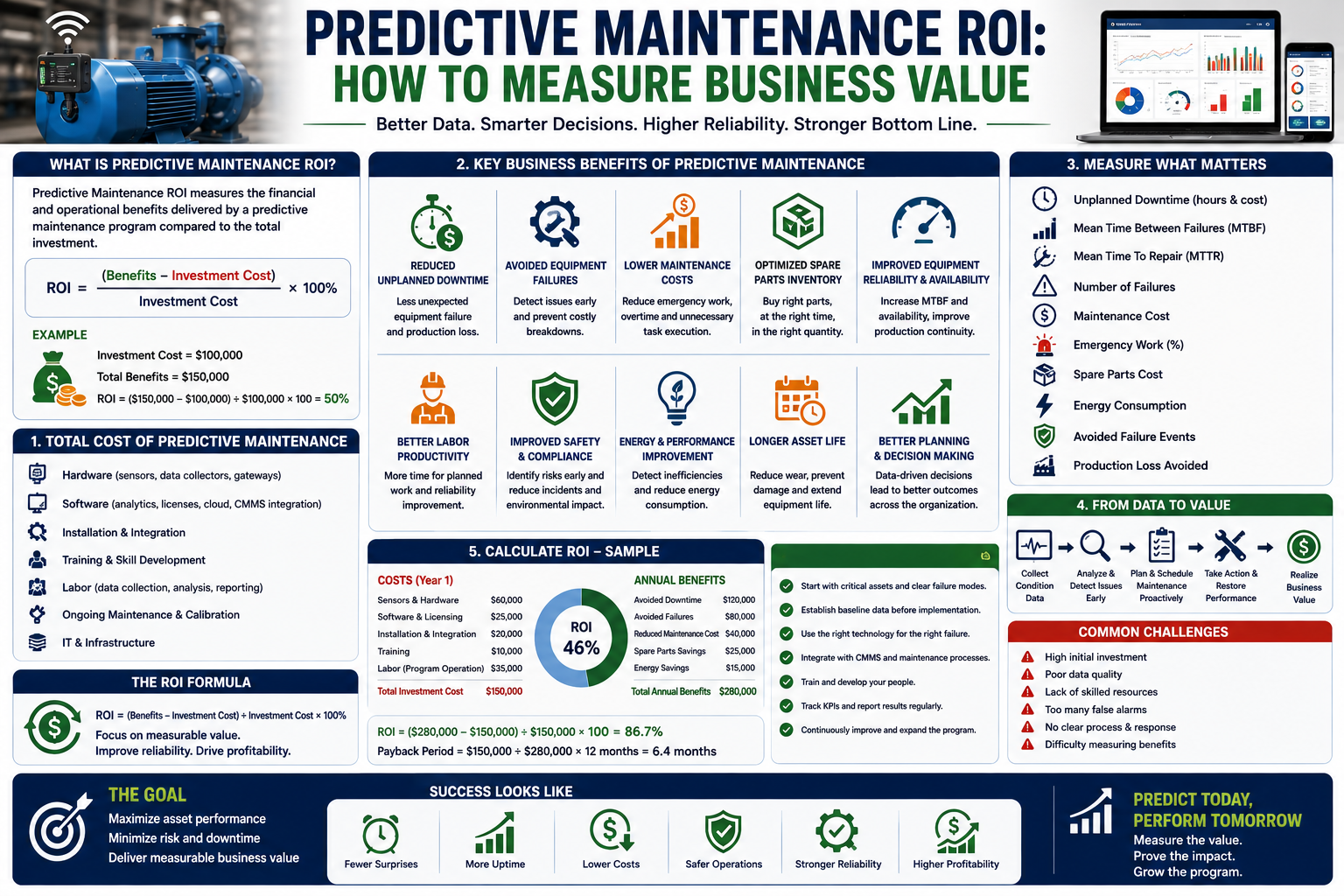
Proactive maintenance requires investment in engineering, analysis, condition monitoring, training, and process improvement.
However, these investments can reduce recurring failures and improve long-term asset performance.
The objective should therefore be to optimize total lifecycle cost, rather than simply minimizing immediate maintenance spending.
Moving From Reactive to Proactive Maintenance
Organizations that rely heavily on reactive maintenance can gradually transition toward a more proactive approach.
Step 1: Identify Critical Assets
Determine which equipment has the greatest impact on safety, production, quality, environment, and cost.
Step 2: Analyze Failure History
Review maintenance records to identify frequent failures and recurring problems.
Step 3: Perform Root Cause Analysis
Investigate significant or repetitive failures instead of repeatedly repairing them without understanding their causes.
Step 4: Improve Preventive Maintenance
Review existing maintenance tasks and eliminate ineffective or unnecessary activities.
Step 5: Introduce Condition Monitoring
Use vibration analysis, thermography, oil analysis, ultrasonic inspection, or sensors where appropriate.
Step 6: Improve Maintenance Procedures
Develop better procedures for lubrication, installation, alignment, inspection, and equipment operation.
Step 7: Measure Performance
Track indicators such as:
- Mean Time Between Failures (MTBF)
- Mean Time To Repair (MTTR)
- Equipment availability
- Unplanned downtime
- Repeat failure rate
- Maintenance cost
- Preventive-maintenance compliance
Step 8: Continuously Improve
Use maintenance data and failure information to continuously improve equipment reliability.
Can Reactive and Proactive Maintenance Work Together?
Yes. A strong maintenance program does not necessarily eliminate reactive maintenance completely.
Instead, organizations should determine which assets require proactive strategies and which can safely operate under corrective or run-to-failure maintenance.
For example:
Low-criticality lighting: Reactive maintenance
Routine equipment lubrication: Preventive maintenance
Critical motor: Predictive maintenance
Repeated pump failure: Proactive maintenance
This combination allows organizations to allocate maintenance resources based on risk and business impact.