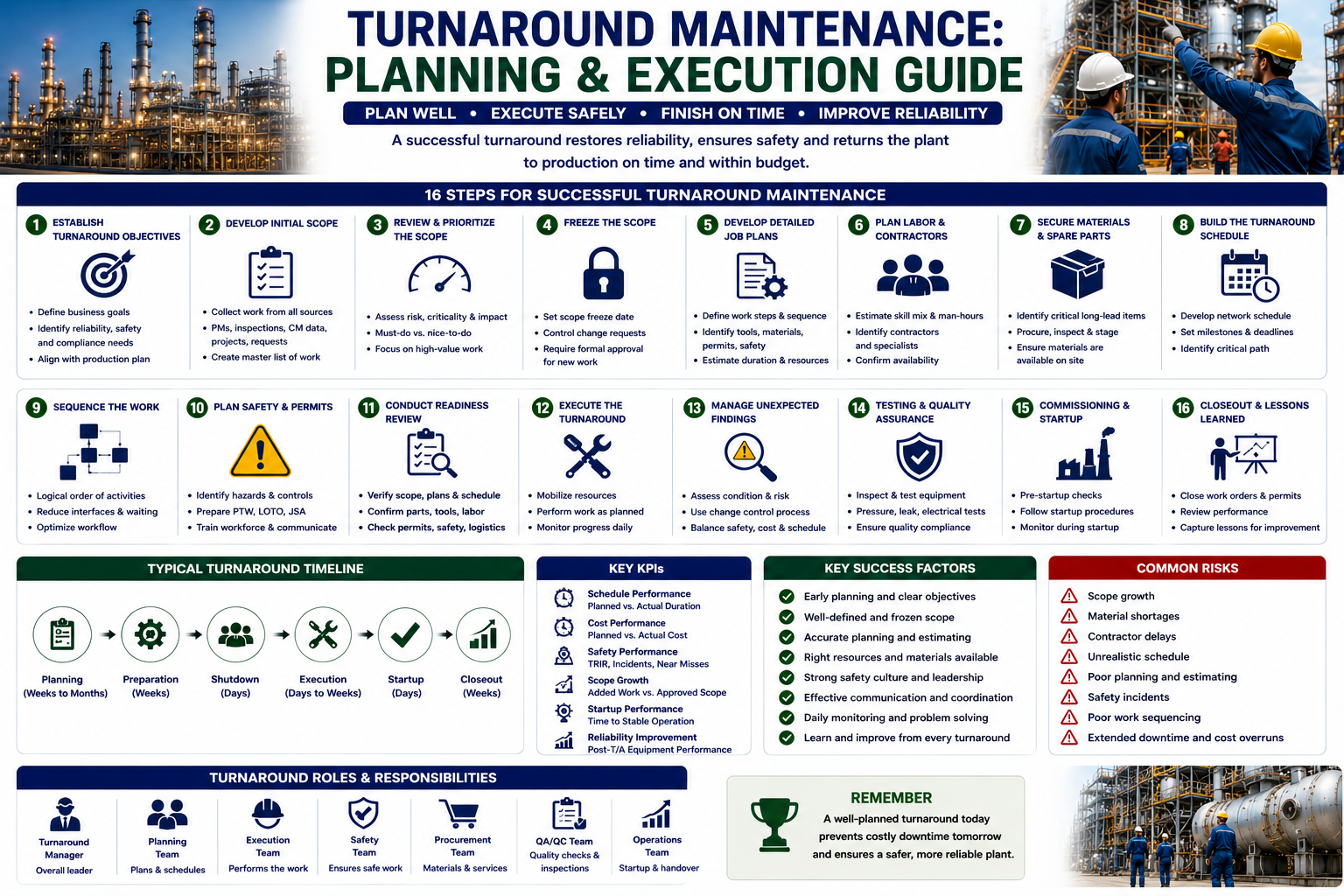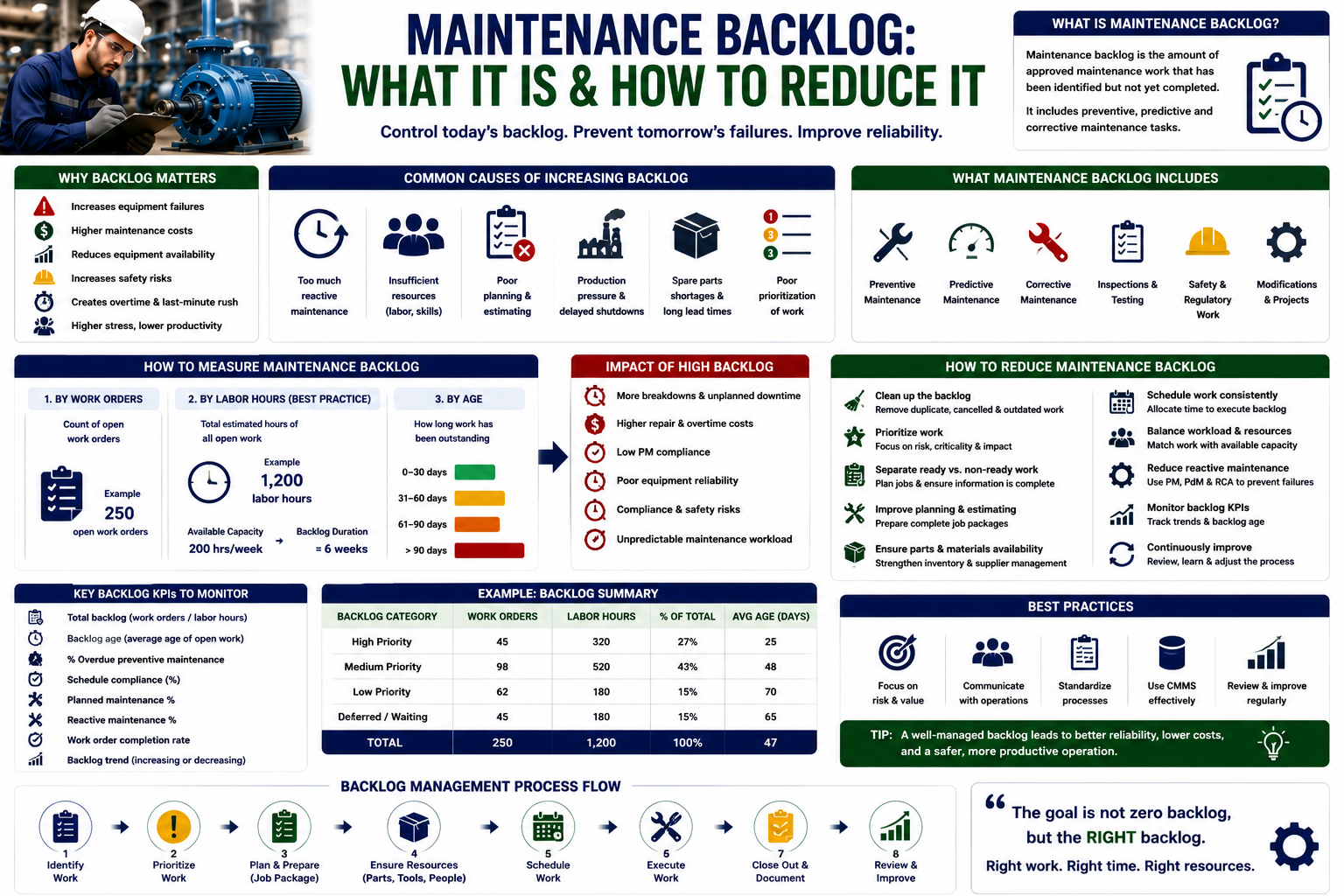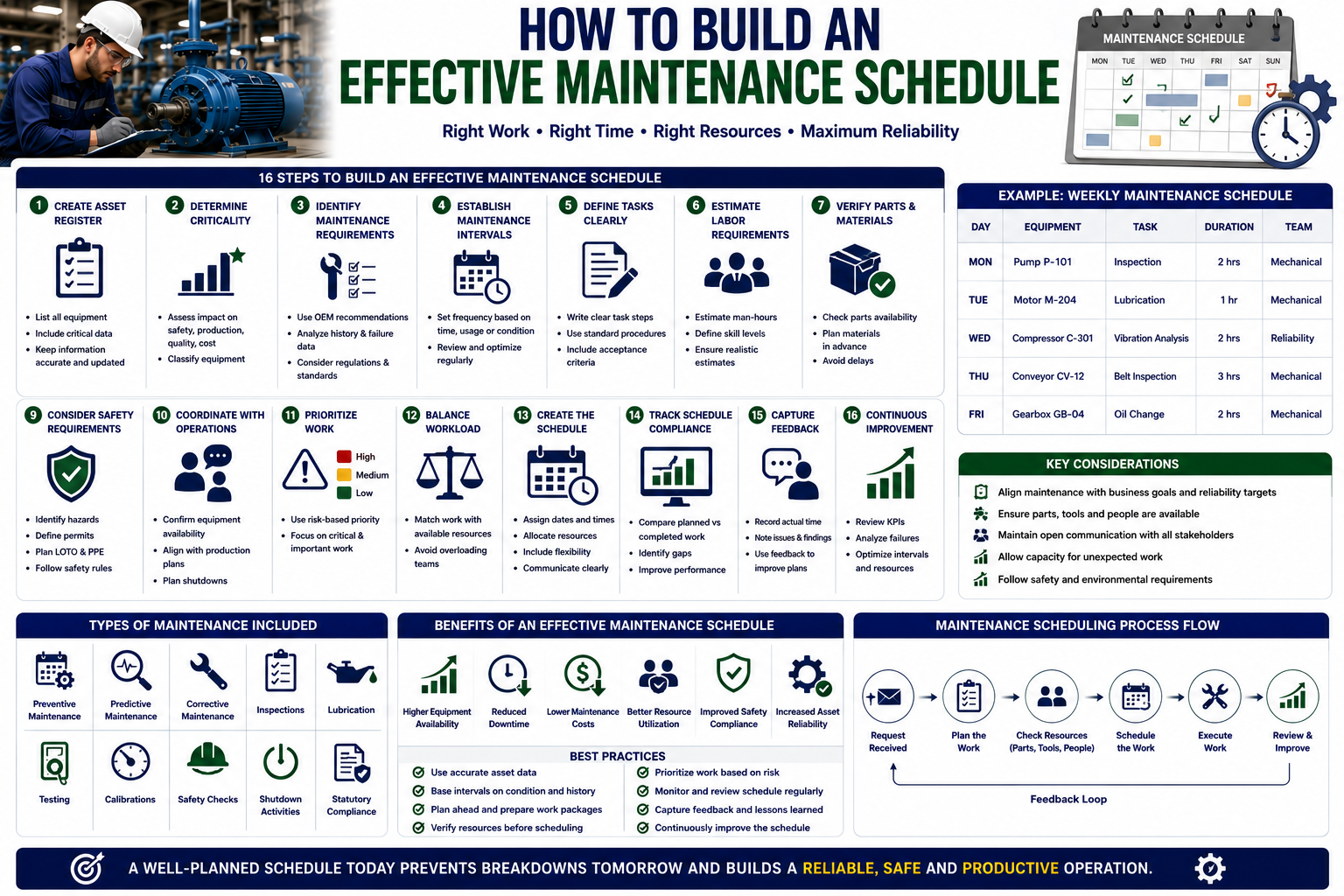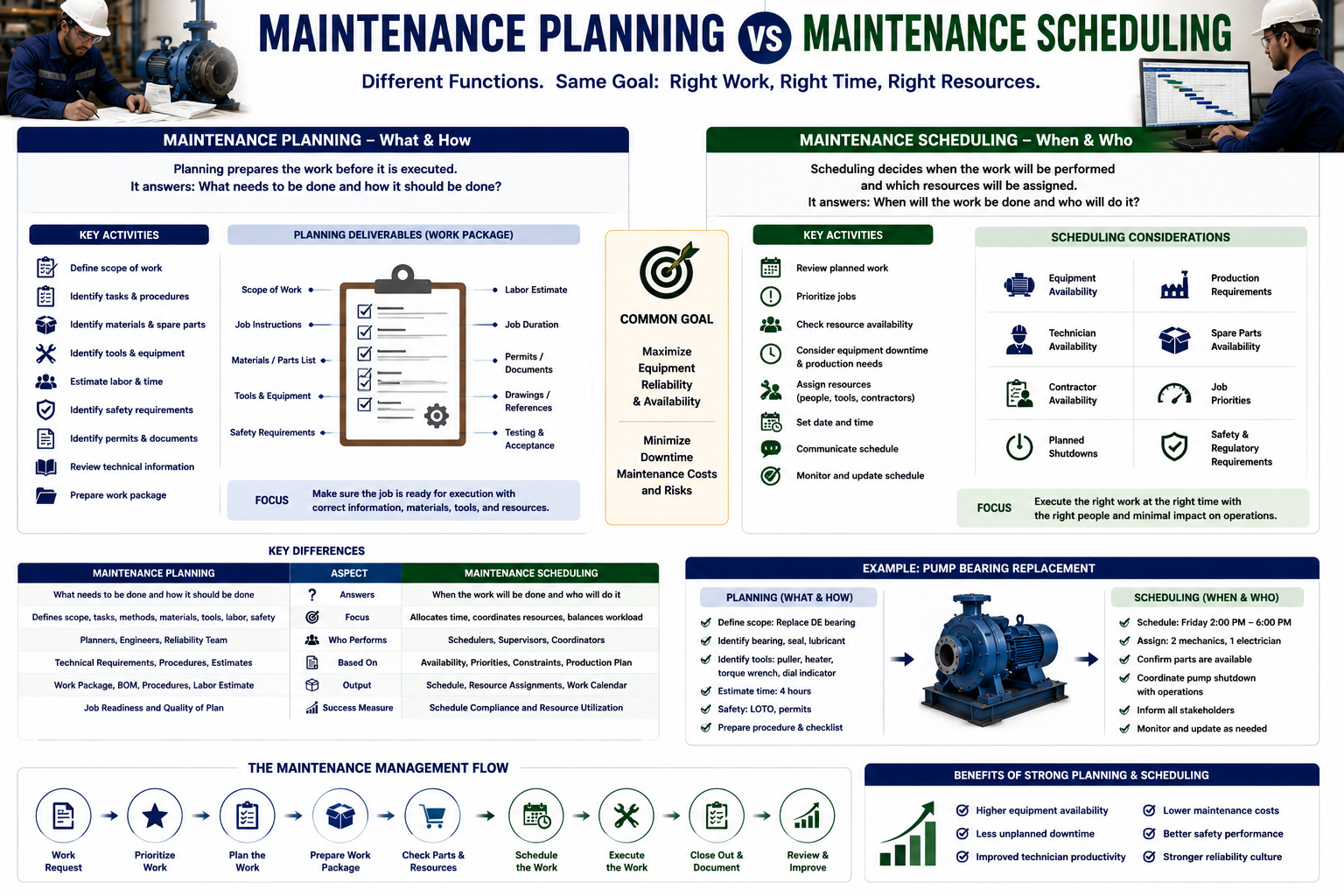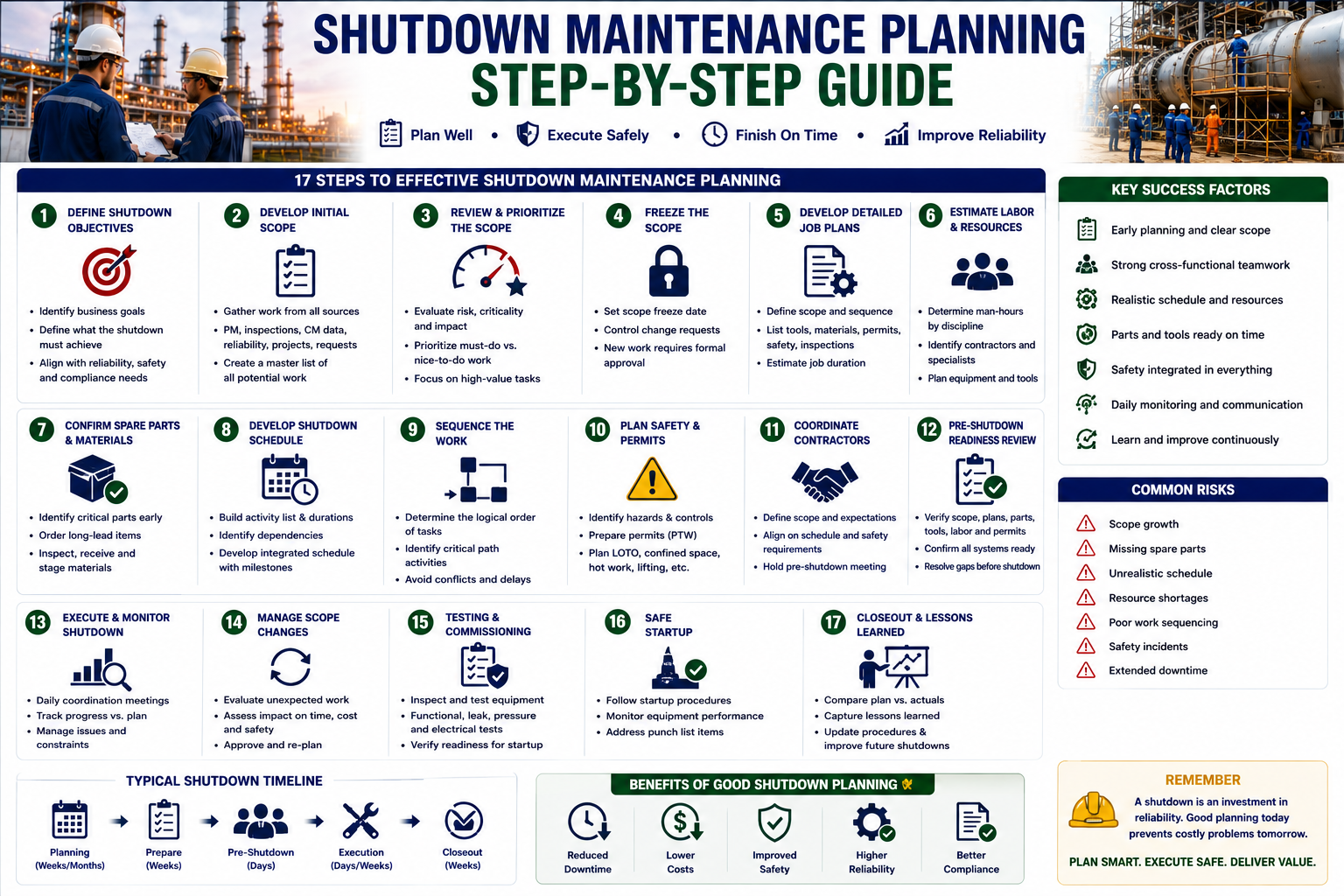
Planned shutdowns are among the most complex maintenance activities in industrial operations. Unlike routine maintenance, a shutdown may involve hundreds or even thousands of maintenance tasks that must be completed within a limited period.
Industries such as oil and gas, petrochemicals, power generation, manufacturing, mining, and heavy processing facilities often rely on planned shutdowns to inspect, repair, overhaul, modify, and restore critical equipment.
A poorly planned shutdown can result in extended downtime, cost overruns, resource shortages, safety incidents, and delayed production startup.
A well-planned shutdown, on the other hand, allows an organization to complete a large amount of maintenance work safely and efficiently while minimizing the impact on production.
This guide explains the key steps involved in effective shutdown maintenance planning.
What Is Shutdown Maintenance?
Shutdown maintenance is planned maintenance performed during a temporary stoppage of production or equipment operation.
Some maintenance activities cannot be safely or effectively completed while equipment is operating.
Examples include:
- Major equipment overhauls
- Pressure-vessel inspections
- Internal inspections
- Heat-exchanger cleaning
- Pipeline repairs
- Major valve replacement
- Turbine maintenance
- Boiler inspection
- Structural repairs
- Equipment modifications
Shutdown maintenance creates an opportunity to perform work that would otherwise be impossible during normal operation.
You may also like: Net Positive Suction Head in Centrifugal Pump Example | PDF
Why Shutdown Planning Is Important
A shutdown is usually expensive because production is reduced or completely stopped.
Every additional day of shutdown can represent significant lost production.
At the same time, maintenance teams need enough time to perform work safely and correctly.
The objective is therefore to balance:
Safety + Maintenance Scope + Time + Cost + Quality + Production Requirements
Effective planning helps prevent problems such as:
- Missing spare parts
- Insufficient manpower
- Poor work sequencing
- Contractor delays
- Equipment-access problems
- Incomplete permits
- Scope growth
- Poor communication
- Extended startup time
Step 1: Define the Shutdown Objectives
The first step is to establish exactly what the shutdown needs to accomplish.
Objectives may include:
- Complete statutory inspections
- Overhaul critical equipment
- Repair known defects
- Replace aging components
- Perform cleaning
- Complete modifications
- Improve equipment reliability
- Address safety findings
The shutdown objectives should be clearly documented and communicated to all departments.
Step 2: Develop the Initial Scope
The shutdown scope is a list of maintenance and project activities planned for the shutdown.
Potential sources of scope include:
- Preventive maintenance
- Corrective work orders
- Inspection findings
- Condition-monitoring results
- Reliability recommendations
- Regulatory requirements
- Previous shutdown findings
- Engineering projects
- Safety improvements
At this stage, the organization should avoid including unnecessary work simply because equipment will be offline.
Every task should have a clear justification.
Step 3: Review and Prioritize the Scope
Shutdown resources are limited, so not every proposed task can automatically be included.
Tasks should be evaluated according to:
- Safety risk
- Environmental impact
- Production risk
- Equipment criticality
- Regulatory requirements
- Failure probability
- Consequence of failure
- Opportunity cost
A critical pressure-vessel inspection may be mandatory, while a cosmetic repair may be deferred.
Risk-based prioritization prevents shutdown resources from being consumed by low-value work.
Step 4: Freeze the Shutdown Scope
One of the biggest challenges in shutdown management is uncontrolled scope growth.
New work requests often appear after planning has already started.
This can create:
- Additional labor requirements
- More materials
- Longer shutdown duration
- Increased costs
- Schedule disruption
Organizations should establish a formal scope freeze date.
After the freeze, new work should require management approval and a documented justification.
This does not mean legitimate safety or equipment-critical work should be rejected. It means scope changes must be controlled.
Step 5: Develop Detailed Job Plans
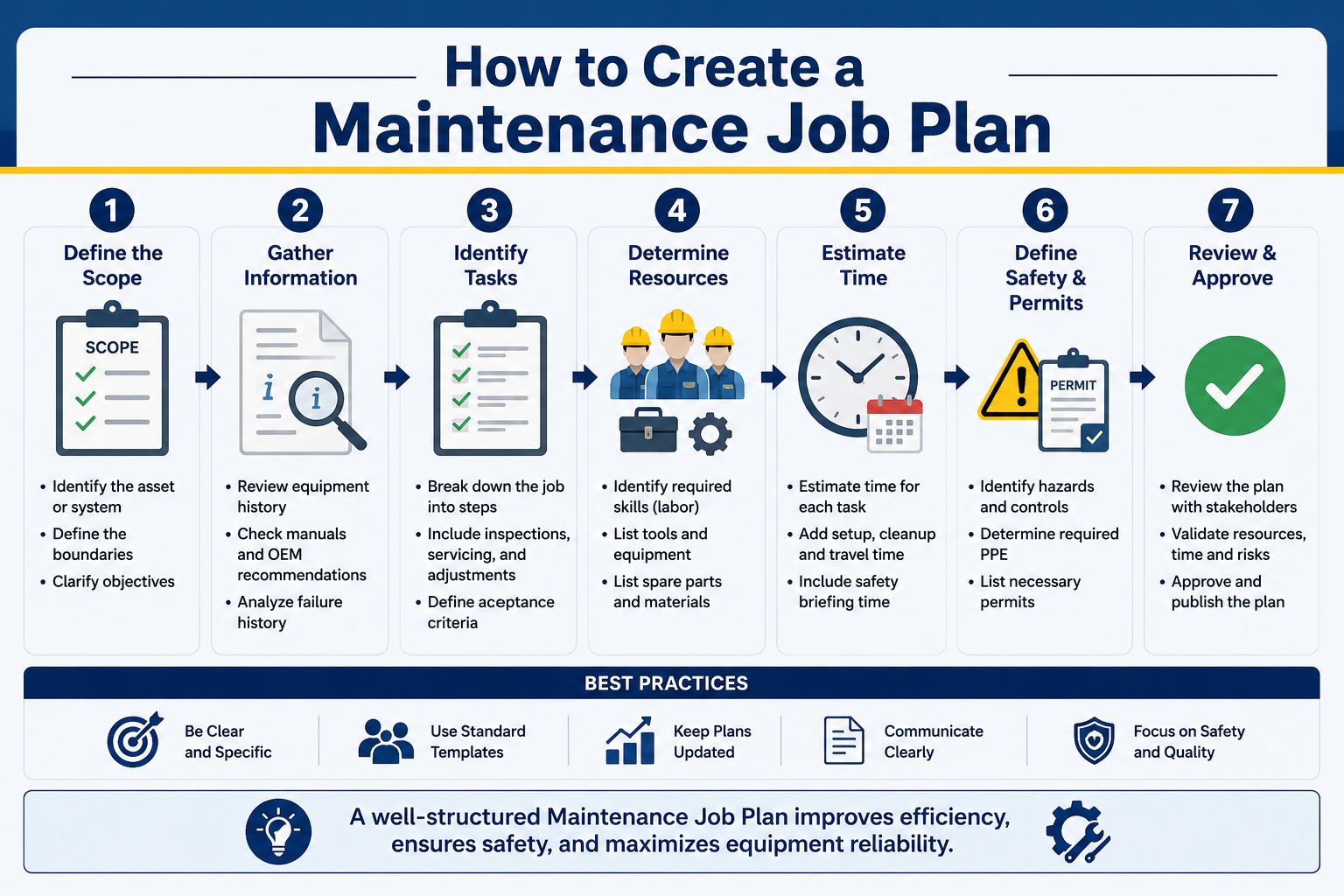
Each major shutdown task should have a detailed job plan.
A job plan should define:
- Work scope
- Work sequence
- Labor requirements
- Tools
- Materials
- Equipment
- Safety controls
- Permits
- Estimated duration
- Inspection requirements
- Testing requirements
For example, a pump overhaul plan might include:
- Isolate pump.
- Drain and depressurize.
- Disconnect piping and coupling.
- Remove pump.
- Disassemble equipment.
- Inspect components.
- Replace damaged parts.
- Reassemble.
- Align shaft and coupling.
- Test run.
- Record results.
Detailed planning reduces uncertainty during execution.
Step 6: Estimate Labor and Resources
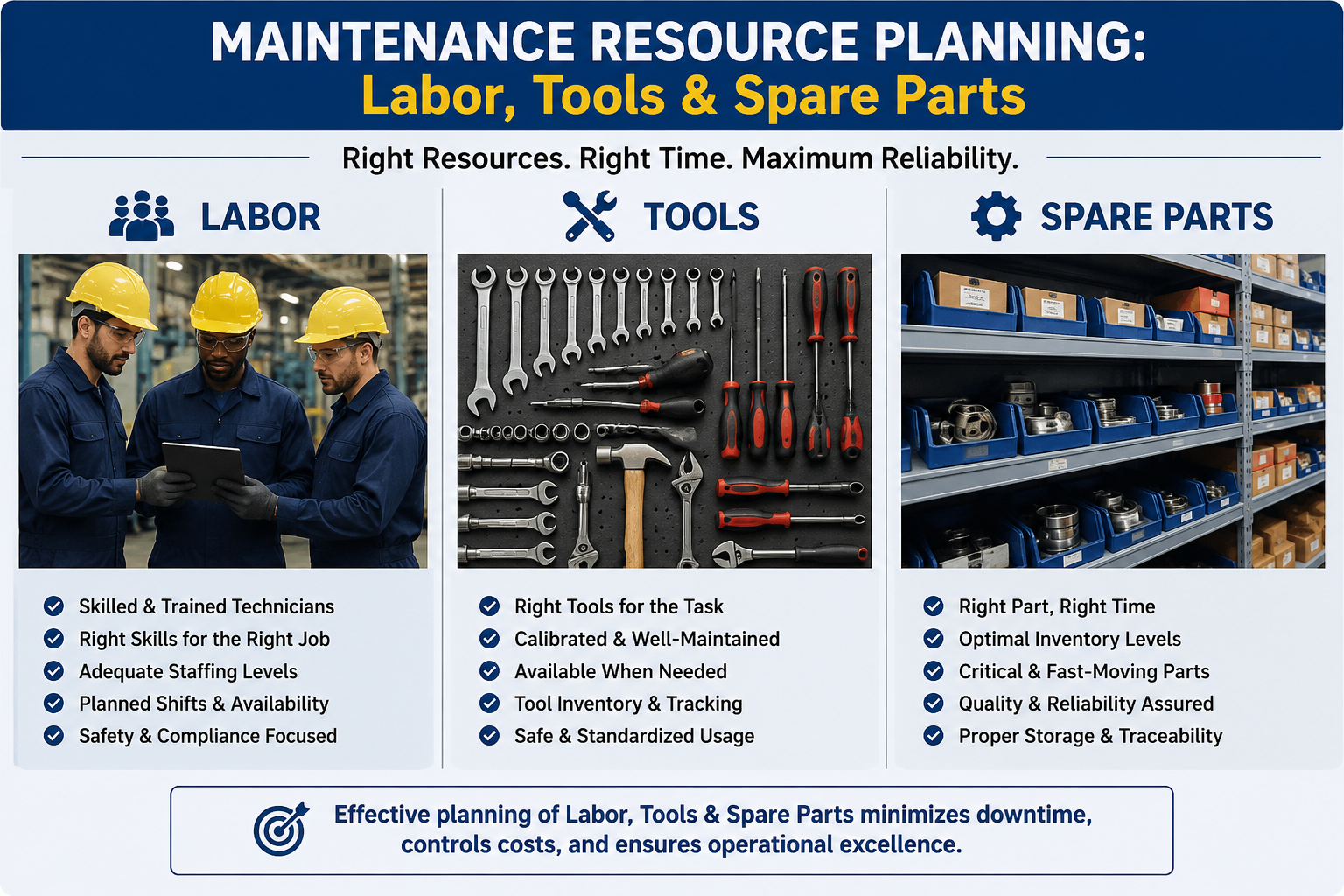
Shutdown planning requires accurate resource estimation.
Determine the required:
- Mechanical technicians
- Electrical technicians
- Instrumentation technicians
- Welders
- Inspectors
- Engineers
- Supervisors
- Contractors
- Specialists
Labor should be estimated for each activity.
Resource requirements should also include:
- Cranes
- Scaffolding
- Welding equipment
- Lifting equipment
- Testing instruments
- Temporary facilities
- Specialized tools
Poor resource planning can create bottlenecks during the shutdown.
Step 7: Confirm Spare Parts and Materials
Parts availability is critical.
Before the shutdown begins, confirm that required materials have been:
Specified → Ordered → Received → Inspected → Stored → Made available
Important shutdown materials may include:
- Bearings
- Mechanical seals
- Gaskets
- Valves
- Fasteners
- Electrical components
- Lubricants
- Welding materials
- Instrumentation components
Critical long-lead items should be identified months before the shutdown.
Step 8: Develop the Shutdown Schedule
Once the scope and resources are established, develop the detailed schedule.
The schedule should show:
- Activities
- Start dates
- Finish dates
- Durations
- Dependencies
- Resources
- Milestones
Critical-path analysis is particularly important.
The critical path consists of activities that directly influence the overall shutdown duration.
If a critical-path activity is delayed, the shutdown may also be delayed.
Step 9: Sequence the Work Properly
Work sequencing is essential.
Some activities cannot begin until other activities are completed.
For example:
Equipment isolation → Access preparation → Inspection → Repair → Testing → Reassembly → Commissioning
Incorrect sequencing can cause technicians to wait for access or equipment.
Good sequencing improves productivity and reduces congestion.
Step 10: Plan Safety and Permits
Shutdowns involve many simultaneous activities, which can increase risk.
Safety planning should include:
- Lockout/Tagout
- Equipment isolation
- Permit-to-work
- Confined-space entry
- Working at height
- Hot work
- Electrical safety
- Gas testing
- Lifting operations
- Temporary equipment
- Emergency response
Safety requirements should be integrated into the schedule rather than treated as an afterthought.
Step 11: Coordinate Contractors
Large shutdowns often require external contractors.
Contractors may provide:
- Specialized technicians
- Scaffolding
- Inspection services
- NDT
- Welding
- Cleaning
- Equipment overhaul
- Crane services
Contractors should receive clear:
- Scope
- Schedule
- Safety requirements
- Quality standards
- Reporting requirements
- Performance expectations
Contractor performance should be monitored throughout the shutdown.
Step 12: Conduct a Pre-Shutdown Readiness Review
Before the shutdown begins, conduct a formal readiness review.
Verify:
- Scope is approved.
- Job plans are complete.
- Parts are available.
- Tools are available.
- Labor is confirmed.
- Contractors are ready.
- Permits are prepared.
- Equipment isolation plans are complete.
- Temporary facilities are available.
- Safety requirements are understood.
A simple question should be asked:
“If the shutdown started tomorrow, are we ready to execute the planned work?”
Any major gap should be addressed before the shutdown begins.
Step 13: Execute and Monitor the Shutdown
During execution, progress should be monitored continuously.
Track:
- Completed work
- Work in progress
- Delayed activities
- Labor utilization
- Material shortages
- Safety incidents
- Quality issues
- Critical-path activities
Daily coordination meetings can help identify problems quickly.
A shutdown control room or central coordination team may be useful for large projects.
Step 14: Control Scope Changes
Unexpected defects are common during shutdowns.
For example, an inspection may reveal:
- Cracked components
- Excessive corrosion
- Unexpected wear
- Damaged insulation
- Structural problems
These findings may require additional work.
New work should be evaluated based on:
Safety + Reliability + Cost + Schedule Impact
Approved changes should be integrated into the shutdown schedule immediately.
Step 15: Testing and Commissioning
Completing mechanical work does not mean the shutdown is finished.
Equipment must be inspected and tested before returning to service.
Testing may include:
- Pressure testing
- Electrical testing
- Instrument calibration
- Alignment verification
- Leak testing
- Vibration measurement
- Functional testing
- Safety-system testing
Commissioning should be performed according to approved procedures.
Step 16: Safe Startup
Startup is one of the most critical stages.
Before startup, confirm:
- Tools removed
- Temporary equipment removed
- Guards installed
- Valves correctly positioned
- Instruments operational
- Safety systems functional
- Work permits closed
- Equipment correctly assembled
- Documentation completed
A controlled startup reduces the risk of immediate post-shutdown failures.
Step 17: Closeout and Capture Lessons Learned
After the shutdown, conduct a formal review.
Compare:
Planned vs Actual
for:
- Cost
- Duration
- Labor
- Materials
- Scope
- Safety
- Equipment performance
Document lessons learned.
For example:
- Which jobs took longer than expected?
- Which materials arrived late?
- Which contractors performed well?
- Which activities caused delays?
- Which job plans need improvement?
- Which unexpected failures were discovered?
These lessons should be incorporated into future shutdown planning.
Key Shutdown Maintenance KPIs
Important shutdown KPIs include:
Schedule Performance
Measures whether work was completed according to schedule.
Cost Performance
Compares actual shutdown cost with the approved budget.
Scope Growth
Measures the amount of additional work added after scope approval.
Safety Performance
Tracks incidents, near misses, and safety observations.
Equipment Reliability After Shutdown
Measures whether maintenance activities actually improved equipment performance.
Startup Performance
Measures how quickly and successfully production returns to normal operation.
Common Shutdown Planning Mistakes
Avoid these common problems:
- Starting planning too late
- Poor scope definition
- Excessive scope growth
- Missing spare parts
- Unrealistic job durations
- Poor contractor coordination
- Weak safety planning
- Inadequate work sequencing
- Poor communication
- Failure to capture lessons learned
These mistakes can turn a planned shutdown into an extended production outage.
Best Practices for Shutdown Maintenance Planning
A successful shutdown should:
- Start planning early.
- Define the scope clearly.
- Prioritize work based on risk.
- Freeze the scope at the appropriate time.
- Develop detailed job plans.
- Confirm labor and contractor resources.
- Secure critical materials early.
- Identify the critical path.
- Integrate safety into every activity.
- Conduct readiness reviews.
- Monitor progress daily.
- Control scope changes.
- Test equipment before startup.
- Measure shutdown performance.
- Capture lessons learned.