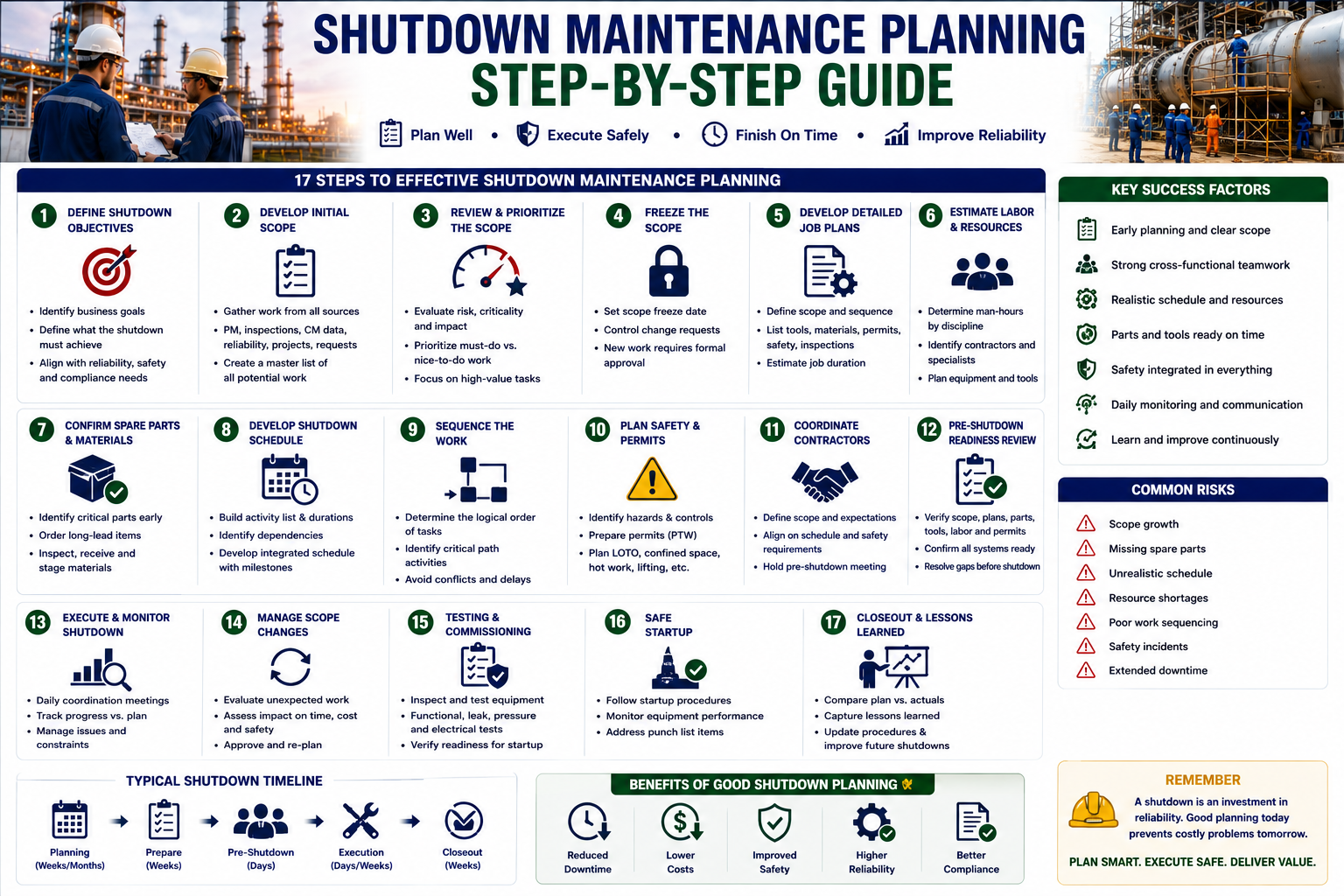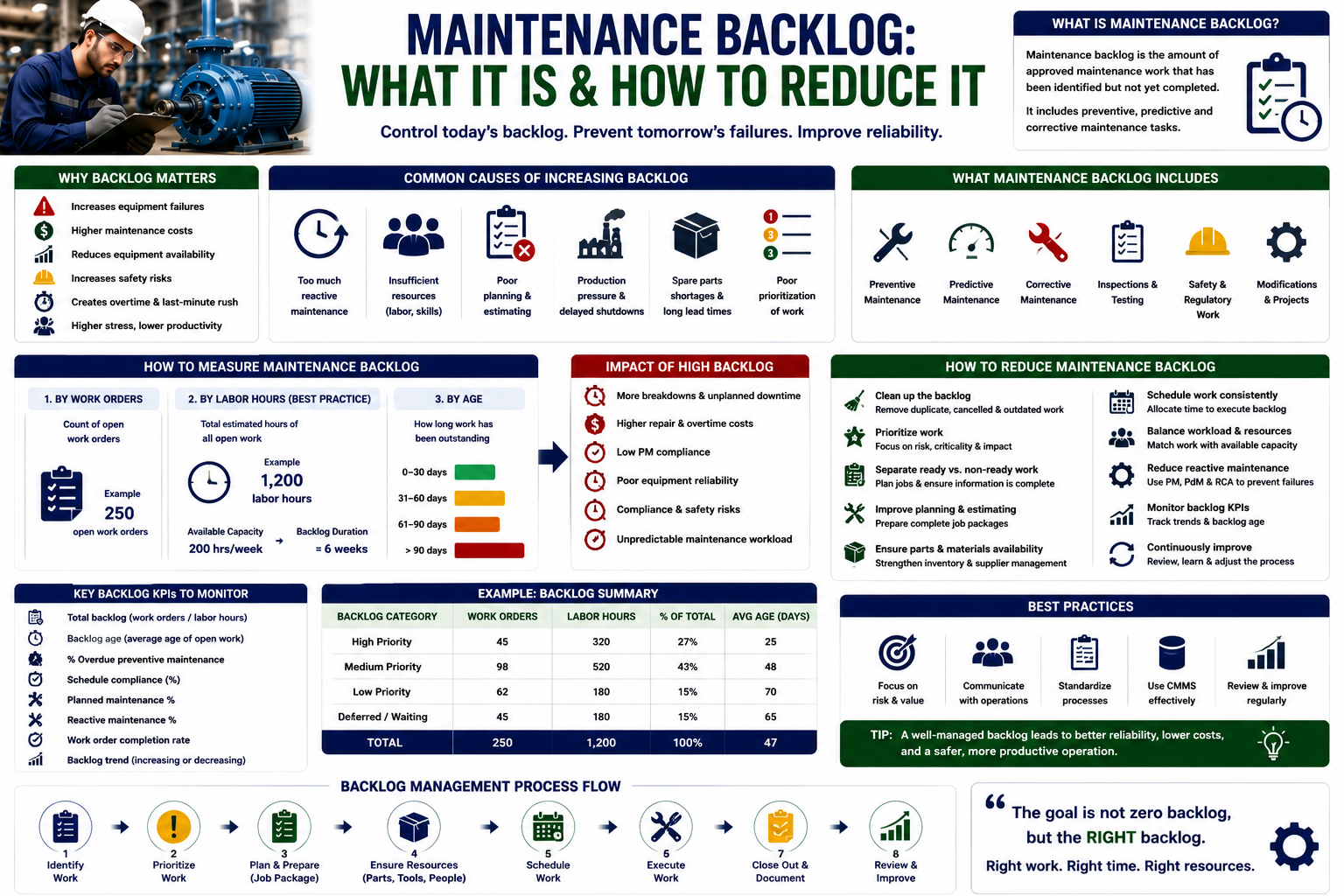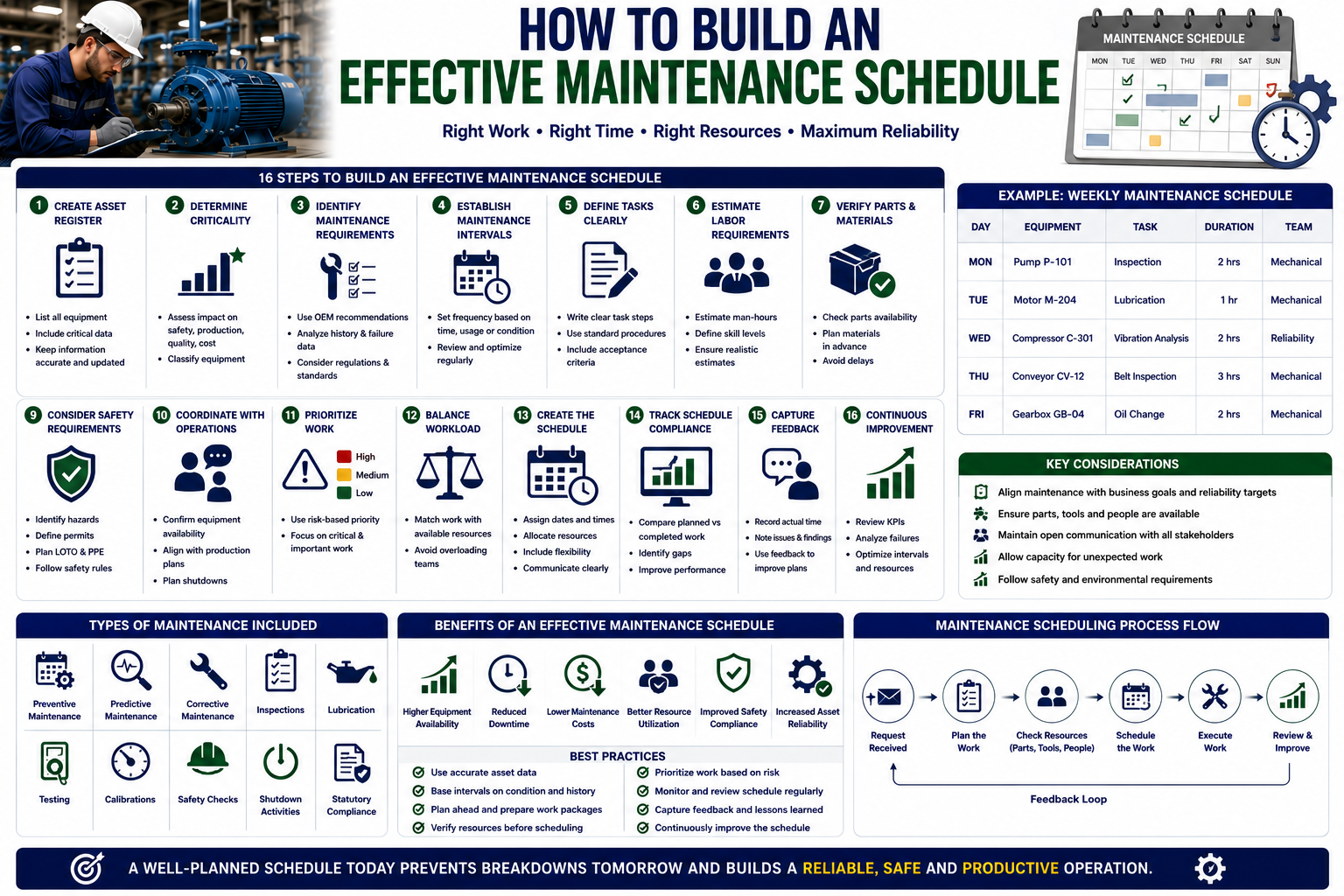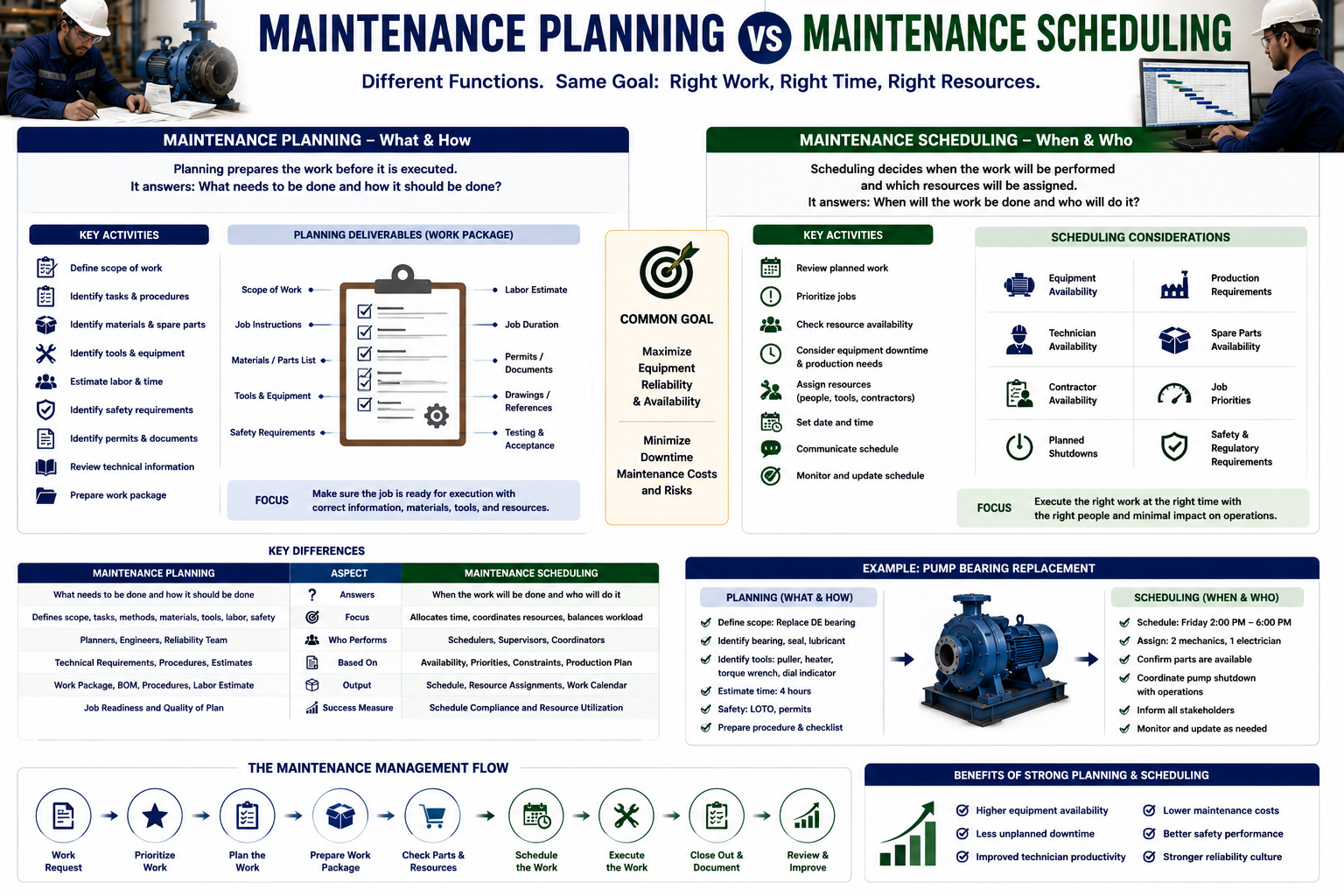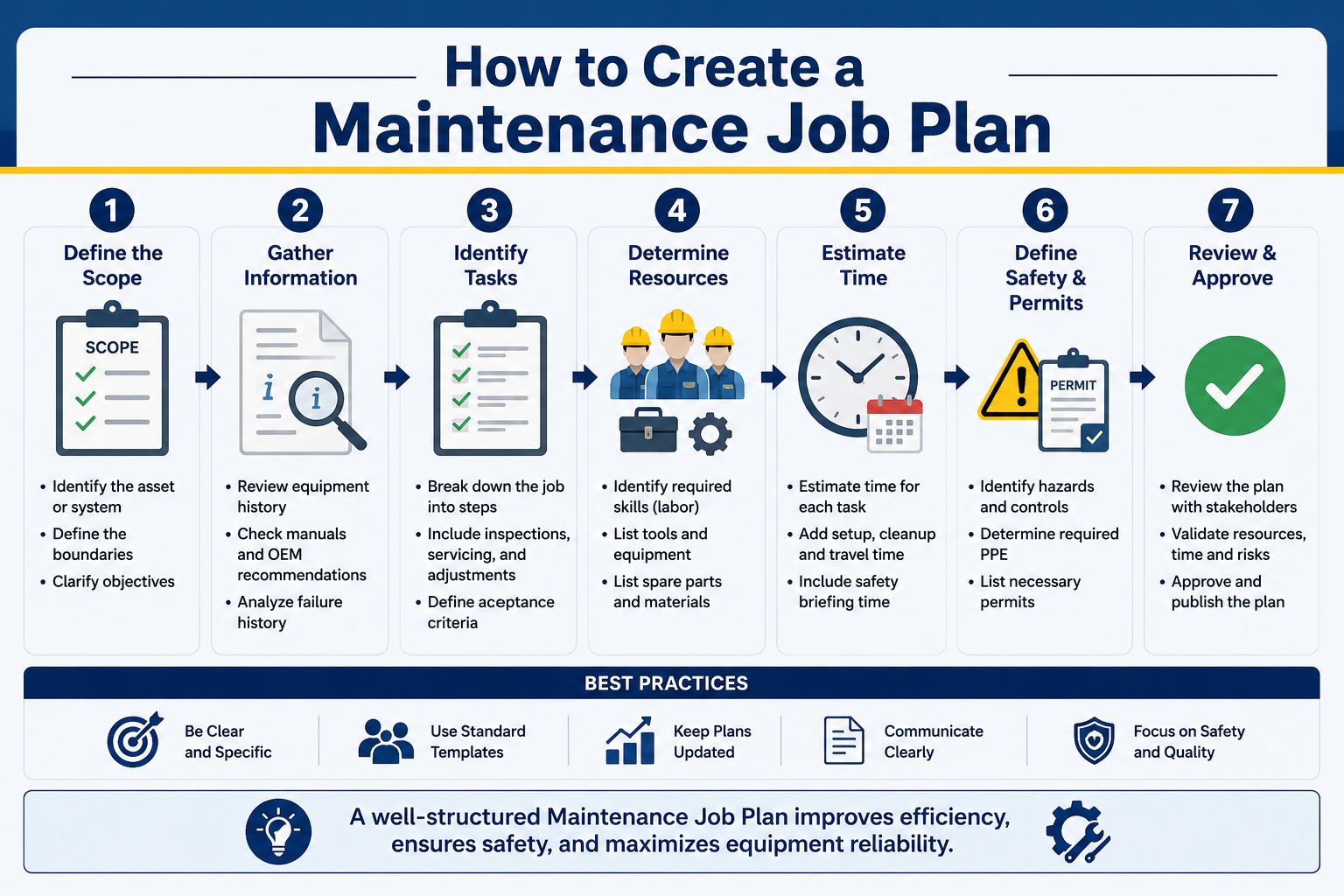
A well-prepared maintenance job plan is one of the most effective ways to improve maintenance productivity, reduce equipment downtime, and ensure technicians have everything they need before starting a job.
In many maintenance organizations, technicians lose valuable time searching for tools, waiting for spare parts, clarifying work instructions, arranging permits, or determining how a task should be performed. These delays can make even simple maintenance activities take much longer than necessary.
A maintenance job plan addresses these problems by defining the work in advance.
A good job plan explains what needs to be done, how it should be done, who is required, what materials and tools are needed, and what safety precautions must be followed.
This guide explains how to create an effective maintenance job plan and how job planning can support a more proactive maintenance strategy.
What Is a Maintenance Job Plan?
A maintenance job plan is a structured document or digital record that provides technicians with the information required to perform a maintenance task.
A typical job plan can include:
- Work description
- Equipment identification
- Maintenance procedure
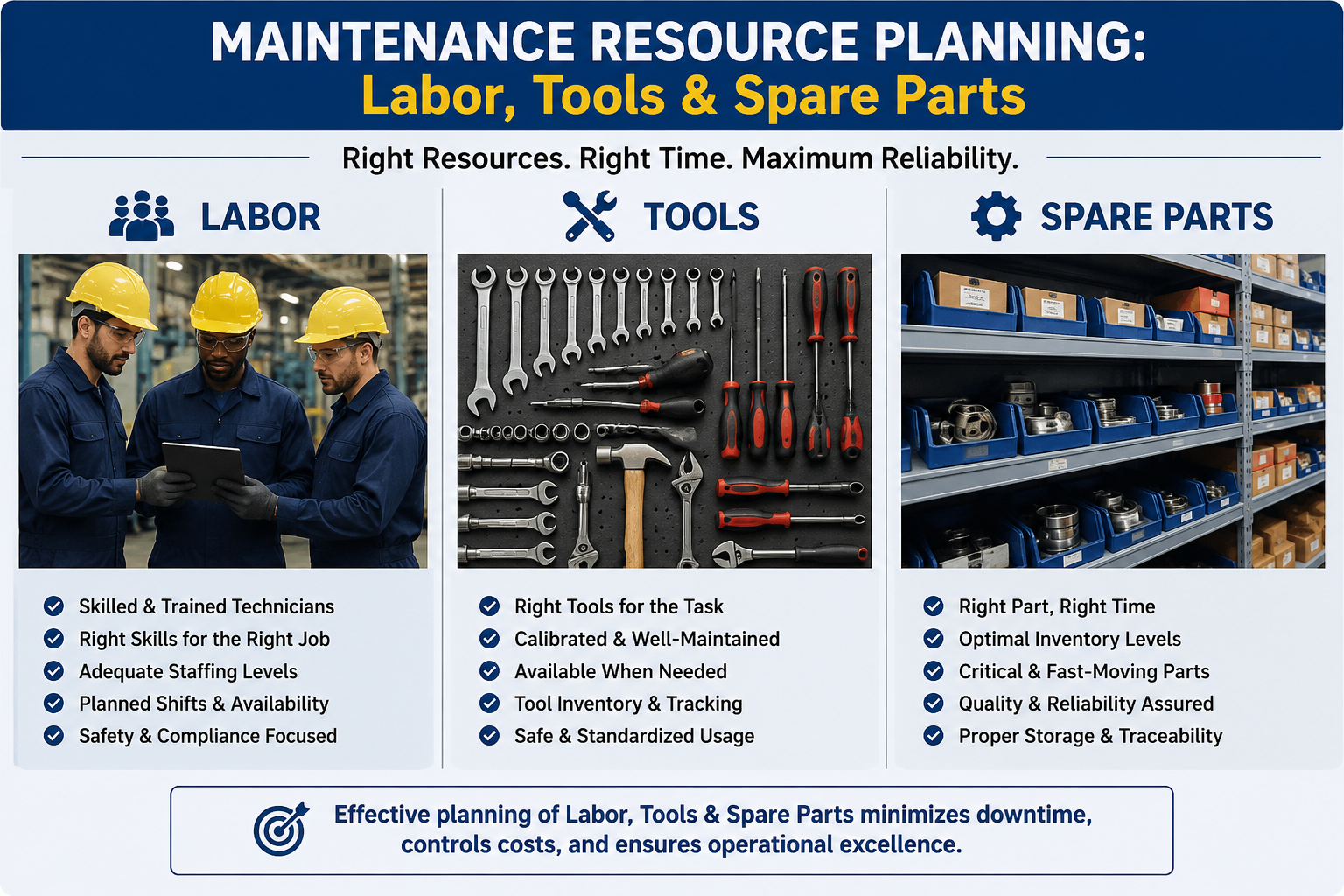
- Labor requirements
- Estimated duration
- Spare parts
- Consumables
- Tools
- Safety requirements
- Permits
- Technical references
- Inspection requirements
- Testing requirements
The purpose is to move as much decision-making as possible from the field into the planning stage.
Instead of asking technicians to figure out the job when they arrive at the equipment, the planner prepares the requirements beforehand.
Why Maintenance Job Planning Matters
Good job planning can provide several benefits.
Higher Technician Productivity
Technicians spend more time performing maintenance and less time looking for information, materials, and tools.
Reduced Equipment Downtime
Well-planned work can be completed faster, helping equipment return to service sooner.
Better Safety
Safety hazards, isolation requirements, and permits can be identified before work begins.
Improved Maintenance Quality
Standardized procedures reduce variation between technicians and maintenance events.
Better Cost Control
Accurate labor and material estimates improve maintenance budgeting.
Improved Scheduling
Schedulers can create more realistic schedules when job duration and resource requirements are known.
Step 1: Define the Job Scope
The first step is to clearly define what the maintenance job involves.
A vague description such as:
“Repair pump”
does not provide enough information.
A better description might be:
“Inspect pump P-101 due to abnormal vibration, verify coupling alignment, inspect bearings and mechanical seal, and replace defective components as required.”
The scope should clearly communicate the expected outcome.
A well-defined scope prevents confusion and helps planners estimate resources accurately.
Step 2: Identify the Equipment
Every maintenance job should be linked to a specific asset.
Record information such as:
- Equipment ID
- Equipment description
- Location
- Manufacturer
- Model
- Equipment type
- Criticality
Equipment identification is particularly important in facilities containing many similar machines.
For example, simply saying “inspect motor” is insufficient if a facility contains hundreds of motors.
The job plan should identify the exact asset.
Step 3: Review Equipment History
Before creating the job plan, review previous maintenance records.
Historical information may reveal:
- Previous failures
- Recurring defects
- Replacement history
- Actual job duration
- Parts previously used
- Common problems
- Technician recommendations
Maintenance history can significantly improve the quality of future job plans.
For example, if a pump repeatedly experiences coupling misalignment, the job plan may include a detailed alignment verification step.
Step 4: Determine the Maintenance Procedure
The next step is to define how the work should be performed.
A procedure may include:
- Review work permit.
- Confirm equipment identification.
- Isolate equipment.
- Verify zero-energy condition.
- Remove required guards.
- Perform inspection.
- Replace defective component.
- Reassemble equipment.
- Perform alignment.
- Conduct testing.
- Restore equipment to service.
- Record results.
The level of detail should match the complexity and risk of the work.
Step 5: Identify Safety Requirements
Safety should be incorporated into the job plan from the beginning.
Potential requirements include:
- Lockout/Tagout
- Electrical isolation
- Mechanical isolation
- Pressure release
- Drainage
- Gas testing
- Confined-space controls
- Working-at-height requirements
- Hot-work permits
- Lifting plans
- Personal protective equipment
The job plan should identify hazards and required controls before technicians begin work.
For high-risk activities, appropriate engineering, safety, and operations personnel should review the plan.
Step 6: Estimate Labor Requirements
Determine how many people are required and what skills they need.
For example:
1 Mechanical Technician — 4 hours
1 Electrical Technician — 2 hours
1 Specialist — 2 hours
The plan should also identify special skills or certifications where applicable.
Labor estimates should be based on equipment complexity, previous job history, manufacturer information, and technician experience.
Step 7: Estimate Job Duration
Accurate duration estimates are essential for maintenance scheduling.
A job may include:
- Preparation
- Isolation
- Access
- Disassembly
- Inspection
- Repair
- Reassembly
- Testing
- Cleanup
All relevant activities should be considered.
If a bearing replacement normally requires four hours, but access preparation adds two hours, the schedule should reflect the actual total work duration.
Historical data can be used to improve estimates over time.
Step 8: Identify Spare Parts
Every required spare part should be identified before the job is scheduled.
Examples include:
- Bearings
- Seals
- Gaskets
- Belts
- Couplings
- Filters
- Fasteners
- Lubricants
- Electrical components
Where possible, include:
- Part number
- Description
- Quantity
- Manufacturer
- Specification
Incorrect part identification can result in delays or installation problems.
Step 9: Identify Consumables
Consumables are often overlooked during maintenance planning.
Examples include:
- Cleaning agents
- Lubricants
- Grease
- Welding materials
- Thread-locking compounds
- Anti-seize compounds
- Sealants
- Absorbent materials
Although individual consumables may be inexpensive, missing them can prevent a job from being completed.
Step 10: Identify Tools and Equipment
The job plan should specify the tools required.
These may include:
- Torque wrench
- Bearing puller
- Hydraulic tools
- Laser alignment system
- Multimeter
- Insulation tester
- Pressure gauge
- Lifting equipment
- Specialized manufacturer tools
Specialized tools should be reserved or arranged before the work is scheduled.
Step 11: Include Technical Documentation
Technicians should have access to relevant technical information.
This may include:
- Equipment manuals
- Drawings
- Schematics
- Datasheets
- Manufacturer procedures
- Maintenance standards
- Inspection specifications
- Torque values
- Alignment tolerances
Accurate technical information improves maintenance quality and reduces uncertainty.
Step 12: Define Inspection and Testing Requirements
The job plan should explain how the completed work will be verified.
Testing may include:
- Functional testing
- Electrical testing
- Pressure testing
- Leak testing
- Vibration measurement
- Temperature measurement
- Alignment verification
- Instrument calibration
For example, after replacing a pump bearing, the plan may require vibration and temperature measurements during the test run.
Step 13: Define the Acceptance Criteria
Technicians need to know what constitutes a successful job.
Acceptance criteria may include:
- Correct torque values
- Shaft alignment within specified tolerance
- No leakage
- Normal vibration
- Correct electrical resistance
- Proper equipment operation
Clear acceptance criteria turn a maintenance job from simply “completed” into verified and completed to an acceptable standard.
Step 14: Review the Job Plan
Before releasing the job plan, it should be reviewed for completeness.
Ask:
- Is the scope clear?
- Is the equipment correctly identified?
- Are labor requirements realistic?
- Are parts available?
- Are tools available?
- Are safety requirements included?
- Is the procedure technically correct?
- Are testing requirements defined?
- Is the estimated duration realistic?
For complex jobs, input from experienced technicians and engineers can improve the plan.
Step 15: Make the Job Ready to Schedule
A maintenance job should ideally be considered ready to schedule only when the major requirements have been addressed.
This means:
Scope defined + Labor identified + Parts available + Tools available + Procedure prepared + Safety requirements identified
Once the job is ready, the scheduler can assign an appropriate execution date.
Step 16: Capture Feedback After Execution
Job planning should be a continuous improvement process.
After the work is completed, technicians should provide feedback.
Ask:
- Did the job take the estimated time?
- Were the correct parts available?
- Were any additional tools required?
- Was the procedure accurate?
- Were unexpected defects found?
- Were there safety concerns?
- Could the job be performed more efficiently?
This feedback should be used to improve the job plan for future maintenance activities.
Maintenance Job Plans and CMMS
A Computerized Maintenance Management System (CMMS) can make job planning easier by storing standardized information.
A CMMS can link:
- Equipment
- Work orders
- Job plans
- Procedures
- Labor
- Spare parts
- Tools
- Maintenance history
Standard job plans can also be reused for recurring preventive-maintenance tasks.
For example, a quarterly pump inspection can use a standardized job plan while still allowing technicians to record equipment-specific findings.
Common Maintenance Job Planning Mistakes
Avoid these common mistakes:
Vague Work Descriptions
Unclear scopes create confusion during execution.
Missing Parts
Scheduling work without verifying spare parts causes avoidable delays.
Unrealistic Labor Estimates
Underestimating job duration creates schedule problems.
Ignoring Tools
Specialized equipment should be identified in advance.
Incomplete Safety Information
Safety controls must be included before execution.
Not Using Historical Data
Previous maintenance performance can improve future job plans.
Never Updating the Plan
Job plans should evolve as equipment and maintenance experience change.
Best Practices for Creating Maintenance Job Plans
Follow these principles:
- Define the scope clearly.
- Identify the exact equipment.
- Review maintenance history.
- Develop a logical work procedure.
- Include safety requirements.
- Estimate labor realistically.
- Estimate total job duration.
- Identify spare parts.
- Identify consumables.
- Identify tools and special equipment.
- Include technical references.
- Define inspection and testing requirements.
- Establish acceptance criteria.
- Review the plan before scheduling.
- Capture technician feedback.
- Update the plan continuously.