
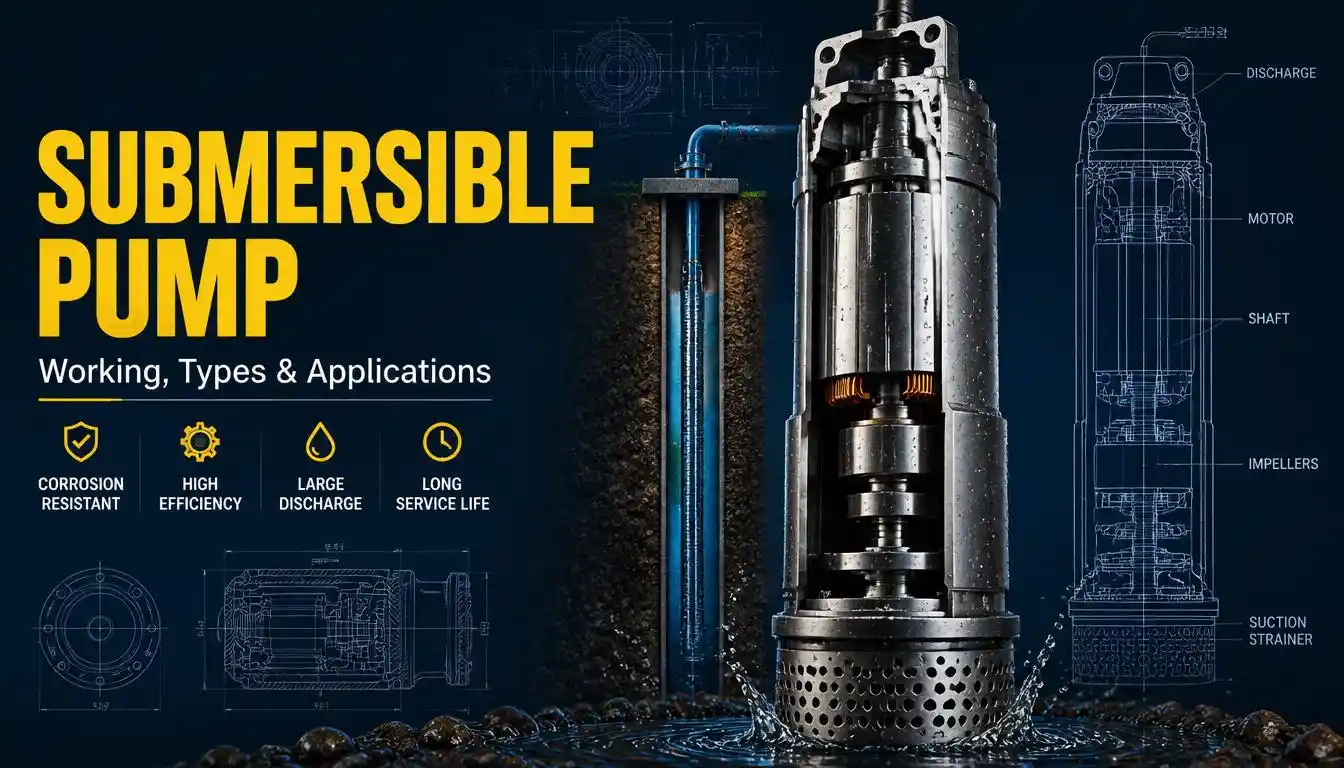
A submersible water pump is one of the most widely used pumping solutions across residential, agricultural, and industrial sectors. Unlike conventional pumps that sit above the fluid and “pull” it upward, a submersible water pump is fully immersed in the liquid it moves and “pushes” it to the surface. This single design difference eliminates several common pump problems and makes submersible pumps far more efficient for deep-well, drainage, and sewage applications.
In this guide, we’ll cover everything about submersible water pumps — how they work, their components, types, applications, advantages, and how to choose the right submersible motor pump for your project.
What Is a Submersible Water Pump?
A submersible water pump, also called an electric submersible pump (ESP), consists of a hermetically sealed submersible motor directly coupled to the pump body. The entire assembly is designed to be lowered into the fluid — water, sewage, slurry, or even oil — that needs to be pumped. As Crompton’s pump guide explains, water flows into the pump through a foot valve and strikes the impeller before being pushed toward the surface.
Because the pump is submerged, it doesn’t need to create suction lift like a surface pump does. Instead, it simply pushes the surrounding fluid upward through a discharge pipe. This is why water pump submersible models are self-priming and considered highly reliable for deep applications such as borewells and tube wells.
Working Principle of a Submersible Water Pump
The working principle of a submersible pump system is based on centrifugal force, much like a standard centrifugal pump — but operating entirely underwater, as detailed in BBP Pump’s technical explainer on submersible pump design.
Here’s a simplified step-by-step of how it works:
- Motor Activation – The sealed submersible motor starts rotating once power is supplied through a waterproof cable.
- Impeller Rotation – The motor shaft spins the impeller(s) at high speed, imparting kinetic energy to the fluid.
- Kinetic to Pressure Energy Conversion – As fluid moves through the diffuser/volute, its velocity is converted into pressure energy.
- Fluid Discharge – The pressurized fluid is pushed upward through the discharge pipe or riser to the surface.
Most submersible water pumps used in deep wells are multistage centrifugal pumps — meaning multiple impeller-diffuser stages are stacked to build up enough head to lift water from great depths. This working principle is essentially an underwater application of the same centrifugal concept discussed in our guide on positive displacement pump types and how they work, though submersible pumps themselves are centrifugal, not positive displacement.
Key Components of a Submersible Water Pump
| Component | Function |
|---|---|
| Submersible Motor | Hermetically sealed electric motor that drives the pump shaft |
| Impeller(s) | Rotating component that generates centrifugal force |
| Diffuser | Converts kinetic energy of fluid into pressure |
| Mechanical Seal | Prevents fluid from entering the motor chamber |
| Discharge Pipe/Riser | Carries pumped fluid to the surface |
| Cable & Cable Guard | Supplies power to the submerged motor safely |
| Strainer/Foot Valve | Filters debris and prevents backflow |
The mechanical seal is one of the most critical parts of any submersible motor pump, since a seal failure allows water into the motor windings and causes burnout. If you want to understand sealing technology in more depth, check out our detailed guide on types of mechanical seals.
Types of Submersible Water Pumps
According to Kingda Pump’s ultimate guide to submersible pumps, these units are broadly classified based on the fluid they handle and their installation environment:
1. Submersible Water Pump (Borewell/Domestic)
Used for extracting groundwater from borewells and tube wells for domestic, agricultural, and municipal water supply.
2. Submersible Sewage Pump
Designed to handle raw sewage, effluent, and wastewater containing solids and fibrous material, commonly used in municipal drainage systems.
3. Submersible Sump Pump
Installed in sumps or pits to remove accumulated water from basements, construction sites, and mines.
4. Submersible Slurry Pump
Built with abrasion-resistant materials to handle thick slurries in mining and dredging applications.
5. Submersible Fountain/Decorative Pump
Small-capacity pumps used in fountains, aquariums, and water features.
6. Deep Well Submersible Water Motor Pump
Multistage units, similar to Grundfos’s clean water submersible range, specifically engineered for high-head applications where water must be lifted from significant depths.
Applications of Submersible Water Pumps
Submersible water pumps are used extensively across industries because of their compact, self-priming, and low-maintenance design. Grundfos’s groundwater pump range highlights groundwater supply, irrigation, groundwater lowering, and pressure boosting as core use cases:
- Agriculture – Irrigation and borewell water extraction
- Municipal Water Supply – Groundwater pumping stations and waterworks
- Sewage & Wastewater Treatment – Handling raw sewage and effluent
- Construction Sites – Dewatering basements and excavation pits
- Mining Industry – Slurry and drainage water removal
- Oil & Gas – Artificial lift in oil wells (Electric Submersible Pumps), a use case explored further on Learn Mechanical Engineering
- Residential Use – Home water supply, sump pumps, and fountains
Advantages of Submersible Water Pumps
- No priming required – Since the pump is already submerged, priming issues are eliminated
- No cavitation risk – Operating underwater prevents the pressure drop that causes cavitation, a problem covered in detail in our article on cavitation in centrifugal pumps
- Quiet operation – Being submerged, noise and vibration are significantly reduced
- Space-saving design – Compact vertical design needs no separate pump house
- High efficiency – Direct coupling between motor and pump reduces energy losses
- Longer lifespan – Sealed design protects the motor from environmental exposure
Disadvantages / Limitations
- Repair and maintenance require pulling the entire unit out of the well or sump
- Higher upfront cost compared to surface pumps
- Cable and seal failures can lead to costly motor damage
- Not ideal for extremely viscous or highly abrasive fluids without special construction
Submersible Water Motor vs. Submersible Water Pump: What’s the Difference?
People often use “submersible motor” and “submersible water pump” interchangeably, but technically:
- The submersible motor is only the electric drive unit — sealed and designed to run underwater.
- The submersible water pump is the complete assembly, including the motor, impellers, diffusers, and casing.
Since a submersible water motor always runs coupled to the pump end, the terms are commonly used together as a single unit in the industry.
How to Select the Right Submersible Water Pump
When choosing a submersible motor pump, consider these factors:
- Flow rate & head requirement – Match pump curve to your system demand
- Well/sump diameter – Pump casing diameter must fit the bore size
- Fluid type – Clean water, sewage, or slurry each require different pump construction
- Power supply – Single-phase vs three-phase motor availability
- Material of construction – Stainless steel for corrosion resistance in aggressive fluids
- NPSH & suction conditions – Even though submersible pumps avoid most suction issues, understanding Net Positive Suction Head (NPSH) helps in system design accuracy
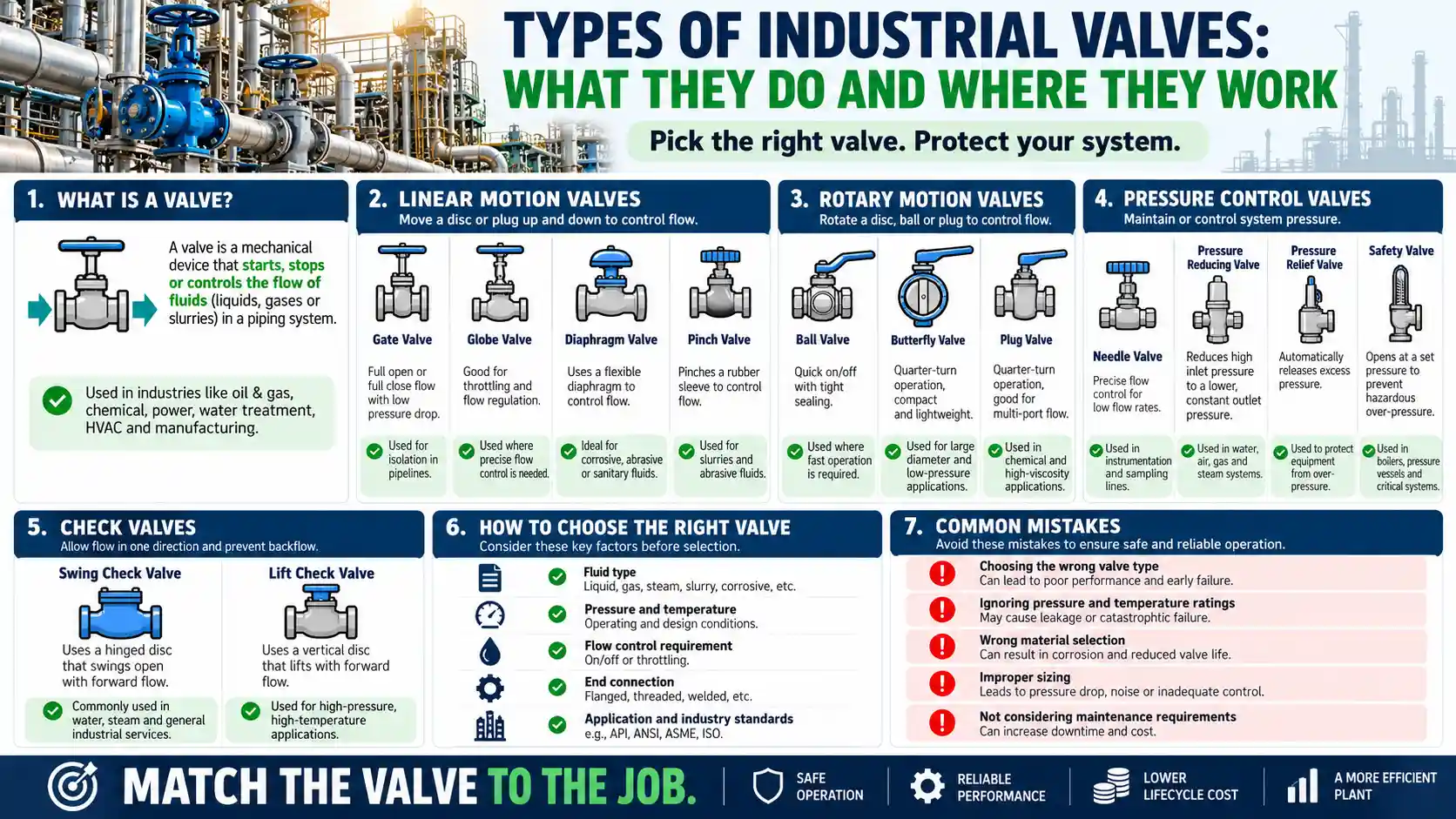
Selecting the correct foot valve and check valve accessories is equally important — you can refer to our complete guide on types of valves to understand valve selection for pumping systems.
Maintenance Tips for Submersible Water Pumps
- Check insulation resistance of the motor periodically
- Inspect mechanical seals for wear during scheduled shutdowns
- Avoid dry running, as it can burn out the submersible motor
- Clean strainers regularly to prevent clogging
- Monitor for unusual vibration or noise, which may indicate impeller wear or bearing damage
Conclusion
The submersible water pump remains one of the most efficient and reliable pumping technologies available today, whether for domestic water supply, agricultural irrigation, sewage handling, or industrial dewatering. Its sealed, self-priming design solves many of the challenges faced by conventional surface pumps, making the submersible motor pump a preferred choice across countless applications.
For more engineering guides on pumps, valves, and heat exchangers, explore our other resources on Mechstera.




1 thought on “Submersible Water Pump: Working, Types, Applications & Advantages”