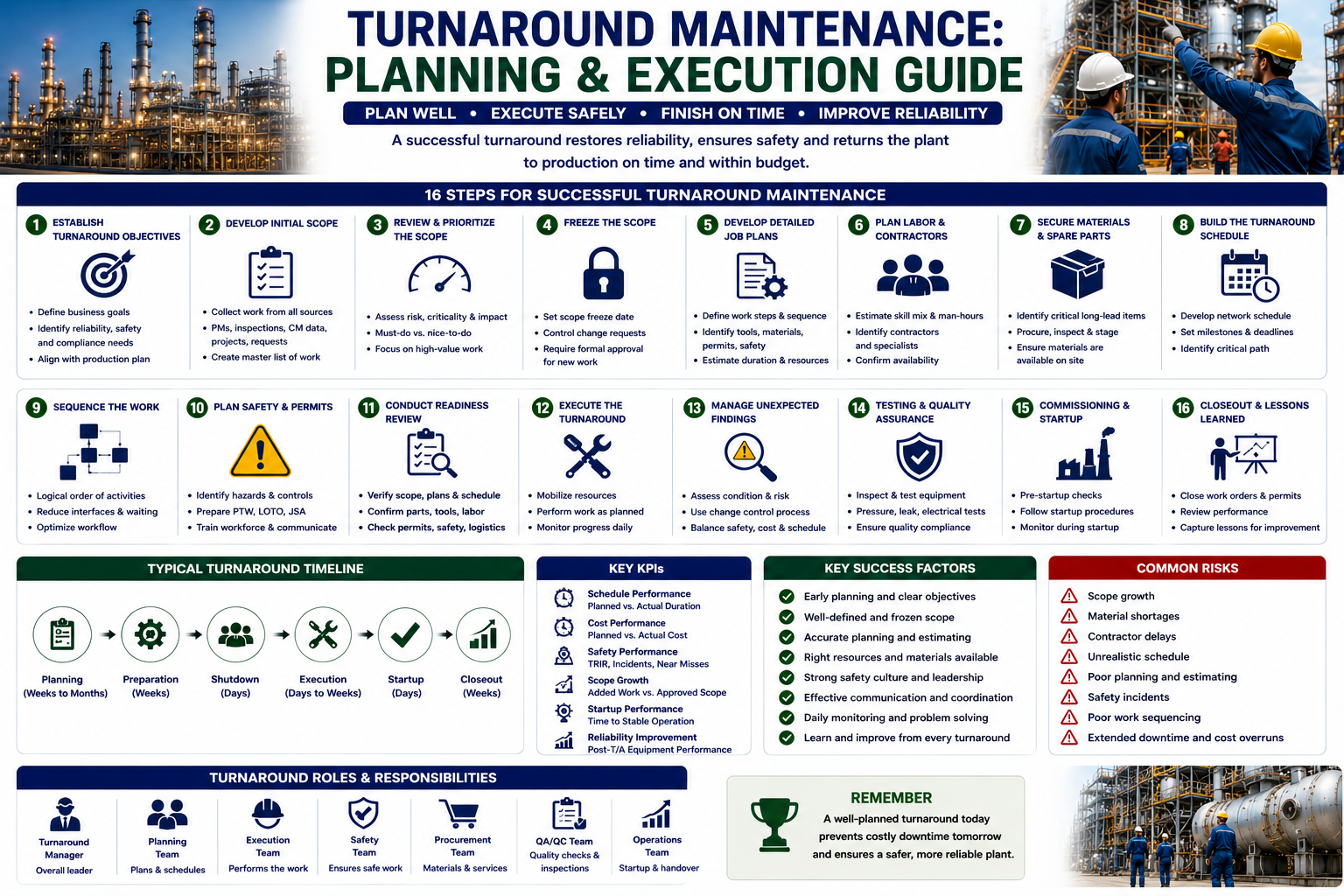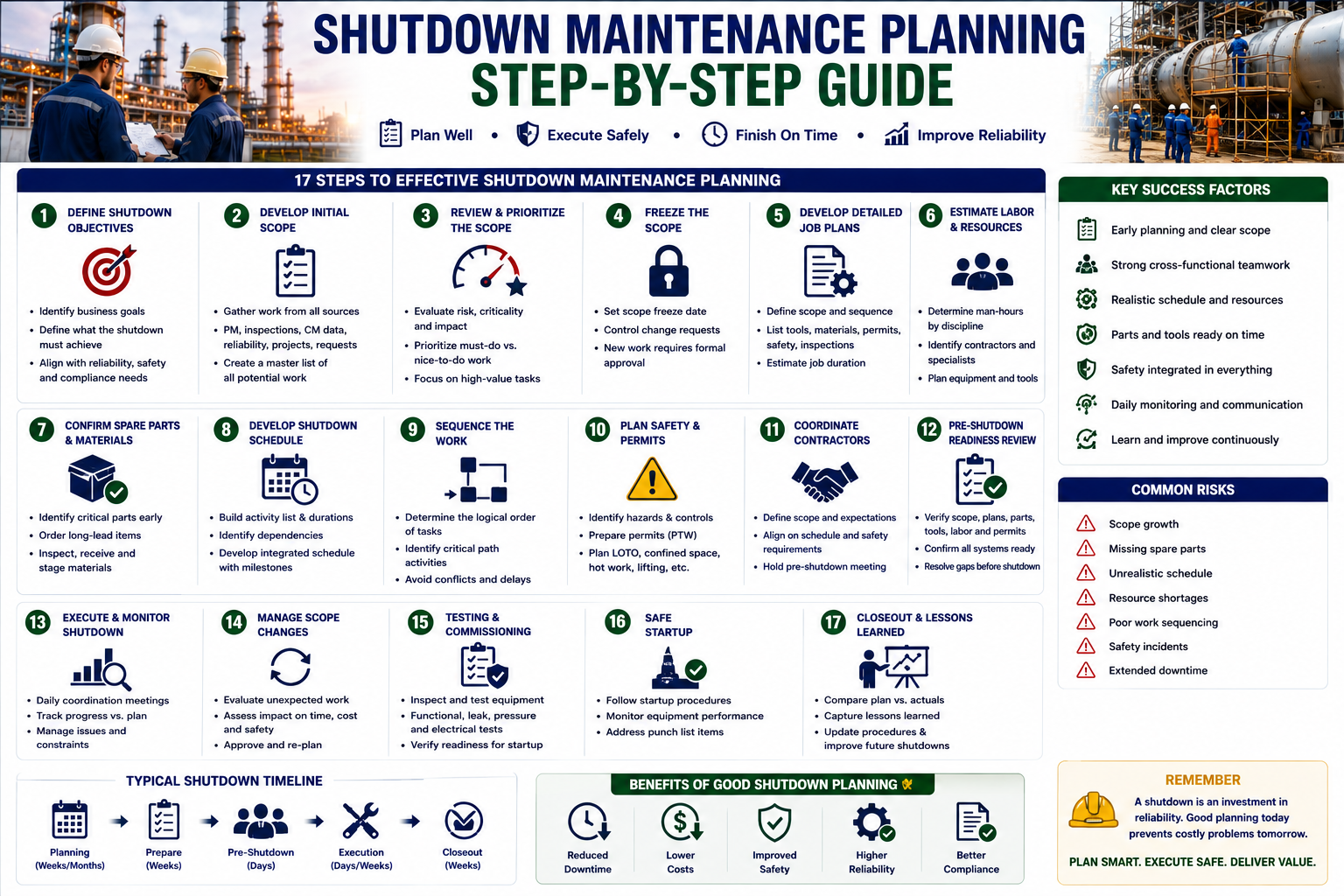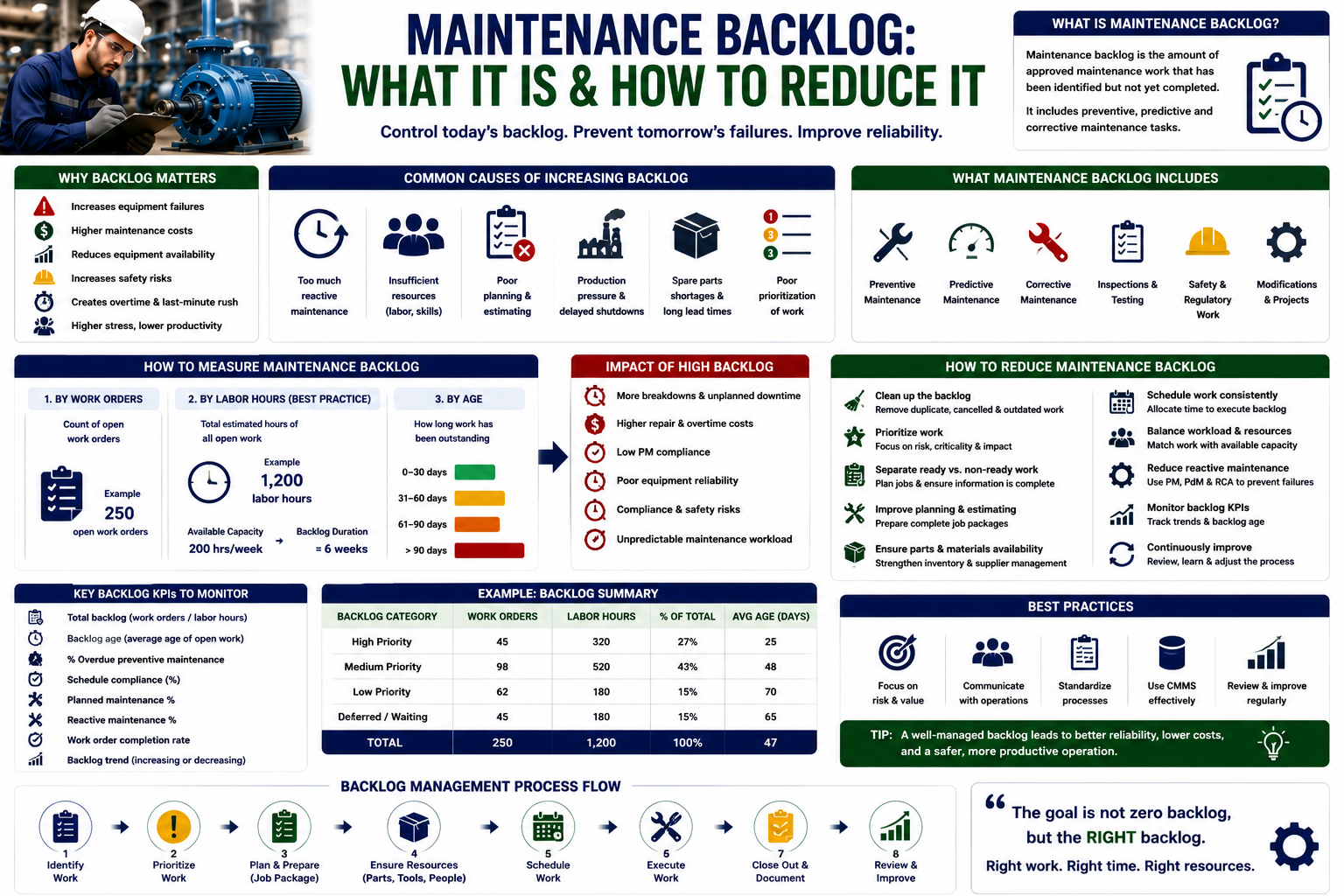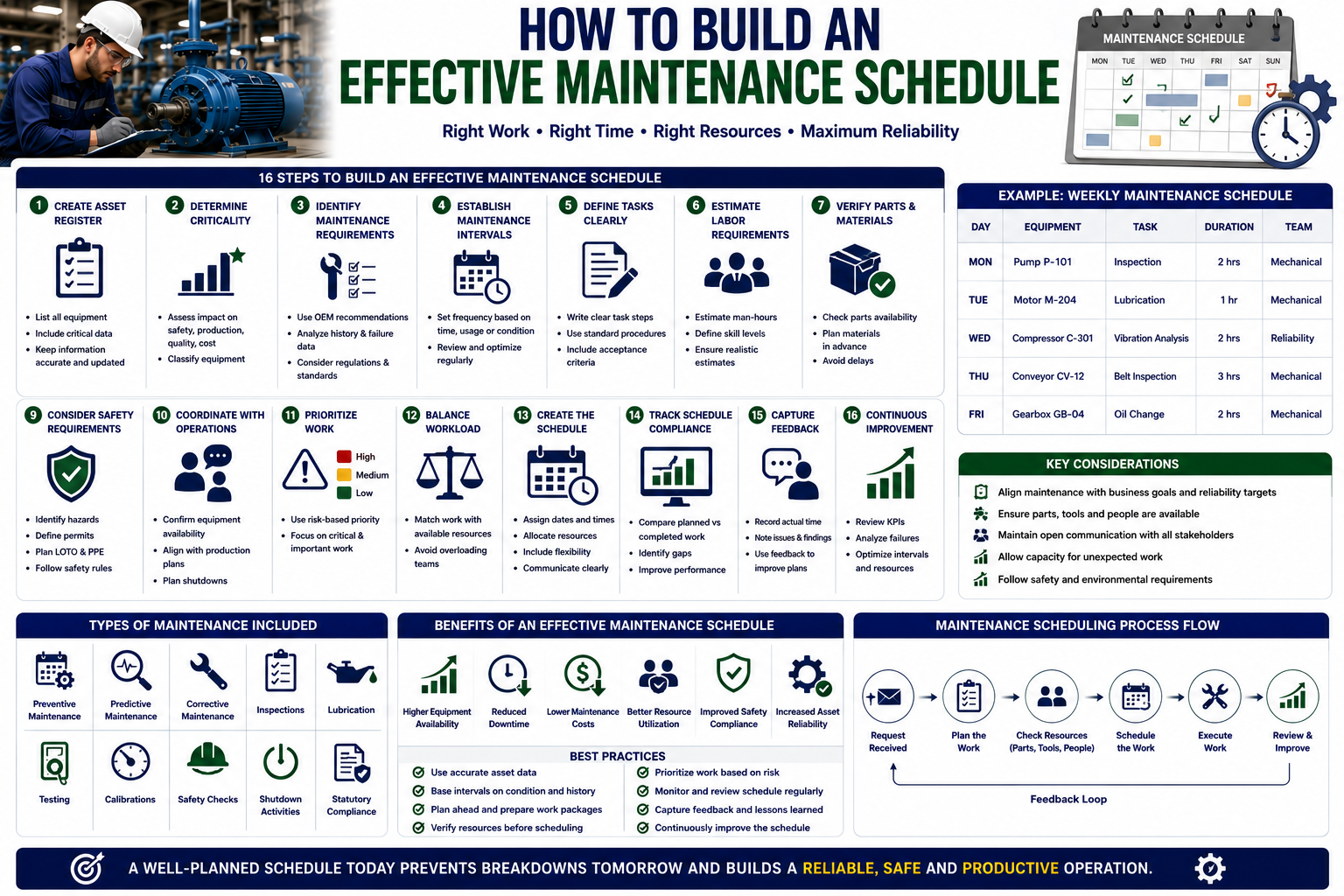
Effective maintenance is not simply about repairing equipment when it breaks. Modern maintenance organizations need a structured approach to ensure that maintenance work is properly prepared, resources are available, and equipment is returned to service safely and efficiently.
Two important concepts in maintenance management are maintenance planning and maintenance scheduling.
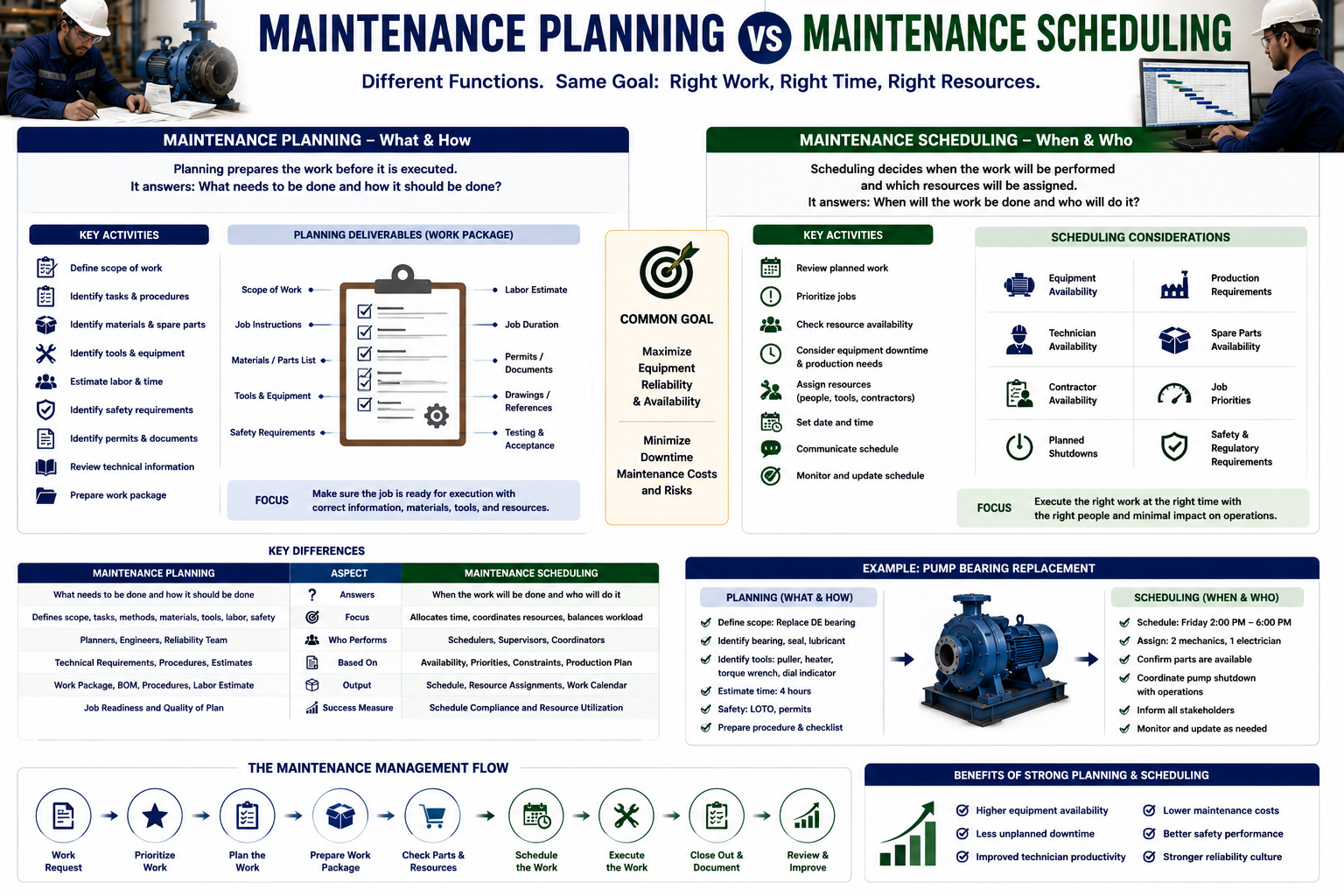
Although these terms are often used interchangeably, they are not the same. Maintenance planning determines what needs to be done and how the work should be performed, while maintenance scheduling determines when the work should be performed and which resources will be assigned.
Understanding the difference between maintenance planning and maintenance scheduling can help organizations reduce downtime, improve technician productivity, control maintenance costs, and increase equipment availability.
What Is Maintenance Planning?
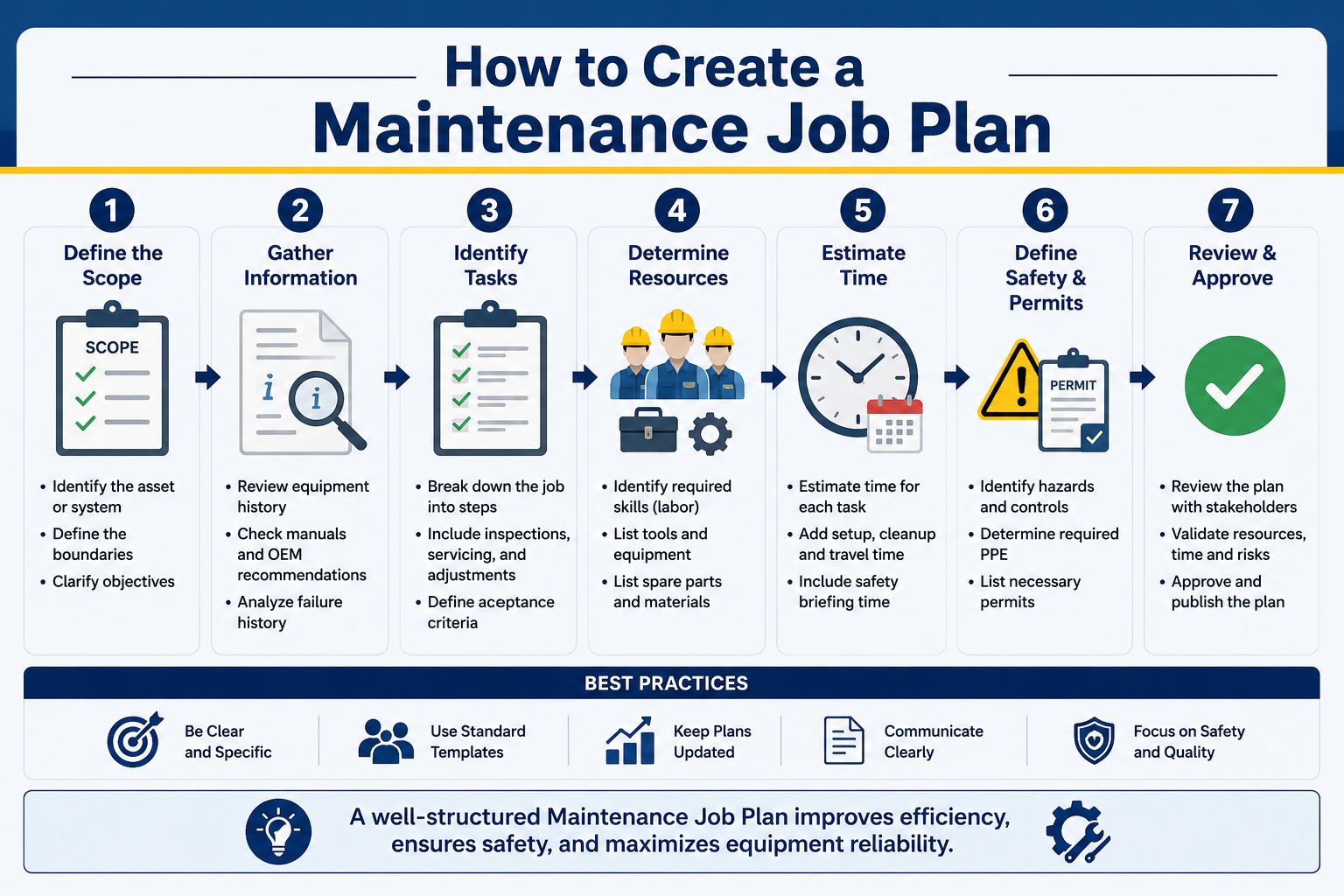
Maintenance planning is the process of preparing maintenance work before it is executed.
A maintenance planner determines everything required to complete a job effectively and safely.
Planning may include:
- Defining the scope of work
- Identifying required tasks
- Developing work instructions
- Estimating labor hours
- Identifying spare parts
- Identifying tools and equipment
- Determining safety requirements
- Identifying permits
- Reviewing technical information
- Estimating job duration
The objective is to make sure technicians have the information and resources they need before starting the job.
For example, if a centrifugal pump requires bearing replacement, the maintenance plan may identify:
- Required bearing specification
- Special tools
- Alignment equipment
- Required technicians
- Lifting equipment
- Lubricant
- Isolation requirements
- Estimated labor hours
- Testing requirements
- Reassembly procedure
A well-planned job reduces the likelihood that technicians will stop work because a critical part, tool, or instruction is missing.
What Is Maintenance Scheduling?
Maintenance scheduling is the process of deciding when planned maintenance work will be performed and assigning available resources to that work.
Scheduling considers factors such as:
- Equipment availability
- Production requirements
- Technician availability
- Spare-parts availability
- Contractor availability
- Job priorities
- Planned shutdowns
- Safety requirements
- Work dependencies
For example, a planner may prepare a pump bearing replacement job.
The scheduler may then determine that the job will be completed:
Tuesday, 8:00 AM–12:00 PM
during a period when the pump can be safely removed from service.
Scheduling therefore converts prepared maintenance work into an executable timetable.
Maintenance Planning vs Maintenance Scheduling
The simplest way to understand the difference is:
Planning = What and How
Scheduling = When and Who
Planning prepares the work.
Scheduling organizes the execution of the work.
| Maintenance Planning | Maintenance Scheduling |
|---|---|
| Determines what work is required | Determines when work will occur |
| Defines job scope | Assigns work dates and times |
| Identifies tools and materials | Coordinates resource availability |
| Develops work instructions | Assigns technicians or crews |
| Estimates labor requirements | Balances available labor |
| Identifies safety requirements | Coordinates equipment access |
| Focuses on job readiness | Focuses on execution timing |
Both processes are necessary for an effective maintenance system.
Why Maintenance Planning Is Important
Poorly planned maintenance creates unnecessary delays.
A technician may arrive at the equipment only to discover that:
- The spare part is unavailable
- A special tool is required
- The correct procedure is missing
- A crane is needed
- Additional technicians are required
- A permit has not been prepared
The technician then has to stop the job and return later.
This creates wasted labor and increases equipment downtime.
Effective planning reduces these problems by identifying requirements before the job starts.
Why Maintenance Scheduling Is Important
Even a perfectly planned maintenance job can fail if it is scheduled poorly.
For example, a pump replacement may require four technicians and six hours.
If it is scheduled during a period of peak production when the pump cannot be removed from service, the job cannot be completed successfully.
Scheduling must therefore consider operational requirements as well as maintenance requirements.
A good schedule ensures that:
People + Parts + Tools + Equipment + Time + Safety Requirements
are available at the same time.
The Maintenance Planning Process
A typical planning process can include the following steps.
1. Receive the Work Request
A maintenance request may come from:
- Operators
- Maintenance technicians
- Reliability engineers
- Inspection teams
- Condition-monitoring personnel
The request should describe the problem or required maintenance activity.
2. Review the Job
The planner reviews the request and determines:
- What equipment is involved?
- What is the problem?
- What work is required?
- How critical is the equipment?
- What risks are involved?
3. Define the Scope
The planner develops a clear description of the work.
For example:
“Remove pump drive-end bearing, inspect shaft and housing, install replacement bearing, align coupling, lubricate, test run, and verify vibration.”
A clear scope reduces misunderstandings during execution.
4. Identify Resources
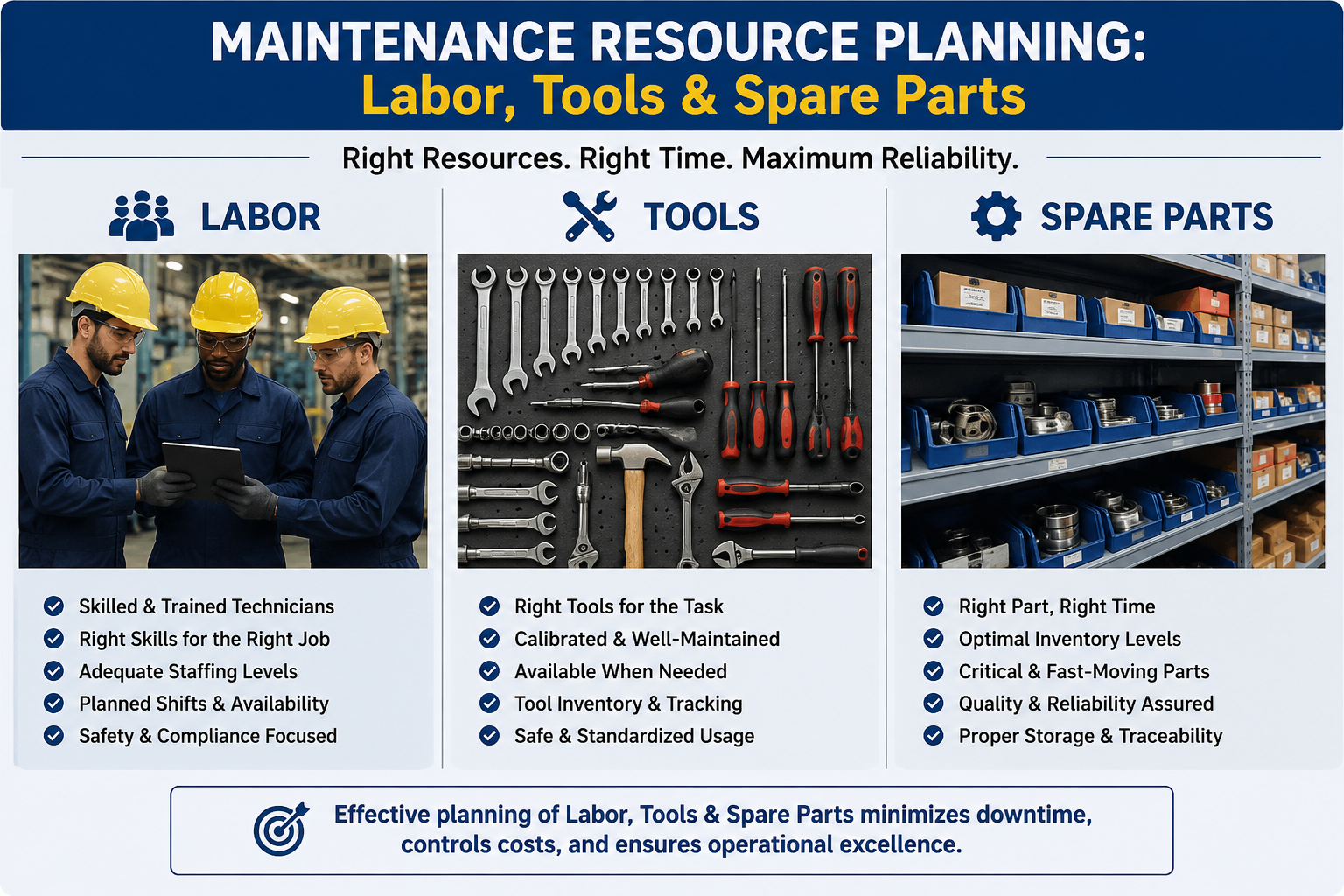
The planner determines the required:
- Labor
- Parts
- Tools
- Equipment
- Procedures
- Permits
5. Estimate Labor
The planner estimates how many people are required and how long the work should take.
For example:
Mechanical technician: 4 hours
Electrician: 1 hour
Alignment specialist: 2 hours
These estimates help the scheduler create realistic schedules.
6. Prepare the Work Package
A completed work package should provide technicians with the information needed to execute the job.
Once the job is ready, it can move into the scheduling process.
The Maintenance Scheduling Process
1. Review Ready Work
The scheduler reviews jobs that have been fully planned and are ready for execution.
2. Prioritize Jobs
Work may be prioritized based on:
- Safety
- Environmental risk
- Production impact
- Equipment criticality
- Failure risk
- Regulatory requirements
Critical work should receive appropriate priority.
3. Check Resource Availability
The scheduler checks whether:
- Technicians are available
- Parts are available
- Tools are available
- Equipment can be shut down
- Contractors are available
4. Coordinate With Operations
Maintenance scheduling should be closely coordinated with production.
A maintenance team cannot schedule major equipment work without considering production requirements.
You may also like: Submersible Water Pump: Working, Types, Applications & Advantages
5. Assign Dates and Resources
The scheduler assigns:
- Work date
- Start time
- Technicians
- Equipment
- Required support resources
6. Communicate the Schedule
The final schedule should be communicated to the relevant teams.
Everyone should understand:
- What work is planned
- When it will occur
- Who will perform it
- What equipment will be affected
Example: Planning vs Scheduling
Consider a conveyor gearbox requiring inspection.
Planning
The planner determines:
- Gearbox inspection procedure
- Required tools
- Required lubricant
- Required technician
- Estimated duration
- Safety requirements
- Spare parts
- Inspection checklist
The job is now planned.
Scheduling
The scheduler determines:
- Friday from 2:00 PM to 5:00 PM
- Two mechanical technicians
- Conveyor shutdown required
- Production approves the shutdown
- Required tools and parts are available
The job is now scheduled.
This example shows why planning must generally occur before scheduling.
The Role of the Maintenance Planner
A maintenance planner focuses on preparing work.
Typical responsibilities include:
- Developing job plans
- Reviewing work requests
- Estimating labor
- Identifying materials
- Preparing work packages
- Developing procedures
- Identifying safety requirements
- Improving job plans using feedback
The planner is primarily concerned with job readiness.
The Role of the Maintenance Scheduler
A maintenance scheduler focuses on coordinating work execution.
Typical responsibilities include:
- Developing maintenance schedules
- Assigning dates
- Balancing resources
- Coordinating shutdowns
- Working with operations
- Resolving scheduling conflicts
- Monitoring schedule compliance
The scheduler is primarily concerned with when and how resources are allocated.
Common Problems With Maintenance Planning
Organizations may experience planning problems such as:
Incomplete Job Information
Work requests may not provide enough detail.
Missing Spare Parts
Technicians arrive at the equipment without required materials.
Poor Labor Estimates
Jobs take significantly longer than expected.
Inadequate Procedures
Technicians must determine the work method while performing the job.
Lack of Historical Information
Previous job feedback is not used to improve future plans.
Common Problems With Maintenance Scheduling
Scheduling problems can include:
Unrealistic Schedules
Too much work is scheduled for the available workforce.
Poor Prioritization
Low-priority work is scheduled while critical work remains outstanding.
Production Conflicts
Maintenance is scheduled when equipment cannot be taken offline.
Resource Conflicts
Multiple jobs require the same technician, tool, or contractor.
Poor Communication
Operations and maintenance teams are not aligned on planned work.
How Planning and Scheduling Work Together
Planning and scheduling should be viewed as connected processes.
A simplified workflow is:
Work Request → Prioritization → Planning → Materials & Resources → Job Ready → Scheduling → Execution → Closeout → Feedback
The feedback stage is particularly important.
After the work is completed, technicians should record:
- Actual labor hours
- Parts used
- Problems encountered
- Additional work required
- Safety issues
- Job duration
- Recommendations
This information can improve future maintenance plans.
Maintenance Planning and Scheduling KPIs
Organizations can use several KPIs to measure performance.
Schedule Compliance
Measures how much scheduled work is completed as planned.
Planned Maintenance Percentage
Shows the proportion of maintenance work that is planned.
Planning Effectiveness
Can be evaluated by comparing planned versus actual labor and job duration.
Schedule Break-In
Measures how frequently urgent work disrupts the maintenance schedule.
Backlog
Shows the amount of outstanding maintenance work.
Maintenance Productivity
Helps evaluate how effectively maintenance labor is being used.
These indicators can help identify weaknesses in the planning and scheduling process.
Best Practices
Organizations can improve maintenance planning and scheduling by following several principles:
- Create clear work requests.
- Prioritize jobs based on risk and criticality.
- Plan jobs before scheduling them.
- Verify spare-parts availability.
- Prepare accurate work instructions.
- Estimate labor realistically.
- Coordinate closely with operations.
- Avoid overloading the maintenance schedule.
- Use historical job data.
- Capture technician feedback after completion.
- Review schedule compliance regularly.
- Continuously improve job plans.
Maintenance Planning and Scheduling in CMMS
A Computerized Maintenance Management System (CMMS) can help organizations manage both planning and scheduling.
A CMMS can store:
- Work orders
- Equipment information
- Job plans
- Spare-parts information
- Labor estimates
- Maintenance schedules
- Work history
- Failure information
For example, a planner can create a standard job plan for pump bearing replacement.
The scheduler can then use that job plan whenever similar work needs to be scheduled.
This creates consistency and reduces planning time.
Conclusion
Maintenance planning and maintenance scheduling are closely related, but they perform different functions.
Maintenance planning answers:
What needs to be done, how should it be done, and what resources are required?
Maintenance scheduling answers:
When should the work be done, and who will perform it?
Effective planning ensures that maintenance jobs are properly prepared. Effective scheduling ensures that those jobs are executed at the right time with the appropriate resources.
Neither process should operate in isolation.
When planning, scheduling, operations, stores, engineering, and maintenance execution work together, organizations can reduce delays, improve labor productivity, increase equipment availability, reduce unplanned downtime, and control maintenance costs.
The ultimate objective is simple:
Plan the work properly, schedule it intelligently, execute it safely, and learn from every completed job.
A mature maintenance organization does not simply react to equipment problems. It creates a structured system in which maintenance work is prepared, prioritized, scheduled, executed, measured, and continuously improved.