Maintenance is essential for keeping industrial equipment reliable, safe, and productive. Whether an organization operates a manufacturing plant, power station, oil and gas facility, processing plant, mining operation, or commercial facility, equipment failure can lead to downtime, production losses, safety risks, and expensive repairs.
Two of the most widely used maintenance strategies are preventive maintenance and predictive maintenance.
Both approaches aim to reduce unexpected equipment failures, but they use different methods to determine when maintenance should be performed.
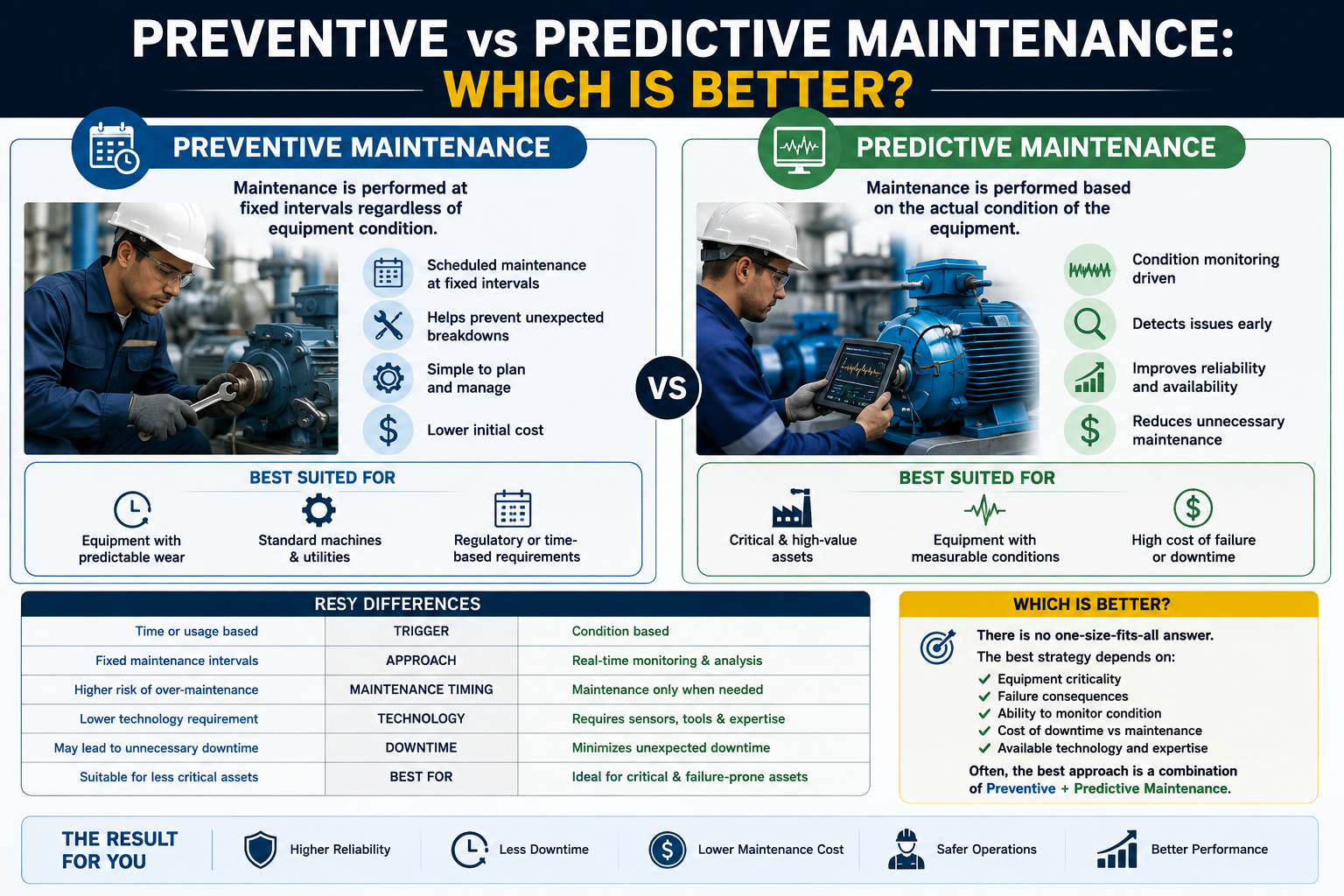
Preventive maintenance relies primarily on predetermined schedules, while predictive maintenance uses the actual condition of equipment and operational data to determine when intervention may be necessary.
So, which is better: preventive or predictive maintenance?
The answer depends on the equipment, failure mode, criticality, operating environment, available data, and cost of implementation. In many organizations, the best solution is not choosing one over the other, but combining both strategies effectively.
What Is Preventive Maintenance?
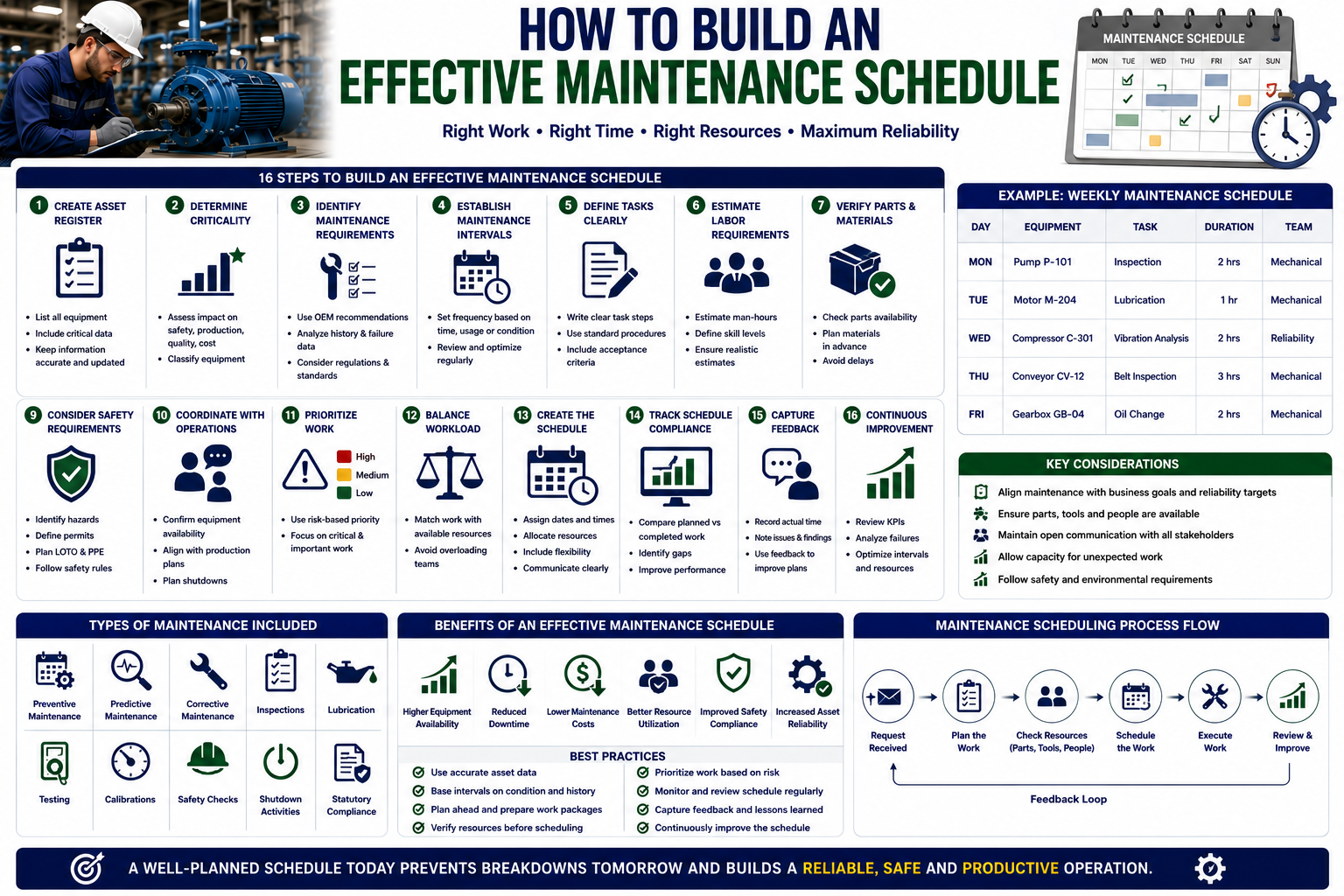
Preventive maintenance is a planned maintenance strategy in which equipment is inspected, serviced, adjusted, or replaced at predetermined intervals to reduce the likelihood of failure.
Maintenance intervals may be based on:
- Calendar time
- Operating hours
- Production cycles
- Mileage
- Equipment usage
- Manufacturer recommendations
For example, a maintenance team may inspect a pump every three months, lubricate a bearing every 1,000 operating hours, or replace an air filter every six months.
The basic principle is:
Perform maintenance before equipment is expected to fail.
Examples of Preventive Maintenance
Common preventive maintenance activities include:
- Lubrication
- Filter replacement
- Belt inspection
- Bearing inspection
- Electrical testing
- Calibration
- Cleaning
- Fastener tightening
- Component replacement
- Equipment alignment
Preventive maintenance is widely used because it is relatively straightforward to plan and manage.
What Is Predictive Maintenance?
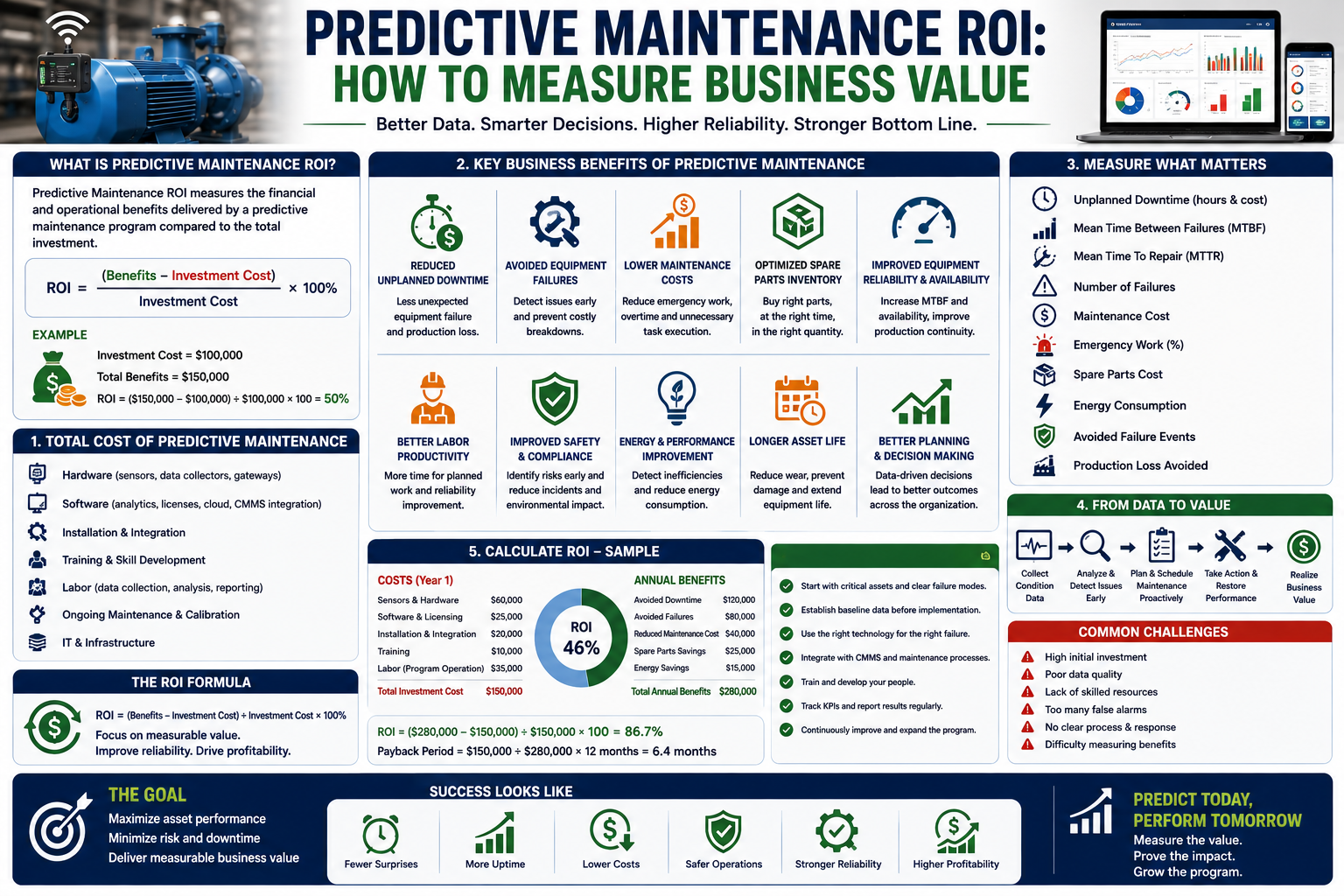
Predictive maintenance uses equipment-condition information to determine when maintenance should be performed.
Instead of relying solely on a fixed schedule, maintenance engineers monitor the actual condition of equipment and look for signs of deterioration.
The principle is:
Perform maintenance when equipment condition indicates that intervention is necessary.
Predictive maintenance may use technologies such as:
Vibration Analysis
Vibration monitoring is commonly used on rotating equipment such as motors, pumps, compressors, fans, gearboxes, and turbines.
Changes in vibration patterns can indicate developing mechanical problems.
Infrared Thermography
Thermal imaging can identify abnormal temperature patterns in electrical and mechanical systems.
Oil Analysis
Oil analysis can provide information about lubricant condition, contamination, and internal component wear.
Ultrasonic Inspection
Ultrasonic techniques can help identify compressed-air leaks, steam leaks, electrical discharge, and certain mechanical conditions.
Online Sensors
Sensors can continuously monitor parameters such as:
- Temperature
- Vibration
- Pressure
- Speed
- Flow
- Energy consumption
This data can be analyzed to identify abnormal conditions.
Preventive vs Predictive Maintenance: Key Difference
The biggest difference is how maintenance timing is determined.
Preventive maintenance asks:
“When should we perform this maintenance based on a predetermined schedule?”
Predictive maintenance asks:
“What is the actual condition of the equipment, and when is maintenance likely to be required?”
For example, consider an electric motor.
A preventive maintenance program might specify:
Inspect the motor every three months.
A predictive maintenance program might continuously monitor vibration and temperature and identify that the motor’s bearing condition is deteriorating.
The maintenance team can then plan a repair based on the condition of the bearing rather than simply following a calendar.
Preventive Maintenance Advantages
Preventive maintenance remains an important strategy because it provides several benefits.
1. Easy to Plan
Maintenance tasks can be scheduled in advance.
2. Predictable Workload
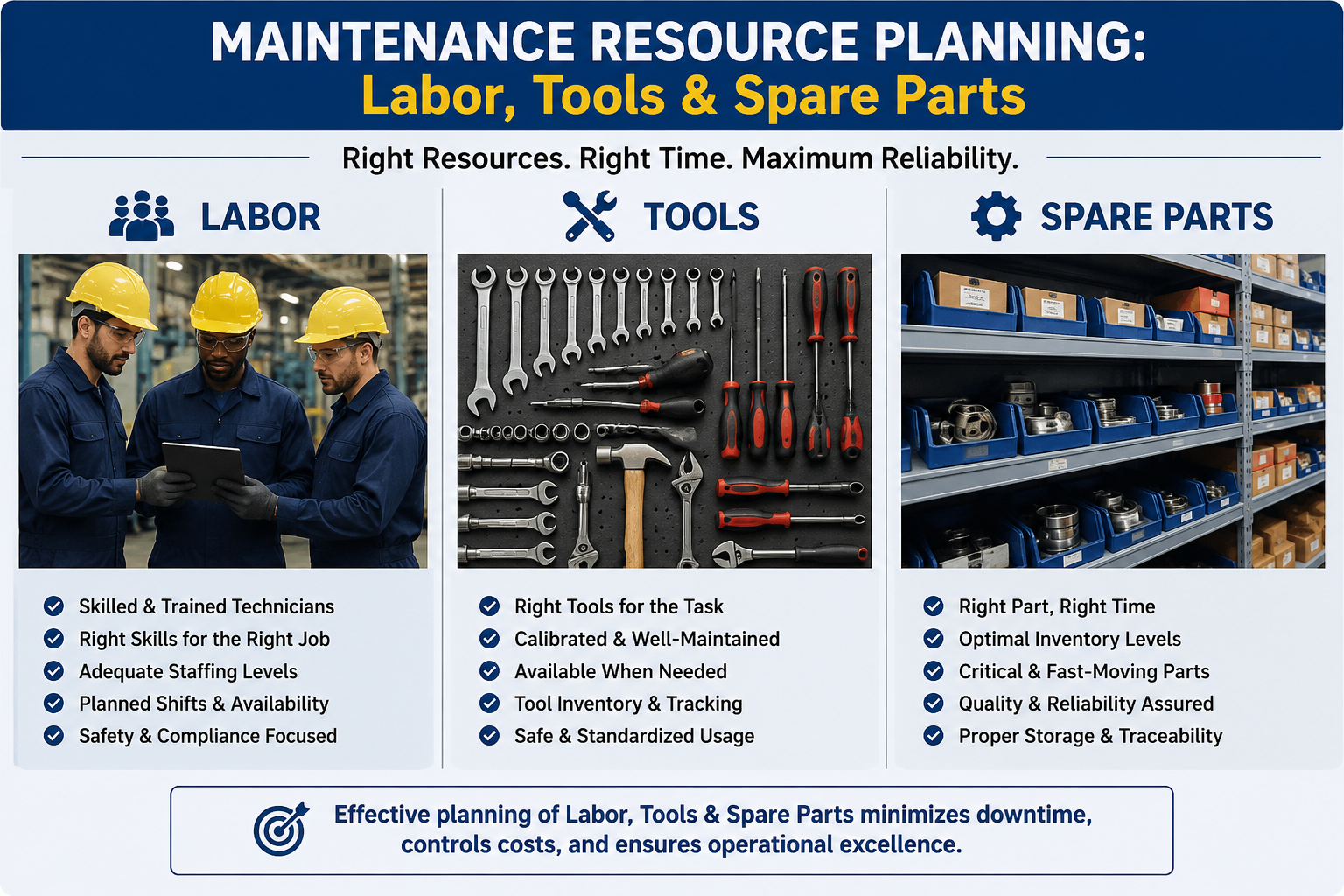
Maintenance departments can estimate labor, spare-parts, tools, and equipment requirements.
3. Reduces Certain Failures
Regular inspection, lubrication, cleaning, and component replacement can prevent some types of failures.
4. Suitable for Many Assets
Preventive maintenance can be effective for equipment with known age-related deterioration or clearly defined service requirements.
5. Simple to Manage
A CMMS can easily schedule and track preventive-maintenance activities.
Preventive Maintenance Disadvantages
Preventive maintenance also has limitations.
Over-Maintenance
Components may be replaced even though they still have significant useful life remaining.
Maintenance-Induced Failures
Every maintenance intervention introduces some risk of installation error, contamination, incorrect assembly, or other human error.
Fixed Intervals May Not Reflect Actual Condition
Two identical machines may operate under different loads or environmental conditions and therefore deteriorate at different rates.
Increased Maintenance Workload
Poorly optimized preventive-maintenance programs can generate unnecessary work orders.
This is why maintenance intervals should be periodically reviewed using equipment history and reliability data.
Predictive Maintenance Advantages
Predictive maintenance provides several important benefits.
1. Early Failure Detection
Condition monitoring can identify developing problems before catastrophic failure occurs.
2. Better Maintenance Timing
Maintenance can be scheduled based on actual equipment condition.
3. Reduced Unnecessary Maintenance
Components do not necessarily need to be replaced simply because they have reached a predetermined age.
4. Improved Equipment Availability
Early warning allows maintenance teams to plan repairs during suitable production windows.
5. Better Reliability Decisions
Condition data provides engineers with additional information for evaluating equipment performance.
Predictive Maintenance Disadvantages
Predictive maintenance also has challenges.
Initial Investment
Sensors, monitoring equipment, software, and analytical tools may require significant investment.
Technical Expertise
Employees may need training in vibration analysis, thermography, oil analysis, data interpretation, and other technologies.
Data Quality
Poor sensor installation, incorrect measurements, insufficient historical data, or bad data management can reduce the effectiveness of predictive maintenance.
Not Suitable for Every Asset
Low-value or low-criticality equipment may not justify the cost of continuous condition monitoring.
Preventive vs Predictive Maintenance Comparison
| Factor | Preventive Maintenance | Predictive Maintenance |
|---|---|---|
| Maintenance trigger | Time or usage | Equipment condition |
| Main approach | Scheduled | Condition-based |
| Data requirements | Low to moderate | Moderate to high |
| Technology requirements | Relatively low | Often higher |
| Maintenance timing | Predetermined | Based on condition |
| Risk of over-maintenance | Higher | Generally lower |
| Early fault detection | Limited | Strong |
| Initial investment | Usually lower | Usually higher |
| Best suited for | Routine maintenance and predictable degradation | Critical assets and detectable failure conditions |
Which Is Better?
There is no universal answer.
The better strategy depends on the specific equipment and failure mechanism.
Preventive Maintenance May Be Better When:
- Equipment has predictable age-related deterioration.
- Maintenance requirements are clearly defined.
- The asset is relatively simple.
- Condition monitoring is not economical.
- The cost of monitoring exceeds the expected benefit.
- Maintenance activities are inexpensive and straightforward.
- Regulatory or manufacturer requirements specify routine servicing.
For example, routine filter replacement or lubrication may be effectively managed using preventive maintenance.
Predictive Maintenance May Be Better When:
- Equipment is highly critical.
- Failure can cause major production losses.
- Equipment provides measurable warning signs before failure.
- Condition monitoring technology is available.
- The asset is expensive to repair or replace.
- Unplanned downtime has significant consequences.
- Equipment condition varies significantly with operating conditions.
For example, vibration monitoring can be highly valuable for critical rotating equipment.
Can Preventive and Predictive Maintenance Work Together?
Yes. In fact, combining the two approaches is often the most effective strategy.
Consider a large industrial pump.
A maintenance program might include:
Preventive maintenance:
Inspect lubrication system every month.
Predictive maintenance:
Monitor bearing vibration and temperature.
Corrective maintenance:
Repair defects identified during inspections.
Proactive maintenance:
Investigate and eliminate recurring causes of bearing failures.
This creates a more comprehensive maintenance strategy.
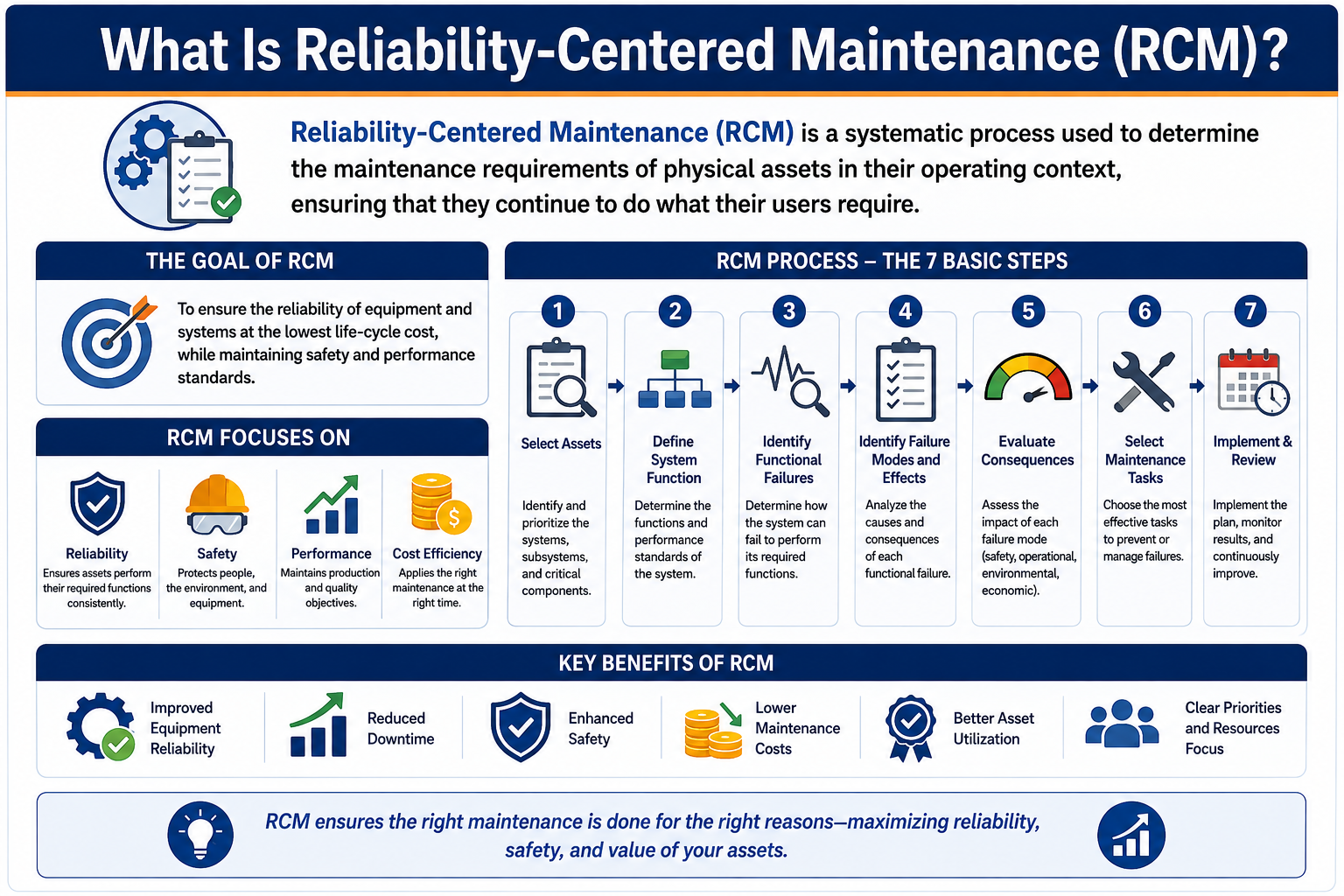
Preventive maintenance provides routine care, predictive maintenance provides condition information, corrective maintenance addresses identified problems, and proactive maintenance focuses on eliminating recurring failure causes.
How to Decide Between Preventive and Predictive Maintenance
Maintenance engineers can use a structured process.
Step 1: Identify Asset Criticality
Determine the consequences of equipment failure.
Consider:
- Safety
- Production
- Quality
- Environmental impact
- Repair cost
- Replacement cost
Step 2: Understand Failure Modes
Identify how and why the equipment can fail.
Tools such as Failure Mode and Effects Analysis (FMEA) can help identify important failure modes.
Step 3: Determine Failure Warning Signs
Ask whether the failure provides measurable signs before it occurs.
If vibration, temperature, oil condition, pressure, or another parameter changes before failure, predictive maintenance may be appropriate.
Step 4: Compare Costs
Compare the cost of preventive and predictive maintenance with the potential cost of equipment failure.
Step 5: Review Historical Data
Equipment failure history can help determine whether existing preventive intervals are effective.
Step 6: Monitor Results
Use maintenance KPIs such as:
- Mean Time Between Failures (MTBF)
- Mean Time To Repair (MTTR)
- Equipment availability
- Unplanned downtime
- Maintenance cost
- Preventive-maintenance compliance
- Repeat failure rate
The strategy should be adjusted based on actual performance.
The Role of CMMS in Preventive and Predictive Maintenance
A Computerized Maintenance Management System (CMMS) can support both strategies.
For preventive maintenance, a CMMS can:
- Generate scheduled work orders
- Track maintenance intervals
- Manage maintenance history
- Track spare parts
- Monitor compliance
For predictive maintenance, condition-monitoring results can be incorporated into maintenance planning and work-order decisions.
Combining equipment history with condition data allows maintenance engineers to make more informed decisions.
The Future of Preventive and Predictive Maintenance
Technology is increasingly changing how maintenance departments operate.
Industrial IoT sensors, cloud platforms, artificial intelligence, machine learning, and advanced analytics can provide organizations with more detailed information about asset condition.
Instead of relying entirely on fixed maintenance schedules, organizations can increasingly use real-time data to understand how assets are performing.
However, this does not mean preventive maintenance will disappear.
Many maintenance activities will continue to require scheduled inspections, lubrication, calibration, cleaning, testing, and servicing.
The future is therefore likely to involve integrated maintenance strategies rather than replacing preventive maintenance completely with predictive maintenance.