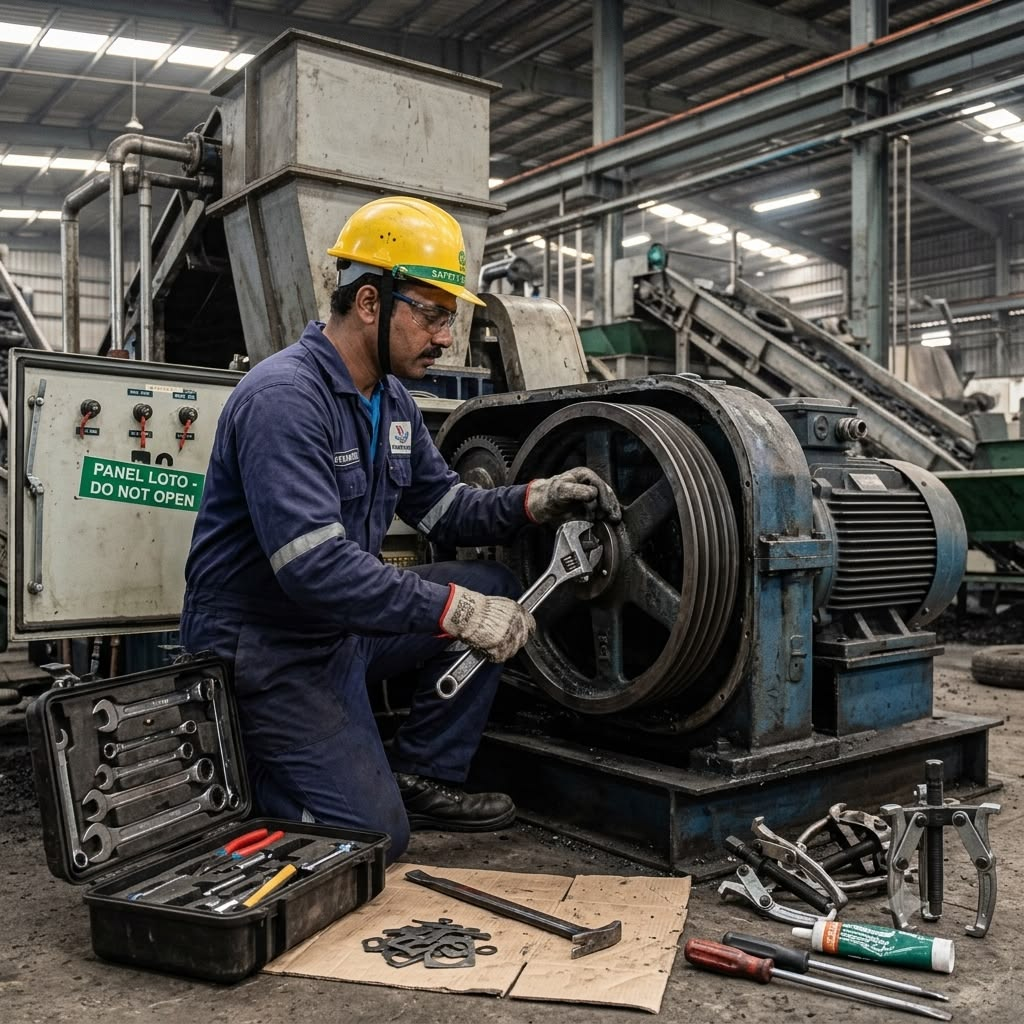
Modern industries depend on machines, equipment, electrical systems, production lines, and other physical assets to operate efficiently. Whether in manufacturing, oil and gas, power generation, mining, construction, food processing, pharmaceuticals, or utilities, equipment reliability directly affects productivity, safety, quality, and profitability.
This is where the maintenance engineer plays a critical role.
A maintenance engineer is responsible for helping organizations keep their equipment and systems safe, reliable, available, and efficient. However, the role has changed significantly over the years. Maintenance engineers are no longer focused only on repairing equipment after it breaks down. Modern maintenance engineering involves preventive maintenance, predictive maintenance, reliability improvement, data analysis, asset management, root cause analysis, safety, and continuous improvement.
This guide explains the role and responsibilities of a maintenance engineer in modern industry and why the profession is becoming increasingly important.
What Is a Maintenance Engineer?
A maintenance engineer is an engineering professional responsible for maintaining, troubleshooting, improving, and managing industrial equipment and physical assets throughout their operating life.
Depending on the industry, maintenance engineers may work with mechanical equipment, electrical systems, instrumentation, automation, rotating machinery, hydraulic systems, pneumatic systems, utilities, and production equipment.
Their primary objective is to ensure that equipment performs its intended function safely, reliably, and economically.
A maintenance engineer may spend part of the day analyzing equipment performance, planning maintenance activities, investigating failures, coordinating technicians, reviewing work orders, and developing reliability-improvement projects.
Why Maintenance Engineers Are Important
Equipment failure can have serious consequences for an organization.
A single unexpected failure can result in:
- Production downtime
- Lost revenue
- Expensive emergency repairs
- Product-quality problems
- Safety incidents
- Environmental consequences
- Increased overtime
- Equipment damage
- Missed production targets
Maintenance engineers help reduce these risks by developing systems that identify equipment problems early, prevent avoidable failures, and improve the reliability of critical assets.
Their work therefore has a direct connection to business performance.
Key Responsibilities of a Maintenance Engineer
The responsibilities of maintenance engineers vary depending on the industry and organization, but several responsibilities are common across modern industrial facilities.
1. Equipment Inspection and Assessment
Maintenance engineers help establish inspection programs to determine the condition of equipment.
They may review equipment for:
- Wear
- Corrosion
- Leakage
- Abnormal vibration
- Overheating
- Misalignment
- Lubrication problems
- Electrical abnormalities
- Structural damage
Regular inspection helps identify developing problems before they result in major equipment failures.
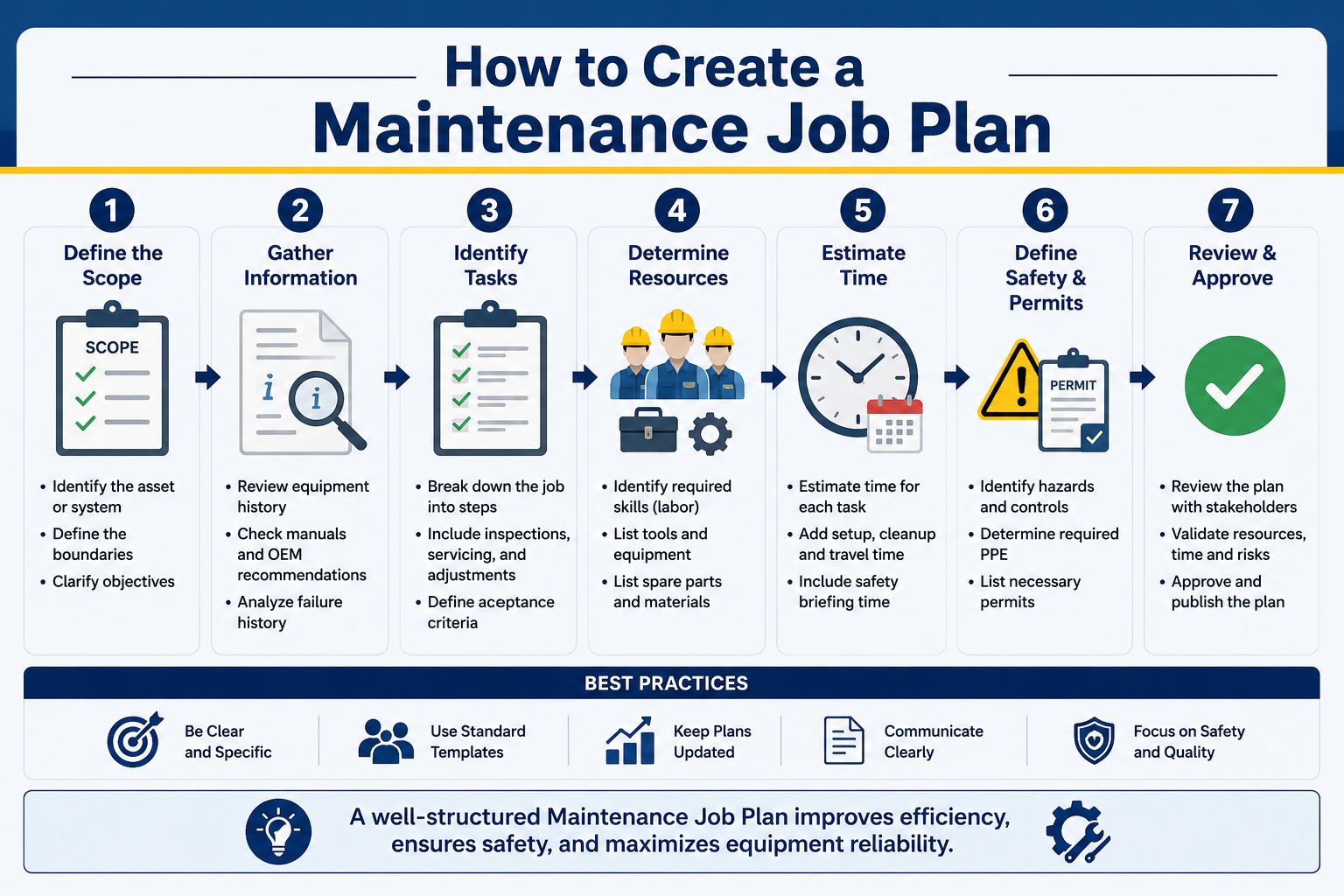
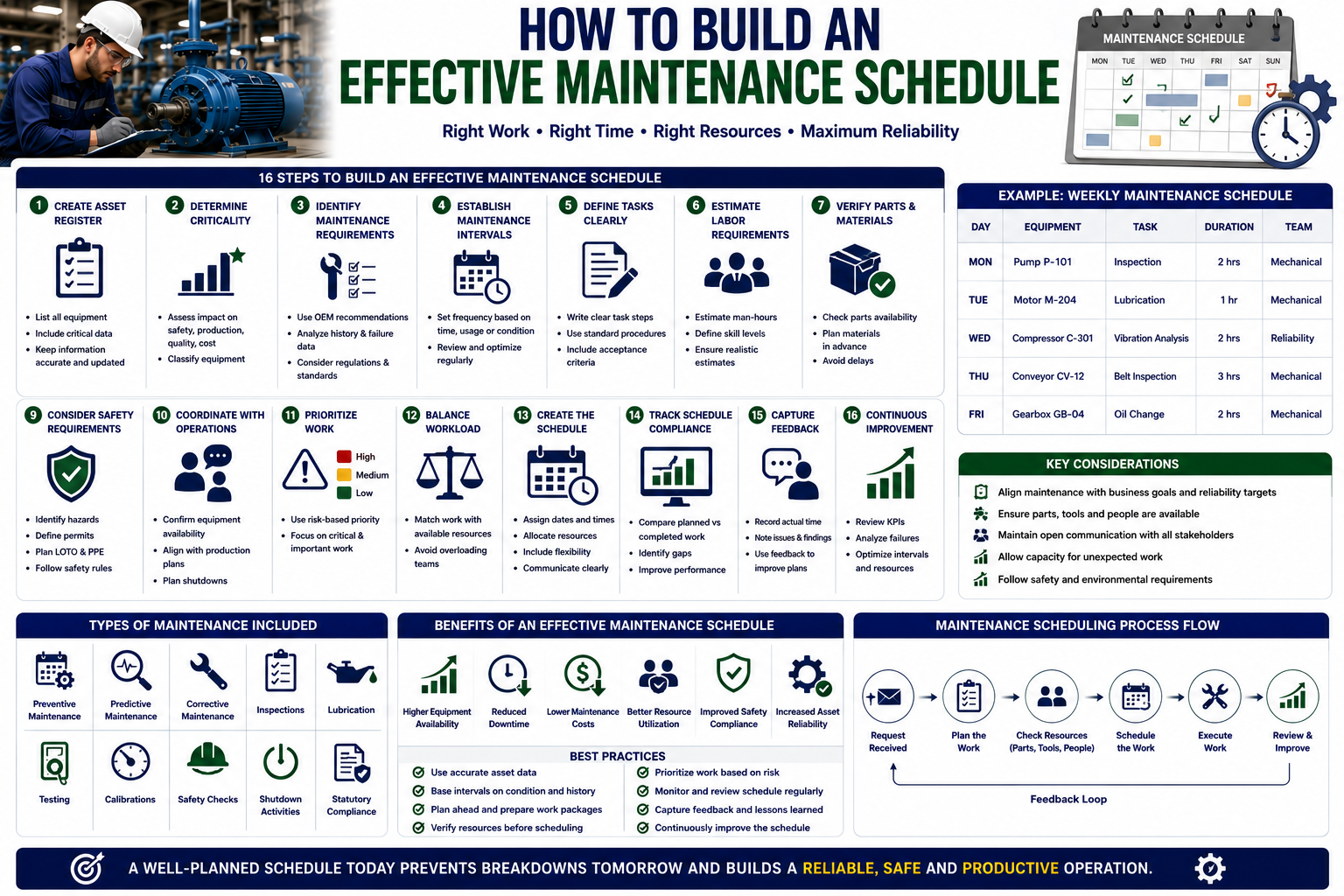
2. Maintenance Planning and Scheduling
Maintenance engineering involves deciding what work needs to be performed and when it should be performed.
A maintenance engineer may develop maintenance plans based on:
- Manufacturer recommendations
- Equipment operating hours
- Failure history
- Equipment criticality
- Condition-monitoring data
- Regulatory requirements
- Production schedules
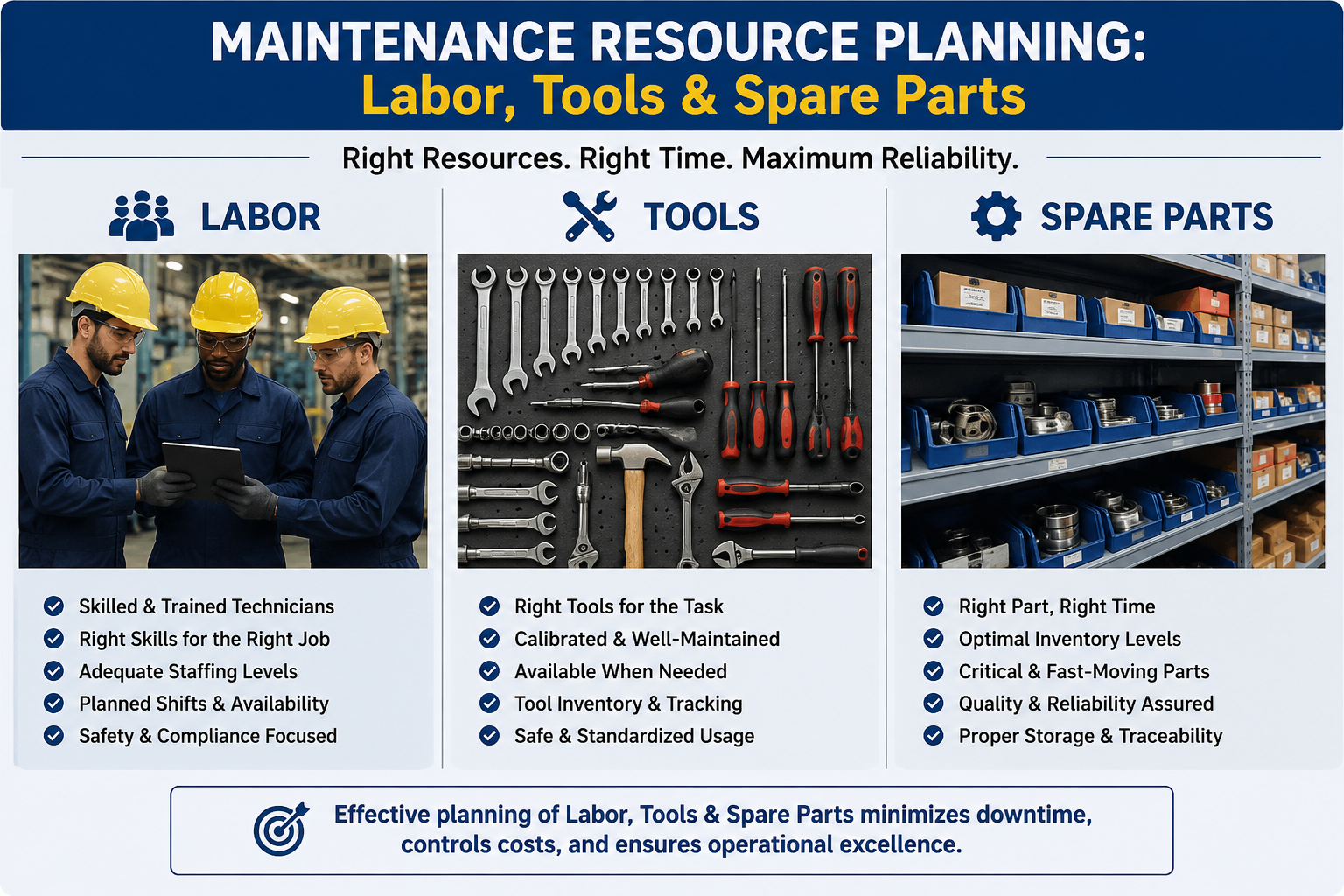
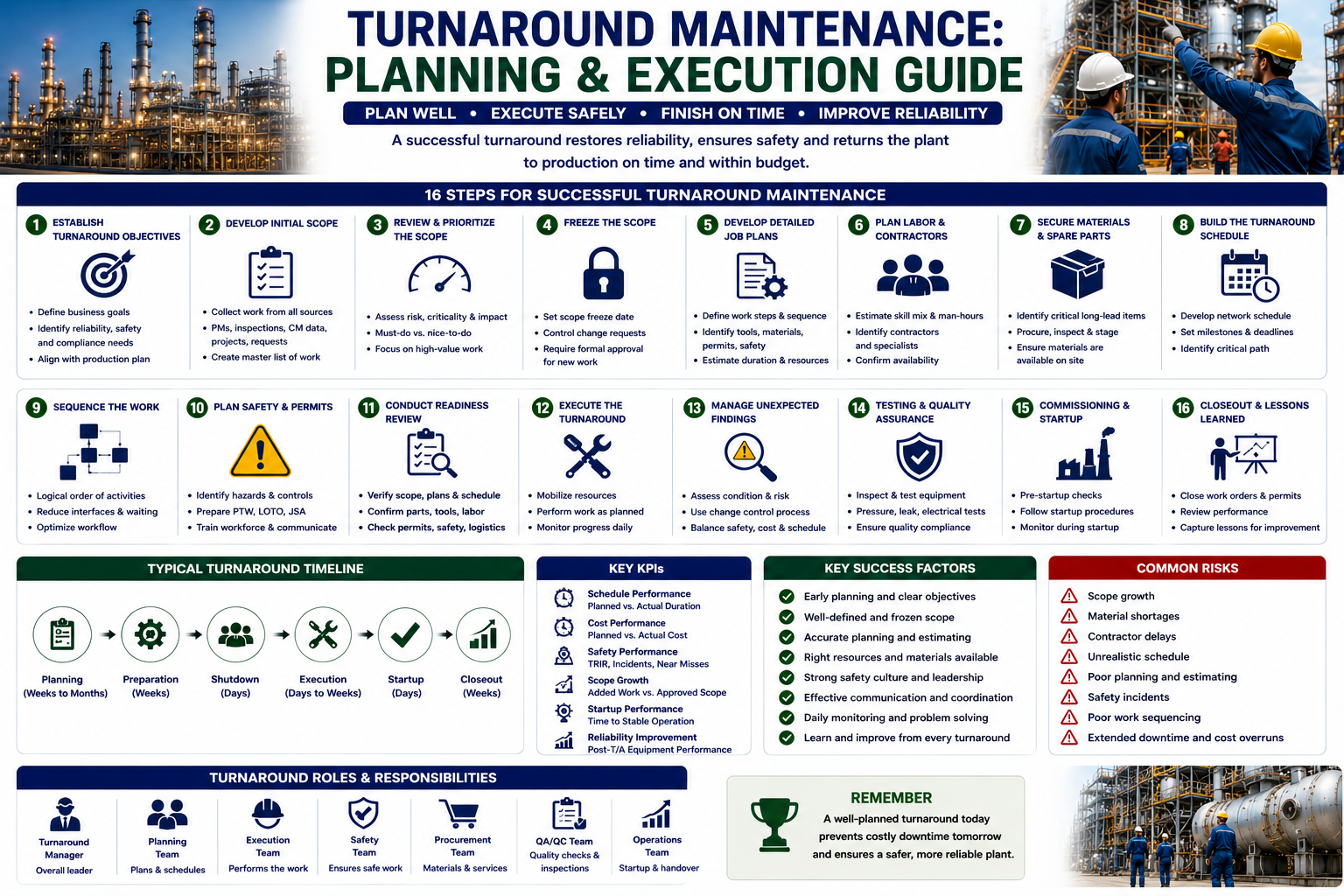
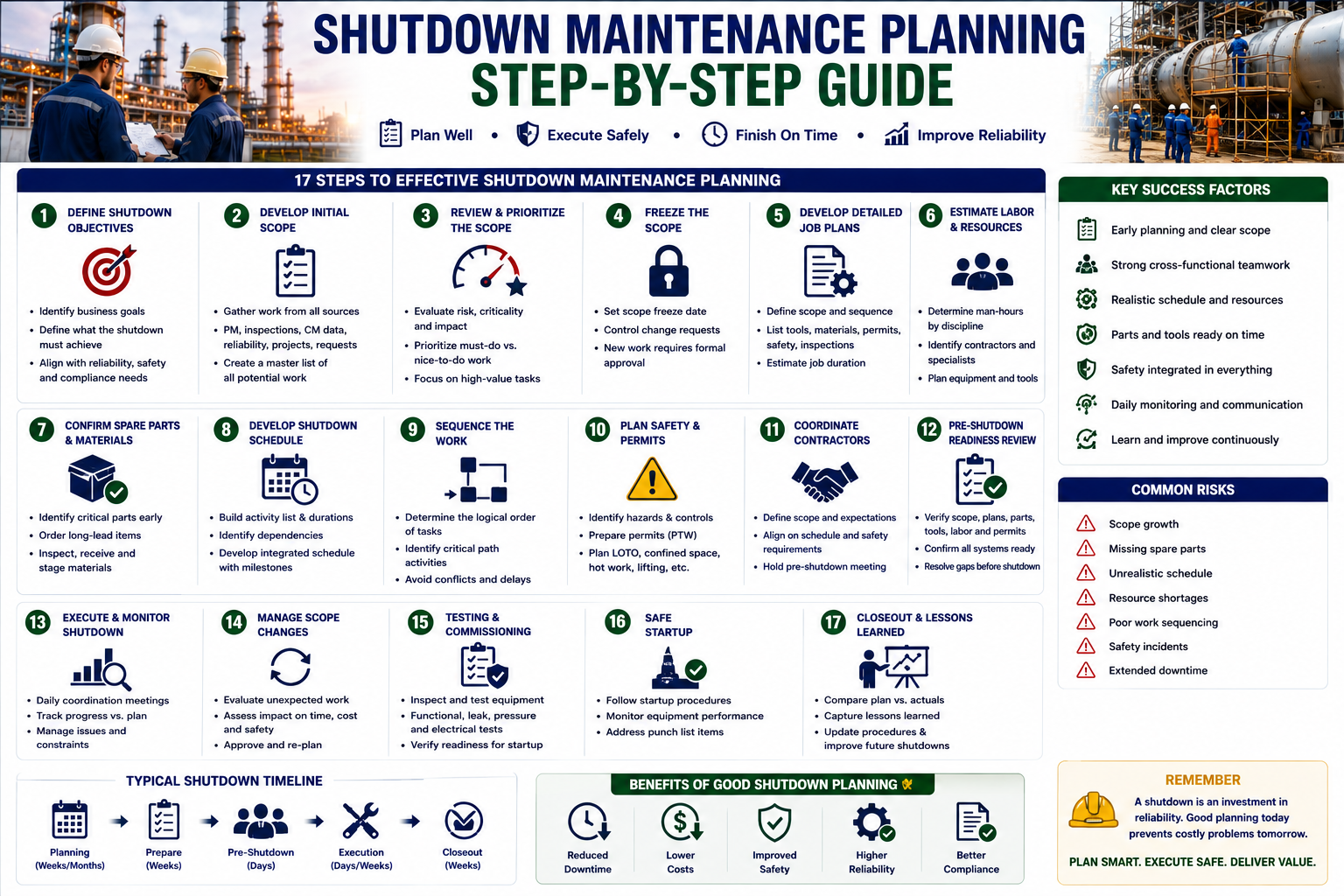
Effective planning ensures that the right personnel, tools, spare parts, procedures, and permits are available before maintenance begins.
Planning also helps reduce unnecessary equipment downtime.
3. Preventive Maintenance Management
Preventive maintenance is an important part of industrial maintenance.
Maintenance engineers develop or review preventive-maintenance tasks such as:
- Lubrication
- Inspection
- Cleaning
- Calibration
- Component replacement
- Electrical testing
- Alignment checks
- Filter replacement
However, modern maintenance engineers should not simply create more maintenance tasks.
They should evaluate whether each task actually contributes to equipment reliability.
Poorly designed preventive maintenance can result in unnecessary costs, excessive downtime, and maintenance-induced failures.
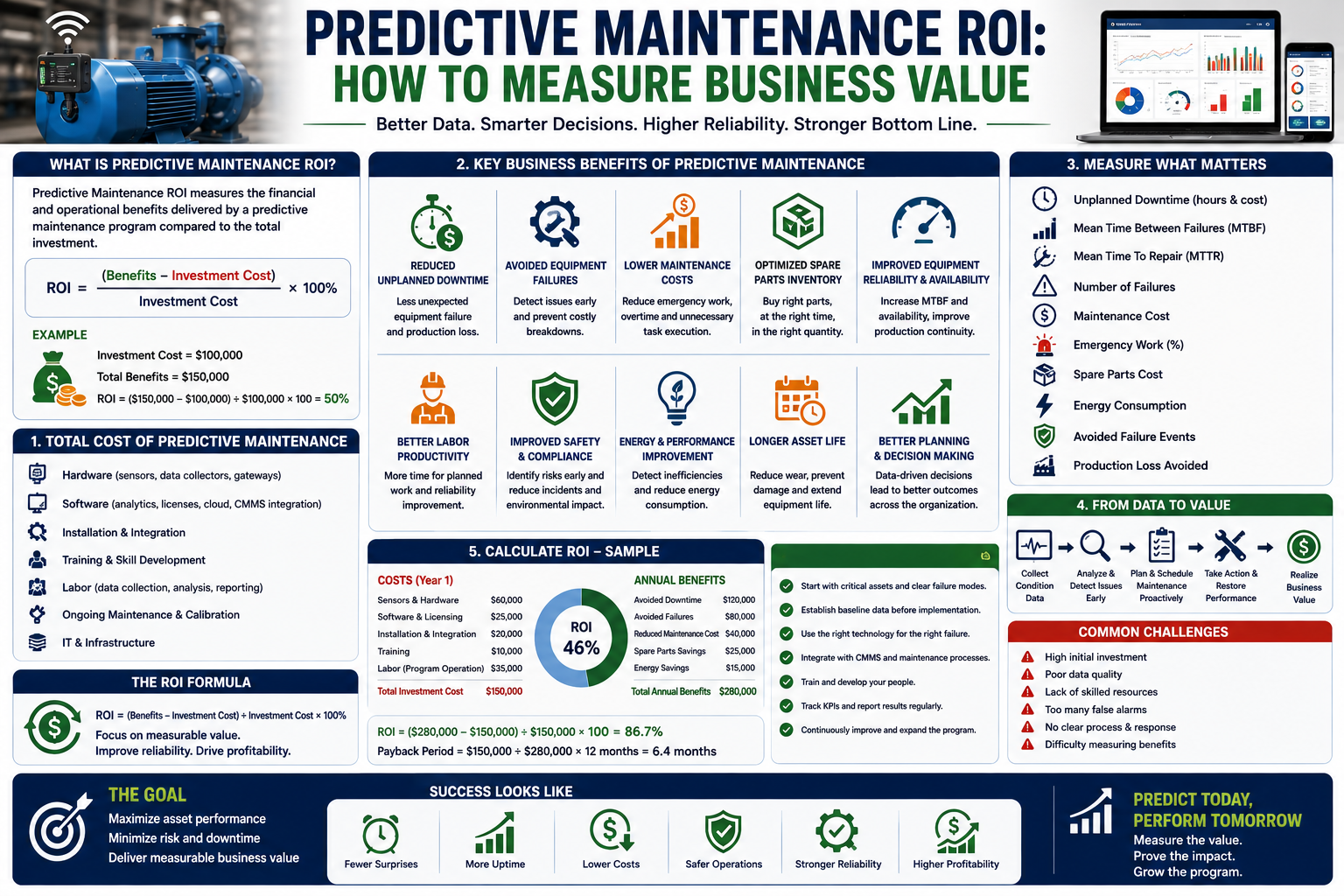
4. Predictive Maintenance and Condition Monitoring
Modern maintenance engineering increasingly uses condition-monitoring technologies to identify developing equipment problems.
A maintenance engineer may work with:
- Vibration analysis
- Infrared thermography
- Oil analysis
- Ultrasonic inspection
- Motor current analysis
- Temperature monitoring
- Pressure monitoring
- Online sensors
For example, increasing vibration in a motor may indicate a developing bearing, alignment, or balance problem.
By identifying the problem early, maintenance can be scheduled before the equipment experiences a catastrophic failure.
5. Troubleshooting Equipment Problems
Maintenance engineers play an important role when equipment behaves abnormally.
They may analyze symptoms such as:
- Excessive vibration
- High temperature
- Low pressure
- Reduced output
- Unusual noise
- Increased energy consumption
- Repeated component failures
Troubleshooting requires engineering knowledge and a structured approach.
The objective is not only to restore equipment but also to understand what caused the problem.
6. Root Cause Analysis
One of the most important responsibilities of a modern maintenance engineer is identifying the root causes of significant failures.
Suppose a pump bearing fails repeatedly.
Replacing the bearing every few months may restore the pump temporarily, but it does not address the underlying problem.
A maintenance engineer may investigate:
- Shaft alignment
- Lubrication
- Installation practices
- Operating conditions
- Bearing selection
- Contamination
- Excessive loading
- Equipment design
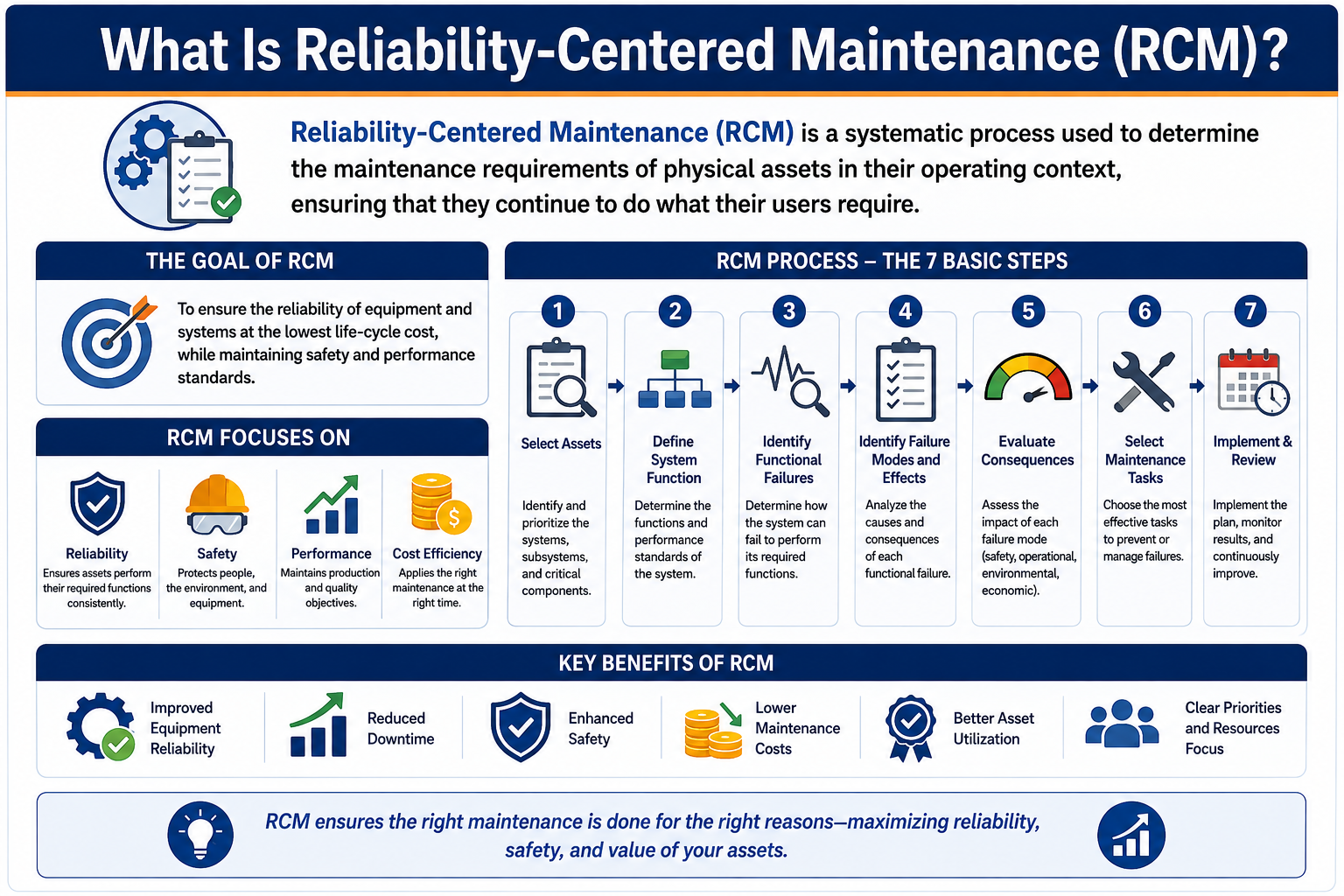
Tools such as 5 Whys, Fishbone Analysis, Fault Tree Analysis, and Failure Mode and Effects Analysis (FMEA) can help identify underlying causes.
Eliminating the root cause can prevent repeated failures and reduce maintenance costs.
7. Improving Equipment Reliability
Maintenance engineers contribute directly to reliability improvement.
They analyze equipment performance and identify opportunities to improve:
- Mean Time Between Failures (MTBF)
- Mean Time To Repair (MTTR)
- Equipment availability
- Maintenance effectiveness
- Equipment life
- Operational efficiency
For example, if a conveyor repeatedly experiences belt failures, the engineer may investigate belt tension, alignment, loading conditions, pulley condition, installation practices, and operating procedures.
Reliability improvement focuses on preventing problems rather than simply responding to them.
8. Managing Maintenance Data
Modern maintenance is increasingly data-driven.
Maintenance engineers use equipment and maintenance data to identify trends and make better decisions.
Important data may include:
- Failure history
- Work-order history
- Maintenance costs
- Equipment operating hours
- Inspection results
- Spare-parts consumption
- Downtime
- Condition-monitoring results
- Maintenance KPIs
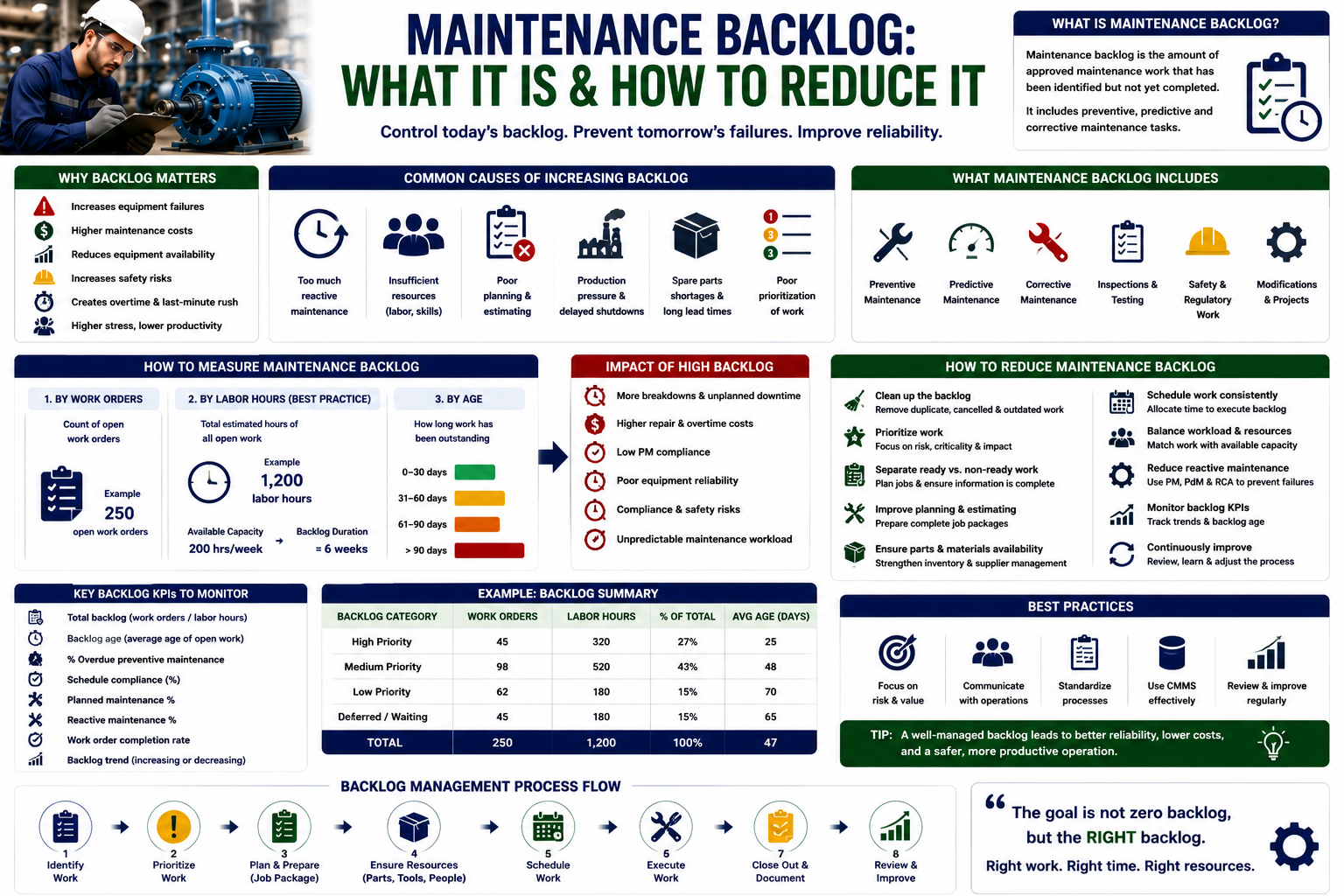
A Computerized Maintenance Management System (CMMS) can help collect and organize this information.
Good data allows engineers to identify recurring failures, evaluate maintenance strategies, and prioritize improvement projects.
9. Spare Parts and Inventory Management
A maintenance engineer may also contribute to spare-parts management.
Having the correct spare parts available is essential for reducing repair time.
However, storing too many spare parts can increase inventory costs.
Maintenance engineers may help determine:
- Critical spare parts
- Recommended stock levels
- Long-lead-time components
- Equipment interchangeability
- Spare-parts criticality
- Replacement strategies
The objective is to balance availability and cost.
10. Safety and Compliance
Safety is one of the most important aspects of maintenance engineering.
Maintenance activities can involve electrical hazards, rotating machinery, high pressure, chemicals, confined spaces, hot work, lifting operations, and other risks.
Maintenance engineers help ensure that maintenance procedures consider appropriate safety requirements.
They may contribute to:
- Risk assessments
- Lockout/tagout procedures
- Permit-to-work systems
- Equipment isolation
- Safety inspections
- Maintenance procedures
- Regulatory compliance
Reliable equipment is important, but it must also be maintained safely.
11. Maintenance Cost Control
Maintenance engineers also have an important role in controlling costs.
Maintenance costs can include:
- Labor
- Spare parts
- Contractor services
- Tools
- Condition-monitoring systems
- Equipment downtime
- Energy losses
- Emergency repairs
Engineers evaluate maintenance strategies to determine whether the organization is spending resources effectively.
The cheapest maintenance activity is not always the best option. The goal is to achieve the required equipment reliability at an appropriate total lifecycle cost.
12. Technology and Digital Transformation
Technology is changing the maintenance engineering profession.
Modern industrial facilities increasingly use:
- IoT sensors
- Cloud-based CMMS platforms
- Automated condition monitoring
- Artificial intelligence
- Machine learning
- Digital twins
- Predictive analytics
- Mobile maintenance applications
These technologies allow maintenance engineers to access equipment information faster and identify developing problems more effectively.
For example, connected sensors can continuously monitor vibration and temperature. When equipment behavior changes, the system can alert the maintenance team so that the problem can be investigated.
The maintenance engineer’s role is therefore becoming increasingly analytical and technology-driven.
Skills Required for a Modern Maintenance Engineer
A successful maintenance engineer needs both technical and non-technical skills.
Important skills include:
Technical Skills
- Mechanical engineering
- Electrical systems
- Instrumentation
- Automation
- Rotating equipment
- Hydraulic and pneumatic systems
- Maintenance planning
- Reliability engineering
- Failure analysis
- Condition monitoring
Analytical Skills
Maintenance engineers need to interpret data, identify trends, investigate failures, and make engineering decisions.
Communication Skills
Maintenance engineers work with technicians, operators, production teams, managers, contractors, suppliers, and other engineers.
Clear communication is essential.
Leadership Skills
Maintenance engineers may coordinate maintenance teams, contractors, shutdown activities, improvement projects, and emergency repairs.
Problem-Solving Skills
Equipment failures rarely present themselves as simple problems. Engineers must use structured problem-solving methods to determine what is happening and why.
Maintenance Engineer vs Reliability Engineer
The two roles are closely related.
A maintenance engineer generally focuses on maintaining and restoring equipment and ensuring that maintenance activities are properly planned and executed.
A reliability engineer typically focuses more heavily on analyzing failures, improving equipment reliability, optimizing maintenance strategies, and reducing the probability of future failures.
In many organizations, however, the responsibilities overlap significantly.
Modern maintenance engineers increasingly perform reliability-engineering activities such as FMEA, RCA, RCM, criticality analysis, and reliability improvement.
The Future Role of Maintenance Engineers
The maintenance engineer of the future will increasingly work with data, automation, sensors, and advanced analytics.
Artificial intelligence and machine learning may help identify unusual equipment behavior and predict potential failures.
Digital twins may allow engineers to model asset behavior and evaluate different maintenance or operating scenarios.
However, technology will not eliminate the need for engineering judgment.
Maintenance engineers will still need to understand equipment, failure mechanisms, operating conditions, safety requirements, and business priorities.
The future maintenance engineer is likely to be a combination of engineer, reliability specialist, data analyst, problem solver, and asset-management professional.