Pumps are among the most widely used mechanical devices in industry, moving liquids and slurries through pipelines, process plants, and domestic systems every single day. But with hundreds of pump models on the market, understanding pump classification is the first step toward selecting the right equipment for any application. This guide breaks down the complete classification of pumps used in mechanical engineering and fluid mechanics, covering working principles, sub-types, and real-world applications.
What Is Pump Classification?
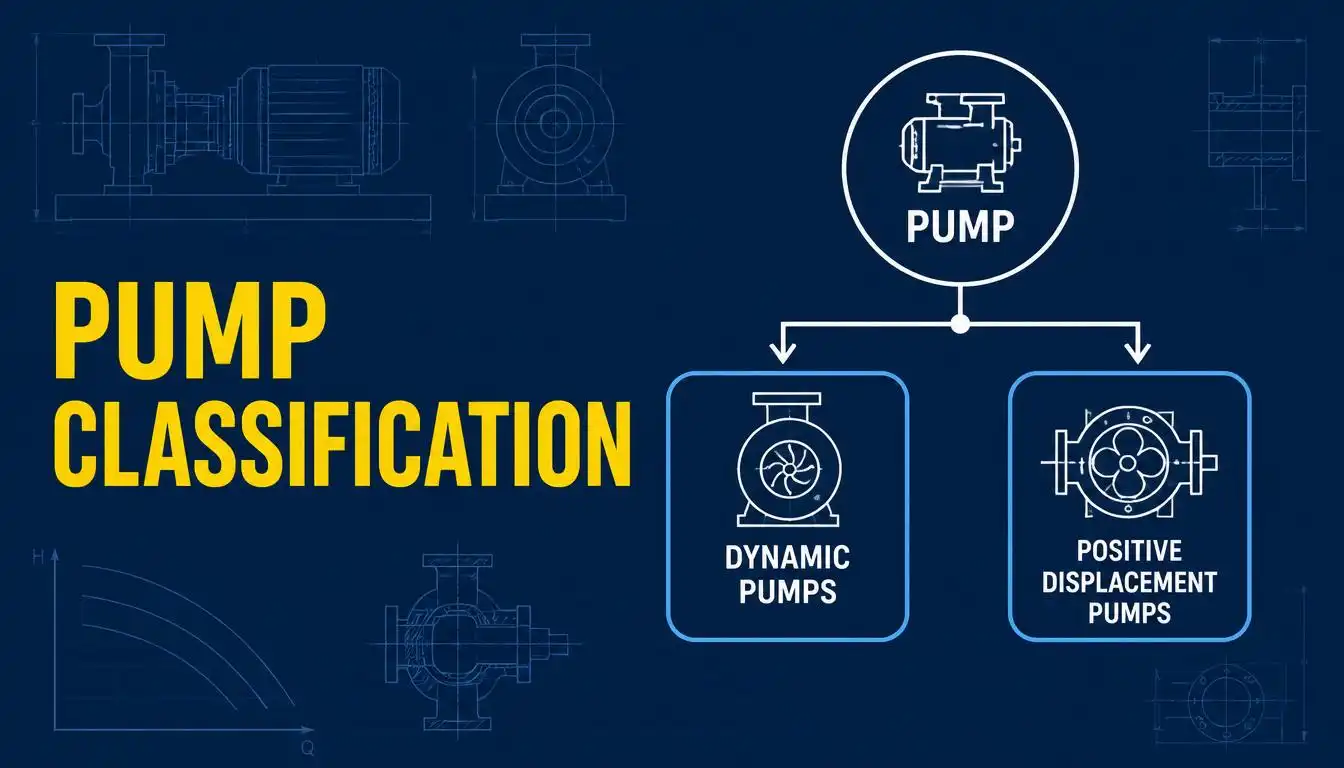
Pump classification is the systematic grouping of pumps based on how they add energy to a fluid and their mechanical design. Broadly, the classification of pump systems is done on the basis of the operating principle and construction features, which helps engineers pick the correct pump for a given flow rate, pressure, and fluid viscosity requirement.
According to Engineering ToolBox, pumps are generally classified into two major families: Centrifugal (Roto-dynamic) Pumps and Positive Displacement Pumps. This two-way split forms the backbone of nearly every pump classification chart used in mechanical engineering textbooks and industry standards today.
The Two Major Types of Pumps in Mechanical Engineering
When studying types of pumps in mechanical engineering, almost every source agrees on this fundamental division:
- Dynamic (Kinetic) Pumps
- Positive Displacement Pumps
Let’s look at both in detail.
1. Dynamic or Kinetic Pumps
Dynamic pumps impart velocity to the fluid using a rotating element and then convert that velocity into pressure energy as the fluid moves through the casing or diffuser, as explained in Multiphase Corporation’s guide to pump working principles. This category is sometimes called “roto-dynamic” because motion (rotation) drives the pumping action.
Sub-types of dynamic pumps include:
- Centrifugal Pumps — The most widely used pump type in the world due to their simple design and low manufacturing cost. A rotating impeller throws liquid outward via centrifugal force, and the volute casing converts velocity into pressure.
- Radial flow pumps
- Axial flow pumps
- Mixed flow pumps
- Special-effect pumps — Jet/ejector pumps, electromagnetic pumps, and gas-lift or hydraulic-ram pumps.
If you want to go deeper into how centrifugal pumps behave under real operating conditions, check out our detailed posts on cavitation in centrifugal pumps and net positive suction head (NPSH) in centrifugal pumps — both are critical concepts for anyone selecting or troubleshooting a dynamic pump.
2. Positive Displacement (PD) Pumps
A positive displacement pump works by trapping a fixed volume of fluid in a chamber and then forcing (displacing) it into the discharge line. Unlike centrifugal pumps, a PD pump delivers a nearly constant flow rate regardless of discharge pressure, which is why it’s preferred for high-viscosity fluids and precise dosing applications.
The Aulank Pump classification guide notes that positive displacement pumps fall into two main categories, each built for different media and pressure requirements:
A. Reciprocating Pumps — use back-and-forth (oscillating) motion:
- Piston pumps
- Plunger pumps
- Diaphragm pumps
B. Rotary Pumps — use continuous rotational motion:
- Gear pumps (external and internal)
- Screw pumps (single or multiple intermeshing screws)
- Vane pumps
- Lobe pumps
- Peristaltic pumps
We’ve already covered this category in depth in our dedicated article — Positive Displacement Pump: Types and How It Works — which is a great follow-up read if you want a deeper technical breakdown of each rotary and reciprocating design.
Types of Pumps in Fluid Mechanics: A Quick Comparison
From a fluid mechanics standpoint, the choice between pump types comes down to how each design handles pressure, viscosity, and flow variation. Here’s a simple comparison:
| Parameter | Centrifugal (Dynamic) Pump | Positive Displacement Pump |
|---|---|---|
| Flow at constant speed | Varies with system head | Nearly constant |
| Best suited for | Low-viscosity fluids | High-viscosity fluids |
| Effect of pressure change | Significant impact on flow | Minimal impact on flow |
| Common uses | Water supply, HVAC, firefighting | Fuel injection, chemical dosing, hydraulics |
| Mechanical complexity | Generally simpler | More complex (seals, valves) |
As Engineering ToolBox explains, changing the system pressure or head can dramatically affect flow rate in a centrifugal pump, while it has little to no effect on a positive displacement pump — a key distinction every mechanical engineer should understand before specifying equipment.
Other Classification Criteria Used in Industry
Beyond the dynamic vs. positive displacement split, pumps are also classified by:
- Fluid handled — water pumps, slurry pumps, chemical pumps, oil pumps
- Number of stages — single-stage vs. multi-stage
- Drive mechanism — electric motor-driven, engine-driven, hydraulic-driven
- Casing orientation — horizontal vs. vertical
- Application/industry — process pumps, firewater pumps, boiler feed pumps, submersible pumps
The Hydraulic Institute, the leading standards body for pump technology in North America, publishes detailed classification standards (ANSI/HI) that many manufacturers follow when categorizing their product lines.
Why Pump Classification Matters in Real Applications
Choosing the wrong pump family for an application isn’t just inefficient — it can lead to premature wear, cavitation damage, or complete system failure. For example, running a centrifugal pump on a highly viscous fluid drastically reduces its efficiency, while a positive displacement pump handling a low-viscosity fluid at high speed may cause excessive pressure buildup.
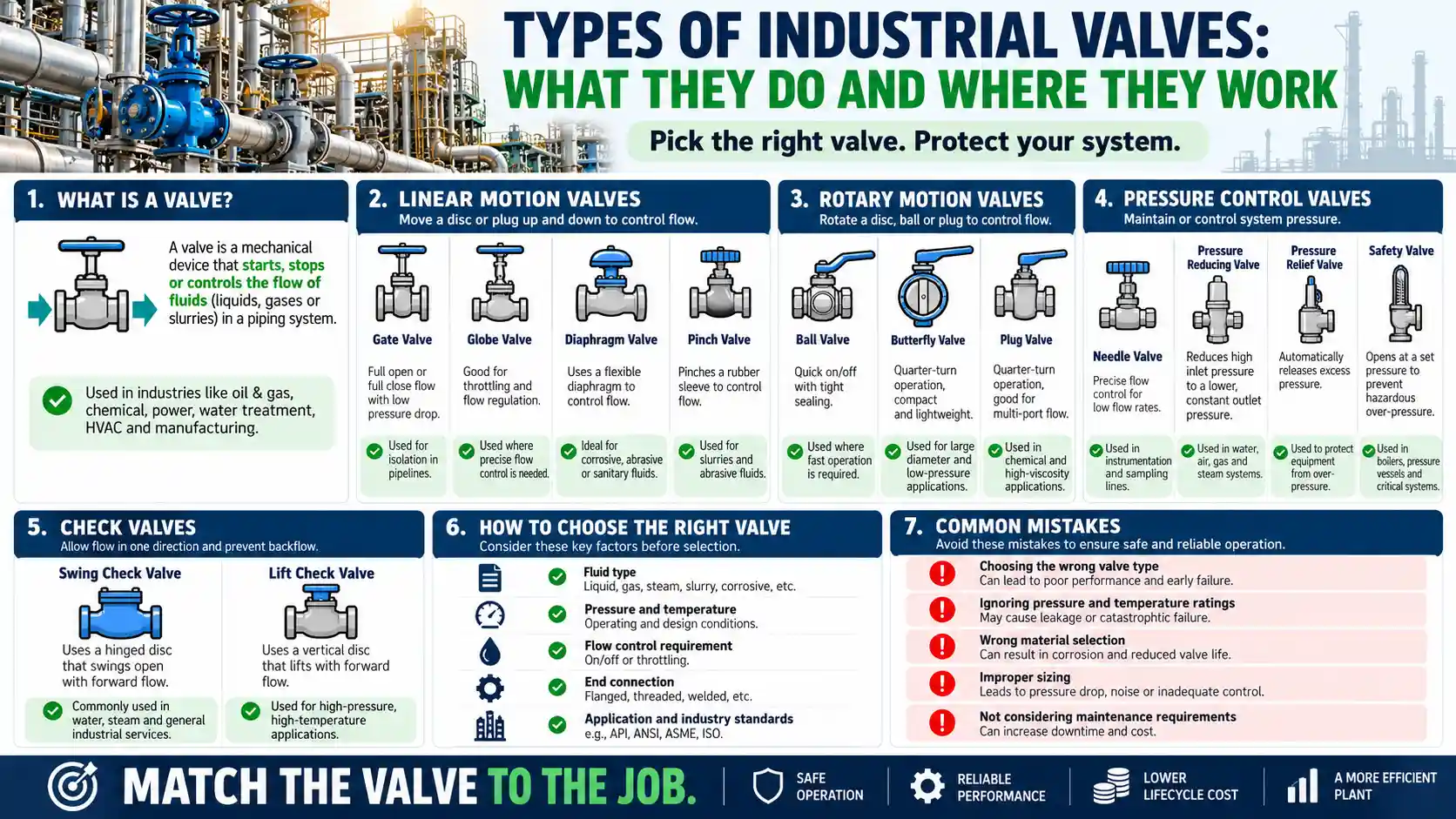
This is also where accessory components matter. A pump is rarely used in isolation — it works alongside valves and seals that control flow direction and prevent leakage. If you’re designing a complete fluid system, it’s worth reviewing our guides on types of valves and types of mechanical seals to understand how these components integrate with your pump selection.
According to the Wikipedia overview of pumps, pumps have been used since antiquity — from Egyptian shadufs to Archimedes’ screw — and the fundamental dynamic vs. displacement classification still underpins how modern engineers categorize even the most advanced industrial pumps today.
Frequently Asked Questions
Q1. What are the two main types of pumps in mechanical engineering?
The two main types are dynamic (centrifugal/kinetic) pumps and positive displacement pumps.
Q2. What is the basic classification of a pump?
Pumps are classified based on the principle by which energy is added to the fluid — either through velocity/kinetic energy (dynamic pumps) or through direct mechanical displacement (positive displacement pumps).
Q3. Which pump type is more efficient for viscous fluids?
Positive displacement pumps are generally more efficient for high-viscosity fluids since their volumetric efficiency actually improves as viscosity increases, unlike centrifugal pumps.
Q4. Are centrifugal pumps positive displacement pumps?
No. Centrifugal pumps fall under the dynamic/kinetic pump category, not positive displacement.
Conclusion
Understanding pump classification is fundamental to selecting the right pump for any mechanical or fluid-handling system. Whether you’re dealing with a simple centrifugal pump for water transfer or a precision-dosing positive displacement pump for chemical processing, knowing the underlying types of pumps in fluid mechanics helps you make better design and maintenance decisions. Pair this knowledge with a solid understanding of related components like valves and seals, and you’ll be well-equipped to design efficient, reliable fluid systems.
Explore more on Mechstera: