Centrifugal pumps are the most widely used fluid-handling equipment across industries — from municipal water supply to oil refineries and chemical plants. But not every centrifugal pump is built the same way. Depending on flow direction, number of stages, casing design, and application, engineers rely on different types of centrifugal pumps to get the job done efficiently.
In this guide, we’ll break down the complete classification of centrifugal pump designs, explain how each type works, and show you real-world examples so you can pick the right pump for your application.
If you’re new to pumps in general, it also helps to first understand how positive displacement pumps work, since centrifugal and positive displacement pumps are the two broad families every fluid system engineer should know.
What Is a Centrifugal Pump?
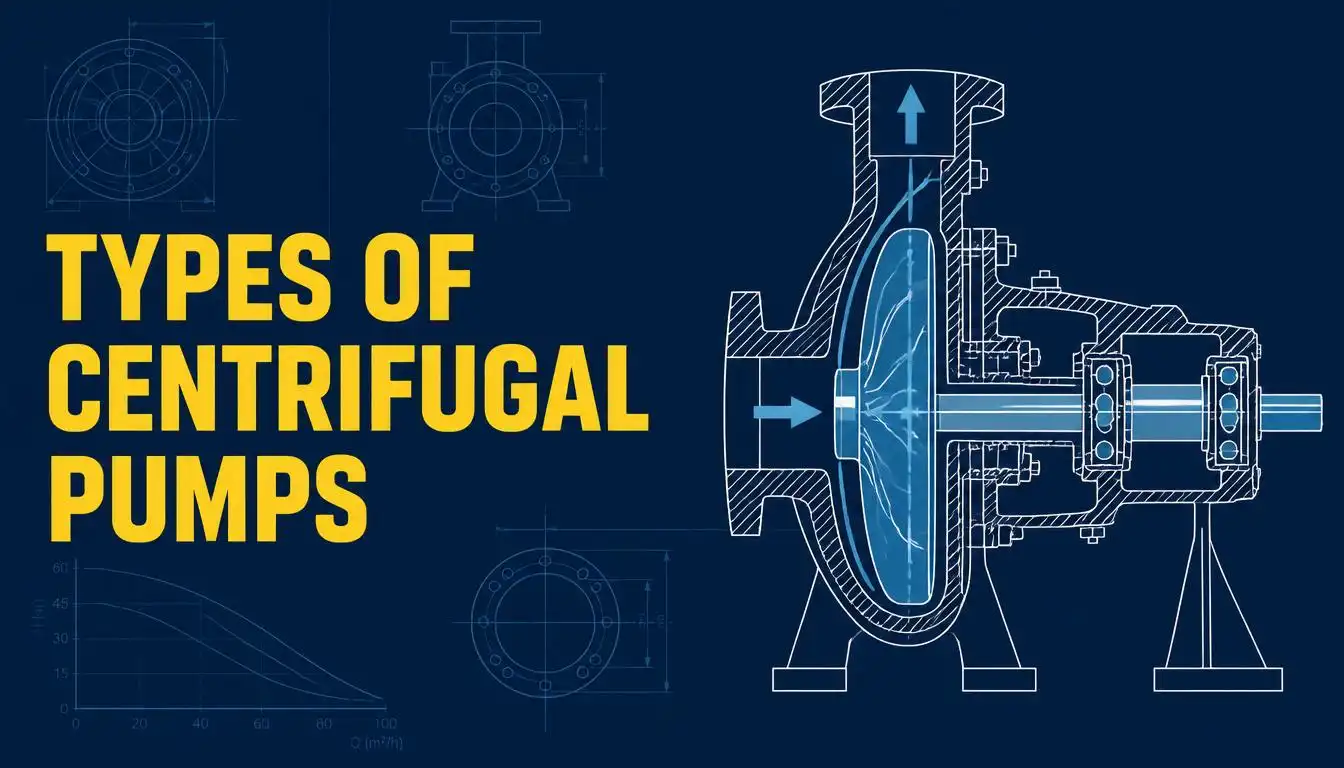
A centrifugal pump is a roto-dynamic machine that converts rotational kinetic energy — supplied by a motor, engine, or turbine — into hydrodynamic energy of a flowing fluid. As the rotechpumps.com guide explains, this conversion happens as the impeller spins, pushing liquid outward and increasing both its velocity and pressure before it exits through the discharge nozzle.
Because of this simple yet powerful principle, centrifugal pumps dominate applications in water treatment, HVAC, oil & gas, power generation, and chemical processing.
How Centrifugal Pumps Are Classified
According to a detailed breakdown on engineeringtoolboxs.com, centrifugal pumps fall under the broader “roto-dynamic pump” category and are generally classified based on:
- Direction of fluid flow
- Number of impeller stages
- Casing design
- Impeller design
- Suction type
- Shaft orientation (horizontal or vertical)
- Application/industry use
Let’s go through each pump centrifugal type in detail.
1. Classification by Flow Direction
Radial Flow Pumps
In radial flow centrifugal pumps, liquid enters at the center (eye) of the impeller and is thrown outward at a 90-degree angle to the shaft. As noted by DXP Equipment, the key distinction between radial and axial pumps lies in this orientation, and radial designs are typically preferred for high-pressure, low-to-moderate flow applications.
Axial Flow Pumps
Axial flow pumps move fluid parallel to the pump shaft rather than perpendicular to it. These are ideal for handling large volumes of fluid at relatively low pressure — think large-scale irrigation or flood control systems.
Mixed Flow Pumps
Mixed flow pumps combine both radial and axial flow characteristics. Fluid enters axially and exits at an angle, offering a balance between flow rate and pressure — commonly used in water treatment and drainage applications.
2. Classification by Number of Stages
Single-Stage Centrifugal Pumps
These pumps have only one impeller and are used for low to moderate pressure requirements. They’re compact, cost-effective, and easy to maintain — making them the most common types of centrifugal pump in residential and light industrial use.
Multistage Centrifugal Pumps
Multistage pumps house two or more impellers connected in series within the same casing. Each stage boosts pressure further, allowing multistage pumps to achieve very high discharge pressures — ideal for boiler feed systems, deep well pumping, and high-rise building water supply.
3. Classification by Casing Design
Volute Casing Pumps
In volute-type pumps, the impeller sits inside a spiral-shaped casing. As fluid velocity decreases while moving through the widening volute, kinetic energy converts into pressure energy.
Diffuser (Turbine) Casing Pumps
Diffuser pumps use stationary guide vanes surrounding the impeller to direct flow smoothly and convert velocity into pressure more efficiently than a plain volute — often used in multistage designs.
As explained on Boilersinfo, centrifugal pumps are also classified based on casing split design — axially split or radially split — which affects maintenance accessibility and pressure handling capacity.
4. Classification by Suction Type
Single Suction Pumps
Fluid enters from one side of the impeller only. Simple in design, these are widely used in general-purpose applications.
Double Suction Pumps
Fluid enters from both sides of the impeller simultaneously, balancing axial thrust and allowing higher flow rates — commonly seen in large water supply and power plant cooling systems.
5. Classification by Shaft Orientation
Horizontal Centrifugal Pumps
The most common orientation, easy to install and service. Ideal for general industrial and commercial applications.
Vertical Centrifugal Pumps
Vertical pumps (including vertical turbine pumps) save floor space and are typically used in deep well applications, sump drainage, and fire-fighting systems.
6. Classification by Application
- Self-Priming Pumps – Capable of removing air from the suction line without external priming, useful in situations where the pump isn’t always fully flooded.
- Submersible Pumps – Designed to operate fully submerged in the fluid, commonly used for sewage, wastewater, and borewell applications.
- API 610 Pumps – Built to strict American Petroleum Institute standards for heavy-duty oil & gas industry service.
- ANSI Pumps – Standardized dimensions allow interchangeability between manufacturers, commonly used in chemical processing.
According to the guide from Hard Hat Engineer, the same physical pump can often fall into two or more classification groups simultaneously — for example, a horizontal, single-stage, volute-type, self-priming pump used in a chemical plant.
Quick Comparison Table
| Classification Basis | Common Types |
|---|---|
| Flow Direction | Radial, Axial, Mixed |
| Number of Stages | Single-stage, Multistage |
| Casing Design | Volute, Diffuser |
| Suction Type | Single suction, Double suction |
| Shaft Orientation | Horizontal, Vertical |
| Application | Self-priming, Submersible, API 610, ANSI |
Why Correct Classification Matters
Choosing the wrong centrifugal pump type for your application can lead to inefficiency, premature wear, or even complete pump failure. For instance, ignoring proper suction design can trigger issues like cavitation in centrifugal pumps, which damages impellers over time. Similarly, understanding Net Positive Suction Head (NPSH) is essential before finalizing pump selection, especially for high-suction-lift applications.
Don’t overlook sealing systems either — the right mechanical seal type directly impacts leak prevention and pump longevity, regardless of which centrifugal pump classification you choose.
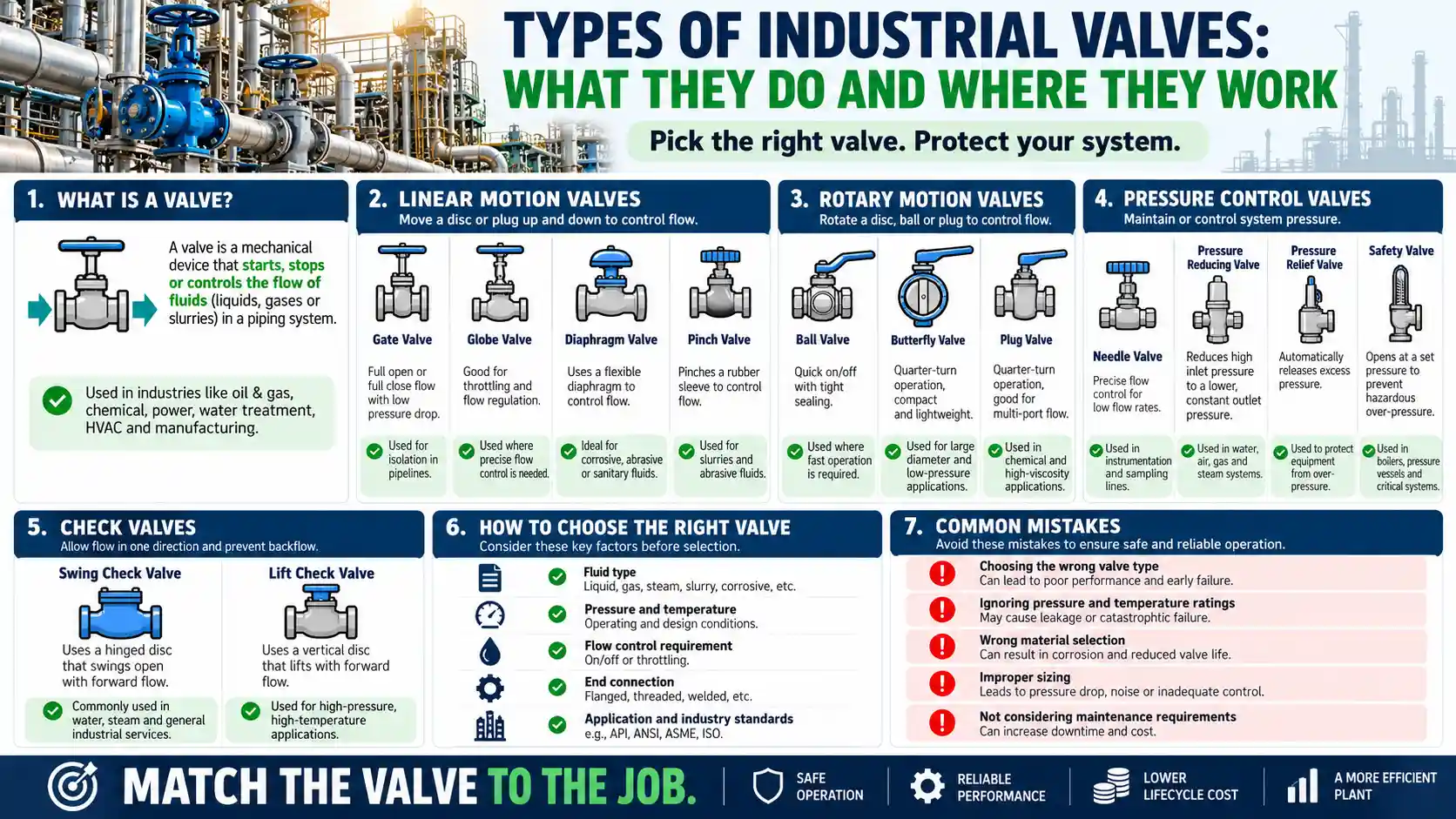
And if your system involves flow regulation alongside pumping, it’s worth reviewing the different types of valves used in piping networks, since pumps and valves almost always work together in real-world installations.
Final Thoughts
Understanding the different types of centrifugal pumps — from radial and axial flow designs to single-stage, multistage, and application-specific pumps like submersible or API 610 units — helps engineers and plant operators select the most efficient and reliable equipment for their systems. Whether you’re designing a water supply network, an HVAC system, or a chemical processing plant, matching the correct classification of centrifugal pump to your operating conditions ensures better performance, lower maintenance costs, and longer equipment life.